Vitamins found in white rice and the temptation of high doses
Will taking vitamin B1 help when I feel tired or have numbness in my hands and feet? Is high-dose benfotiamine better than regular thiamine? These are questions most people have when encountering vitamin B1 as a supplement for fatigue or nerve nutrition. In short, if there is a deficiency, correction is necessary; however, for those with sufficient levels, evidence that taking more will relieve fatigue or reduce numbness is inconsistent. Just because benfotiamine shows interesting characteristics in specific situations does not mean it can be concluded as superior for all symptoms.
The point where these questions diverge is simple. Vitamin B1 is a nutrient necessary for the energy metabolism of carbohydrates and amino acids, as well as for nerve function. However, 'necessary' does not mean 'the more you take, the better it gets.' In particular, choices can become blurred because thiamine from food, thiamine hydrochloride or nitrate from supplements, benfotiamine (a fat-soluble derivative), and injection therapy for deficiency emergencies are all grouped under the name 'vitamin B1.' Let's follow the diverging paths hidden beneath that name.
The Identity of Vitamin B1: Same Name, Different Forms
Vitamin B1 is a water-soluble vitamin also called thiamine. It is necessary for the energy metabolism of carbohydrates and amino acids, as well as for nerve function. Interestingly, there are actually several forms under the name 'vitamin B1.' Thiamine found in food, thiamine hydrochloride or nitrate used in oral supplements, benfotiamine as a fat-soluble derivative, and injection therapy used in deficiency emergencies all differ in their absorption methods, purposes, and supporting evidence. Grouping them into one category under the name 'vitamin B1' can actually make the choice more confusing.
Why it is relied upon for fatigue and nerve health
It starts with the fact that thiamine is necessary for energy metabolism. However, it is easy for 'necessary for energy metabolism' to be misinterpreted as 'creates more energy.' There is insufficient evidence that taking high doses of B1 alone improves fatigue or concentration in healthy individuals. In other words, filling more when there is no deficiency is a different matter. It is clear that milling, cooking, alcohol consumption, and malabsorption can affect thiamine status, and deficiency can cause serious problems in the nerves and heart. However, correcting a deficiency and additional intake for someone with sufficient levels should not be treated as the same thing.
Differences between food, supplements, and benfotiamine
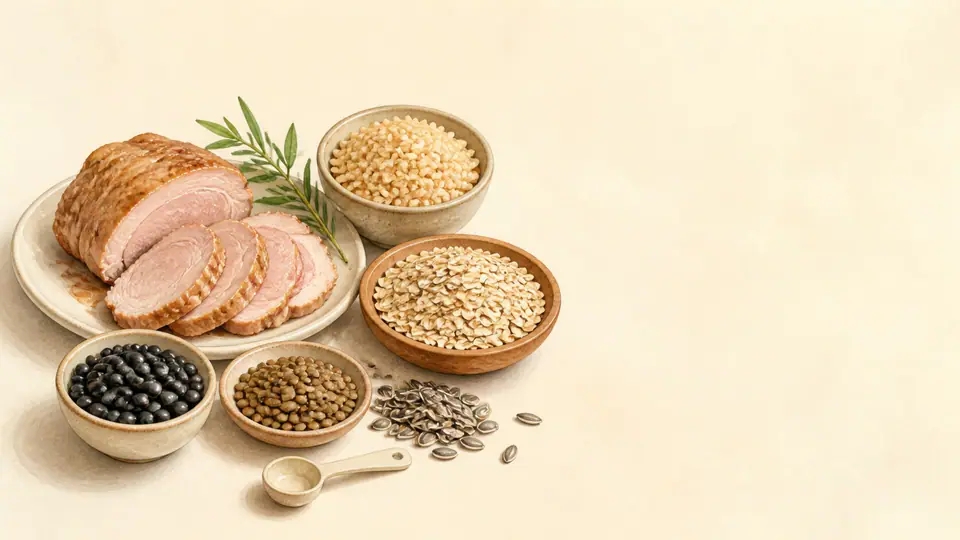
Major sources include whole grains, pork, legumes, and fortified cereals. The NIH ODS recommended daily allowance for adults is 1.2 mg for men and 1.1 mg for women. Even with the same raw material, thiamine from food, single supplements, B-complexes, and benfotiamine differ in how they enter the body and the evidence discussed. Benfotiamine is a fat-soluble derivative with different absorption characteristics; while some studies have shown more notable results than regular thiamine in surrogate markers for diabetic neuropathy, this cannot be expanded to the conclusion that it is superior for all symptoms. Since the study subjects and measured markers were specific, applying those results to general fatigue or all types of numbness in the hands and feet is a stretch.
People at high risk of deficiency
Chronic alcohol use, advanced age, HIV infection, post-bariatric surgery, and some diabetes patients are at high risk of thiamine deficiency. However, 'low test values' and 'clinical effectiveness' are not the same question. Low test values may require correction, but that is not direct evidence that a supplement will improve fatigue. Thiamine deficiency can cause beriberi and Wernicke-Korsakoff syndrome, so it is important not to delay treatment if deficiency is suspected.
Points to check when using with other medications
Diuretics such as furosemide and long-term alcohol consumption can affect thiamine status. In such cases, it is necessary to check your current medications and thiamine status with your medical team. Additionally, when using multiple products, you must determine which form they are, thiamine hydrochloride, nitrate, benfotiamine, or B-complex, and calculate the total amount of B1 across all products. Even for the same vitamin B1, the form and total amount are key to the choice.
Signs that should not be managed with supplements alone
If confusion or gait abnormalities occur during repeated vomiting, difficulty eating after bariatric surgery, or heavy drinking, you should not simply monitor the situation with oral products. Sudden confusion, abnormal eye movements, difficulty walking, shortness of breath, or severe edema require evaluation by 119 or an emergency room. An emergency situation where Wernicke's encephalopathy is suspected is not a matter of choosing a supplement. Thiamine injections are used in medical settings because, although rare, severe allergic reactions are possible.
Is a high dose more effective?
Oral thiamine has low toxicity, so no upper limit has been set, but this does not mean high doses are necessary or more effective. A higher number does not mean deficiency correction happens faster or that fatigue in healthy people is relieved more effectively. Rather, being attracted to high-dose numbers makes it easy to overlook the formulation, total amount, and one's own risk of deficiency.
How to Distinguish Between General Fatigue and Deficiency Signals
You must first determine whether you are experiencing simple fatigue or deficiency signals such as gait instability, confusion, abnormal eye movements, edema, or abnormal heart rate. You should also check for conditions such as alcohol dependence, repeated vomiting, history of bariatric surgery, malnutrition, use of diuretics, or diabetes. From this point, the focus of the inquiry shifts from the ingredients themselves to the current state of your body.
Final Decision Criteria
The final criteria for judgment should be checking the risk of deficiency, the urgency of symptoms, the exact formulation, and the total dosage, rather than focusing on high-dosage numbers, and separating the evidence for treating deficiency from claims of improving general fatigue. Vitamin B1 began as the grain vitamin that prevented beriberi and became established as a supplement for fatigue and nerve health; however, along that journey, dietary amounts in mg, high-dose therapeutic amounts, oral supplements, and emergency injections diverged into different paths. At this crossroads, please identify your own situation first rather than choosing based solely on the name of the raw material.
References
- NIH ODS: Thiamin fact sheet for health professionals.
- NIH ODS: Thiamin fact sheet for consumers.
- WHO: Thiamine deficiency and its prevention and control.
This text explains the origin of the raw materials, the scope of research, and precautions before consumption. As this cannot replace individual diagnosis or treatment, please consult a medical professional if you are taking medication or if symptoms persist. If sudden and severe symptoms such as difficulty breathing or decreased consciousness occur after consumption, seek help from 119 or the emergency room.

Medical Staff Review
Director Choi Yeon-seung
Chief Director of Baekrokdam Korean Medicine ClinicVitamin B1 Glossary, reviewed the safety of expressions and the scope of verification before administration.
Review scope: Ingredient origin, human studies, concomitant medications, safety of intake · Last reviewed 2026-08-17
- Graduated from Kyung Hee University College of Korean Medicine
- Providing Korean medicine treatment since 2010
- Consultations for Gongjindan, Gyeongokgo, Nokyong (Deer Antler) restorative medicine, and customized restorative herbal medicine