A Piece of Protein: Valine, Independent Under the Name BCAA
Is taking valine or BCAA separately after exercise better for muscle recovery than protein? In short, for those already consuming sufficient protein, evidence that BCAA or single valine further enhances athletic performance is limited. While some studies show signals of reduced muscle soreness, actual recovery of muscle performance was not significantly accelerated.
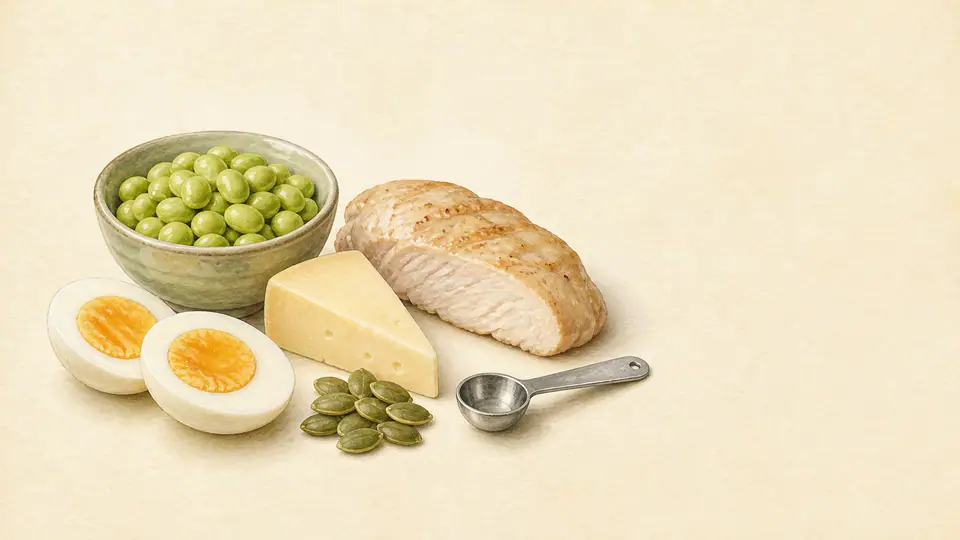
Valine is an essential amino acid that our bodies cannot produce on their own. It is found in protein-rich foods such as meat, fish, eggs, dairy, and legumes, and together with leucine and isoleucine, it forms branched-chain amino acids, or BCAA. However, valine within protein, single L-valine, a 2:1:1 BCAA mixture, and protein containing all essential amino acids are not the same product. Let's explore how valine became independent under the name BCAA and the distinctions hidden behind that name.
Valine Is a Piece of Protein
Valine is an essential amino acid. Since the body cannot synthesize it, it must be obtained through food. When you consume protein-rich foods, you also take in valine. Valine, along with leucine and isoleucine, shares a special name. All three are branched-chain amino acids, or BCAAs. The NIH ODS explains that BCAAs can be metabolized in skeletal muscle. This is the starting point for the connection to exercise.
Expectations Created by the Name BCAA
The reason BCAA established itself as an exercise supplement is simple: it can be used directly as energy in the muscles, and leucine is involved in protein synthesis signaling. Therefore, there was an expectation that adding BCAA before and after exercise would reduce muscle damage and aid recovery. However, the NIH ODS concludes that evidence for enhancing athletic performance is limited. This means that when sufficient protein is already being consumed, the additional benefit of adding BCAA is not clear.
2:1:1 Is Not a Grade of Effectiveness
The 2:1:1 commonly seen on the front of BCAA products is the mixing ratio of leucine:isoleucine:valine. This number only indicates the proportion in which the three ingredients are mixed; it does not signify a grade of effectiveness or the daily required amount. However, this ratio is often interpreted as if it were a proven optimal ratio. Valine occupies the '1' position in this ratio. While leucine is mentioned as the lead role in protein synthesis signaling, all essential amino acids, including valine, are required to actually build protein. The three BCAAs alone cannot replace complete protein.
What did the research show?
A 2022 systematic review of athletes reported signals of muscle soreness relief. However, gains in performance and body composition were minimal, and results for endurance exercise were inconsistent. A 2021 meta-analysis also showed that some muscle damage markers and pain decreased after intense exercise, but muscle performance recovery at 24 and 48 hours was not significantly accelerated. In other words, while subjective muscle soreness may be reduced, objective recovery of exercise capacity is a different matter. Then why do people feel that recovery is faster? It is easy to perceive a decrease in pain scores as recovery, but actual strength and endurance are measured by separate scales.
Distinguish Between Blood Valine Levels and Supplements
High levels of BCAA, including valine, are observed in the blood of people with obesity or insulin resistance. Seeing this, it is easy to simply conclude that taking BCAA supplements causes insulin resistance or obesity. However, Mendelian randomization studies support a different direction. Rather than high BCAA causing insulin resistance, it is more likely that insulin resistance acts to increase BCAA levels. In other words, biomarkers in the blood and the effects of ingested supplements are not the same thing.
Single Valine, BCAA, and Protein Are Different Products
Valine in food protein is included along with other essential amino acids. Single L-valine is a form where only valine is isolated. A BCAA mixture is a blend of leucine, isoleucine, and valine in a specific ratio. Complete protein or essential amino acid products provide a broader spectrum of amino acids. These are not interchangeable. In particular, BCAA alone is insufficient for muscle protein synthesis.
Safety Depends on Who Is Taking It
For those with BCAA degradation disorders, such as maple syrup urine disease, valine and BCAA are subjects of controlled medical diets. Supplements should not be used arbitrarily. As a rule, if you have kidney or liver disease or have been prescribed protein or amino acid restrictions, you should not add exercise supplements on your own. If you are taking medications that may compete with amino acids for absorption and transport, such as levodopa, do not determine the dosing interval yourself; confirm it with your prescribing medical team.
The short-term data summarized by the NIH covers the use of BCAA at 20 g or less per day for up to 6 weeks. This does not guarantee the safety of long-term high-dose use or the use of single valine.
WHO recommended intake is not a supplement dosage
The WHO/FAO/UNU report estimates the average requirement of valine for healthy adults to be 26 mg per kg of body weight per day. However, this is not a recommended dose for a single supplement. It is the nutritional requirement to be met through the overall diet. It is not appropriate to directly compare the mg value on a supplement label with this requirement.
What should I consider when taking it with other supplements or medications?
If you are considering valine or BCAA, you should first look at three things. First, whether it is single valine or a BCAA mixture, the total amount per serving, and the ratio of leucine:isoleucine:valine. Second, whether your total daily protein and calorie intake and their distribution between meals are sufficient, and whether your goal is reducing muscle soreness or improving performance and muscle mass. Third, whether you have kidney or liver disease, are pregnant or breastfeeding, have amino acid metabolism disorders such as maple syrup urine disease, or are taking levodopa.
Final Decision Criteria
Rather than being drawn to the ratio numbers, first check your total daily protein intake and the actual amounts of the three components in the product. Distinguish whether your desired result is a reduction in muscle soreness, recovery of exercise performance, or an increase in muscle mass. If you have metabolic diseases, kidney or liver problems, or are taking medication, it is important not to arbitrarily add single amino acids. Valine is just one piece of protein; just because it has become independent under the name BCAA does not make it more special than protein.
References
- WHO/FAO/UNU: Protein and amino acid requirements in human nutrition.
- NIH ODS: Dietary supplements for exercise and athletic performance.
- Oral BCAA supplementation in athletes: systematic review.
- BCAA, muscle damage markers and performance: systematic review and meta-analysis.
- Genetic evidence on insulin resistance and circulating BCAA levels.
This text explains the origin of the raw materials, the scope of research, and precautions before consumption. As this cannot replace individual diagnosis or treatment, please consult a medical professional if you are taking medication or if symptoms persist. If sudden and severe symptoms such as difficulty breathing or decreased consciousness occur after consumption, seek help from 119 or the emergency room.

Medical Staff Review
Director Choi Yeon-seung
Chief Director of Baekrokdam Korean Medicine ClinicValine Dictionary Entry, reviewed the safety of expressions and the scope of verification before administration.
Review scope: Ingredient origin, human studies, concomitant medications, safety of intake · Last reviewed 2026-08-17
- Graduated from Kyung Hee University College of Korean Medicine
- Providing Korean medicine treatment since 2010
- Consultations for Gongjindan, Gyeongokgo, Nokyong (Deer Antler) restorative medicine, and customized restorative herbal medicine