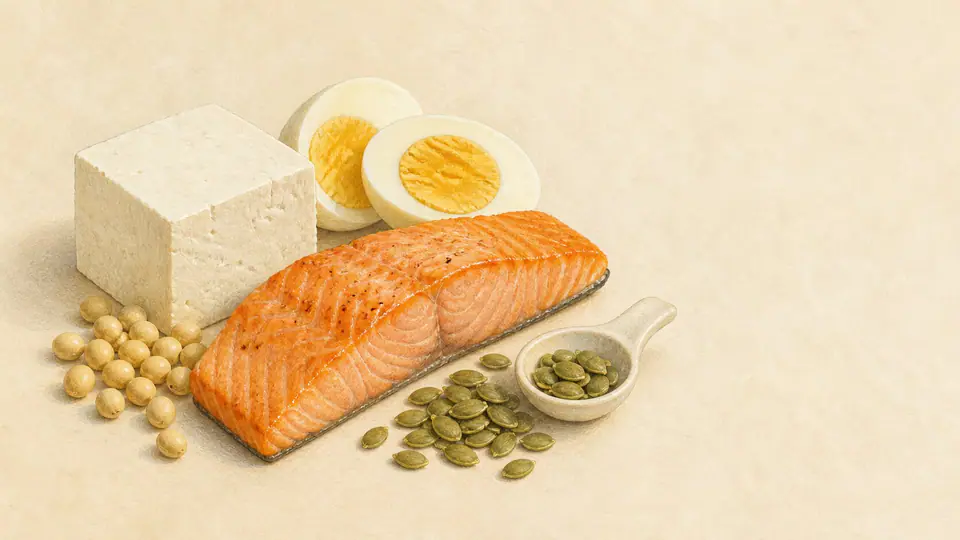
Amino acids in cheese and soy: what questions were they intended to answer?
When you cannot concentrate and your mind feels foggy due to stress, will taking tyrosine increase dopamine and help with studying, exercise, or mood? To answer briefly, it is important to first recognize that this question splits into three different paths.
The impact of tyrosine varies depending on whether you want to improve general concentration, endure short-term situations where catecholamines are rapidly depleted (such as sleep deprivation or cold), or expect treatment for conditions like depression or ADHD. It is essential to distinguish between these gaps.
Tyrosine is merely a building block for dopamine, not a dopamine booster
L-tyrosine is an amino acid found in dietary proteins and is produced in the body from phenylalanine. It is part of the synthesis pathways for dopamine, norepinephrine, thyroid hormones, and melanin. However, being a precursor does not mean it automatically improves mood, concentration, or thyroid function. Adding more raw materials does not necessarily increase dopamine in the brain to the desired level, as synthesis involves several regulatory steps. In other words, tyrosine is an important starting point, but it does not guarantee the destination.
Why there are expectations for concentration, mood, and athletic ability
This is because dopamine and norepinephrine are linked to alertness, reward, and concentration. The single sentence stating that tyrosine is a precursor to these is easily misread as "taking it activates the brain." However, relatively consistent signals from precursor supplementation research are concentrated on short-term situations with high catecholamine depletion, such as sleep deprivation, cold, or high cognitive load. Evidence that taking it during a calm daily routine improves general cognitive ability falls outside that scope.
How far the research has gone and where it stopped
A 2015 literature review reported some cognitive performance signals in situations of short-term stress or high cognitive demand, but evaluated the possibility of treating clinical diseases or improving athletic performance as limited. A 2020 systematic review involving healthy young adults and military populations also summarized some cognitive signals in cumulative stress situations, but concluded that it is difficult to provide a definitive recommendation due to insufficient research quality. Research on concentration should not be misinterpreted as improvement in athletic ability; exercise and cognition are different outcome indicators.
In a crossover trial of 30 healthy adult males in 2026, there were no distinct clinical abnormalities for 4 weeks at doses up to 4g per day. However, this must be viewed within the context of the short duration, the inclusion of only males, and the researchers being affiliated with the raw material supplier. These results cannot be extrapolated to long-term safety for the general population.
Dietary protein, L-tyrosine, and N-acetyl-L-tyrosine are not the same ingredients
Tyrosine from proteins in food, pure L-tyrosine, and N-acetyl-L-tyrosine cannot be treated as having the same absorption rates or research data. Just because "tyrosine" is in the name does not mean they share the same evidence. When choosing a product, you must check exactly which form it is, the amount per dose, and how much of other amino acids or caffeine it contains. In particular, please keep in mind that it is easy to attribute the alertness felt when taken with caffeine to the action of tyrosine alone.
Consult your medical team first if you are taking medication or have a medical condition
Evidence has not been established for tyrosine to replace the diagnosis or standard treatment of depression, ADHD, or chronic fatigue. If you are taking levodopa, thyroid medication, or psychiatric drugs, or if you have thyroid disease or phenylketonuria, do not start taking it arbitrarily and consult your medical team about the product. Data on high-dose long-term intake for pregnant or lactating women, children, or patients with liver or kidney disease cannot be substituted by short-term studies on healthy adults.
If nausea, heartburn, headache, insomnia, or throbbing occurs after supplementation, stop use to evaluate rather than increasing the dose. If severe throbbing, chest pain, severe headache, confusion, or fainting occurs, call 119 or seek evaluation at an emergency room.
Expectations become clearer when divided into three questions
Let us return to the point. The answer varies depending on whether you seek general concentration improvement, relief in short-term stress situations (such as sleep deprivation, cold, or high-intensity work), or treatment for conditions like depression, ADHD, or chronic fatigue. Current evidence is weak for improving general concentration or replacing disease treatment. Only some studies have shown weak positive signals for cognitive performance under short-term stress, and even those are not definitive recommendations.
Final criteria for judgment: type of stress, formulation, and combination use
Then, what should we look for? Rather than using the term 'dopamine booster,' it is more accurate to ask the following: Which stress situations and outcomes were studied? Were the exact formulation, dosage, and medications verified? Are short-term cognitive signals being extrapolated to general concentration or the treatment of psychiatric disorders? In other words, tyrosine is a common amino acid found in cheese and beans. While this commonality sometimes leads to exaggerated expectations, the reviewed evidence remains limited to cognitive performance under short-term stress.
References
- Tyrosine supplementation under stress or cognitive demands: review.
- Dietary supplements and cognitive performance in healthy young adults and military personnel: systematic review.
- Safety and tolerability of L-tyrosine in healthy adult men: randomized crossover trial.
This text explains the origin of the raw materials, the scope of research, and precautions before consumption. As this cannot replace individual diagnosis or treatment, please consult a medical professional if you are taking medication or if symptoms persist. If sudden and severe symptoms such as difficulty breathing or decreased consciousness occur after consumption, seek help from 119 or the emergency room.

Medical Staff Review
Director Choi Yeon-seung
Chief Director of Baekrokdam Korean Medicine ClinicTyrosine Dictionary Entry, reviewed the safety of expressions and the scope of verification before administration.
Review scope: Ingredient origin, human studies, concomitant medications, safety of intake · Last reviewed 2026-08-17
- Graduated from Kyung Hee University College of Korean Medicine
- Providing Korean medicine treatment since 2010
- Consultations for Gongjindan, Gyeongokgo, Nokyong (Deer Antler) restorative medicine, and customized restorative herbal medicine