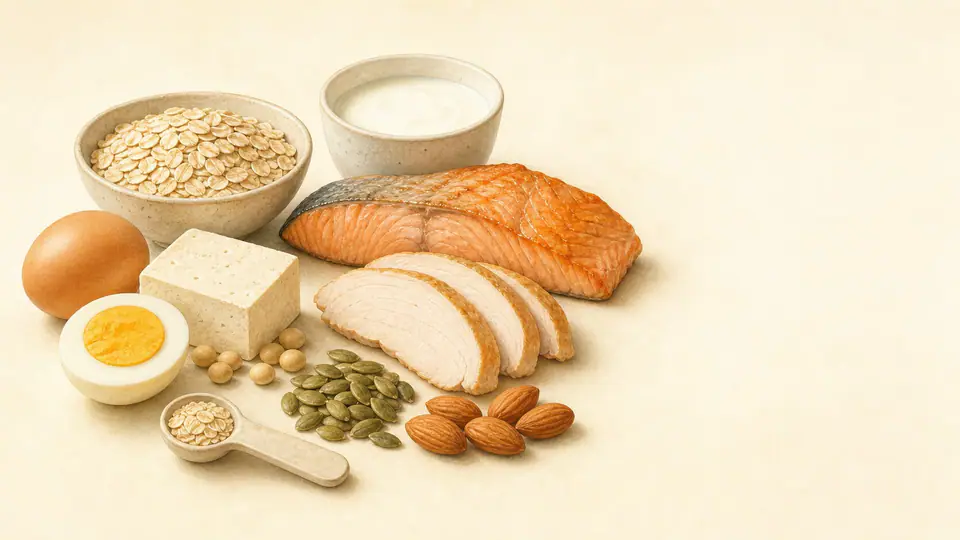
When you can't sleep and feel down, how much can tryptophan help?
When I have trouble sleeping and feel depressed, will taking tryptophan help by increasing serotonin and melatonin? Is it safe to take with antidepressants?
In short, while tryptophan is indeed a building block for serotonin and melatonin, consuming more of that building block does not necessarily increase hormone levels in the brain. Meta-analyses on sleep have only shown some signals, and using it with antidepressants can actually be dangerous.
What kind of raw material is tryptophan?
Tryptophan is an essential amino acid that our bodies cannot produce on their own. It is a basic building block of proteins and the starting material for the serotonin, melatonin, and kynurenine pathways. In other words, it is a raw material with multiple roles in the body as a precursor for protein synthesis and various signaling substances. While it begins as a nutrient that must be consumed through food, the context changes when it is taken as a supplement.
Why expectations are tied to sleep and mood
Serotonin is a well-known neurotransmitter for mood regulation, and melatonin is involved in the sleep-wake cycle. The fact that tryptophan is a building block for both is intuitively appealing. It is easy to infer that a lack of these materials causes insomnia or low mood. However, the fact that tryptophan is a precursor to serotonin and melatonin does not mean that a deficiency in tryptophan is the cause of depression or insomnia. This is because conversion within the body is not a simple 1:1 supply.
The path to the brain is a competition
An increase in tryptophan in the blood does not mean it all enters the brain. Tryptophan competes with other large neutral amino acids for transporters to reach the brain. Therefore, it is difficult to predict brain serotonin concentrations based on intake alone. Proteins in food contain competing amino acids, creating a relatively stable competitive environment, but single supplements provide a relatively large amount all at once. This means that even with the same raw material, the method of exposure differs.
Differences in product form: Tryptophan in food vs. single supplements
Tryptophan in food, single gram-unit supplements, and 5-HTP are not the same form of exposure. This distinction is the first thing to check when choosing a product. In protein-rich foods, it enters slowly along with competing amino acids, but supplements act in a concentrated form. Thus, unlike food, single supplements can cause gram-unit exposure and lead to drowsiness, nausea, or dizziness. While expectations may be placed on serotonin and melatonin, the way the body actually processes them is more complex.
| Category | Tryptophan in food | Single supplement |
|---|---|---|
| Accompanying components | Together with competing amino acids | Large amount of a single ingredient at once |
| Exposure characteristics | Relatively gradual | Concentrated exposure in g units |
| Reactions to watch for | Discomfort at the level of general food | Possibility of drowsiness, nausea, or dizziness |
What do sleep studies actually show?
A sleep meta-analysis reviewed 18 studies, but quantitative synthesis was performed on only 4 studies. There was a signal of reduced wake-after-sleep onset at doses of 1 g or more, but other sleep indicators did not improve. In other words, while there was some trend toward reducing the time spent awake after falling asleep, there was no broad improvement in sleep latency or total sleep time. It must be noted that the number of studies and consistency are limited. So, what should we look at? It is important to distinguish between wake-after-sleep onset, sleep latency, and total sleep time.
Evidence for treating depression is more limited
Evidence for treating depression is limited and is not a basis for replacing or arbitrarily reducing prescribed antidepressants. The mechanism of serotonin precursors and the results of depression treatment are not on the same level. While it is common to infer that an effect will exist because there is a mechanism, clinical results are more narrow. There is no evidence to justify reducing antidepressants on your own and switching to tryptophan just because your mood feels low.
Risk increases when used with antidepressants
When used in combination with serotonergic drugs, there is an increased risk of serotonin syndrome, which can be accompanied by agitation, sweating, diarrhea, tremors, muscle rigidity, fever, and confusion. It is essential to check if you are using medications that affect serotonin, such as SSRIs, SNRIs, MAOIs, triptans, tramadol, or dextromethorphan. While the term 'serotonin precursor' may sound like a natural and safe nutrient, it can lead to an emergency situation when combined with serotonin-class medications.
Drowsiness, driving, and other safety signals
Since drowsiness may occur, check your reaction before driving or operating machinery, and it is recommended not to use it with alcohol or sedatives. Safety regarding pregnancy, breastfeeding, liver or kidney disease, and long-term high-dose use in children must be confirmed with a healthcare provider. If high fever, severe agitation, muscle rigidity, convulsions, changes in consciousness, or thoughts of self-harm or suicide occur, stop taking the supplement and seek help from 119 or an emergency room. Adverse reactions are rare but cannot be ignored.
L-tryptophan, 5-HTP, and melatonin are different ingredients
L-tryptophan and 5-HTP have different metabolic stages and products, so their dosages are not interchangeable. 5-HTP is a metabolic intermediate in the stage following tryptophan, and melatonin is a hormone produced through the conversion of tryptophan. Although they share similar narratives, they act at different points. When checking product labels, you must first verify whether it is L-tryptophan or 5-HTP, and what the dose per serving and total daily amount are.
Lessons on ingredient quality from the 1989 incident
The 1989 outbreak of eosinophilia-myalgia syndrome was linked to contaminated L-tryptophan from a specific manufacturer, highlighting the importance of ingredient purity and manufacturing quality. This incident does not negate the necessity of tryptophan itself, but shows that how an ingredient is manufactured can directly impact safety. When choosing a supplement, you should examine the manufacturing quality control system as well as the ingredient name.
Realistic criteria to check today
In other words, the key is to verify the exact ingredients, dosage, concomitant medications, and the cause of insomnia, rather than simply relying on the explanation that tryptophan is a serotonin precursor, and to avoid expanding the improvement of limited sleep indicators into a treatment for depression or chronic insomnia. When choosing a product, check whether it is L-tryptophan or 5-HTP, what the amount per dose and total daily amount are, whether you are using medications that affect serotonin, and whether there are separate evaluation signals such as the duration of insomnia, snoring, apnea, mania, or suicidal ideation. This raw material is an ingredient, not a switch that directly fixes mood and sleep.
References
- NCBI Bookshelf: tryptophan as the precursor of serotonin.
- Tryptophan supplementation and sleep quality: systematic review and meta-analysis.
- Side effects of amino acid supplements.
This text explains the origin of the raw materials, the scope of research, and precautions before consumption. As this cannot replace individual diagnosis or treatment, please consult a medical professional if you are taking medication or if symptoms persist. If sudden and severe symptoms such as difficulty breathing or decreased consciousness occur after consumption, seek help from 119 or the emergency room.

Medical Staff Review
Director Choi Yeon-seung
Chief Director of Baekrokdam Korean Medicine ClinicTryptophan Dictionary Entry, reviewed the safety of expressions and the scope of verification before administration.
Review scope: Ingredient origin, human studies, concomitant medications, safety of intake · Last reviewed 2026-08-17
- Graduated from Kyung Hee University College of Korean Medicine
- Providing Korean medicine treatment since 2010
- Consultations for Gongjindan, Gyeongokgo, Nokyong (Deer Antler) restorative medicine, and customized restorative herbal medicine