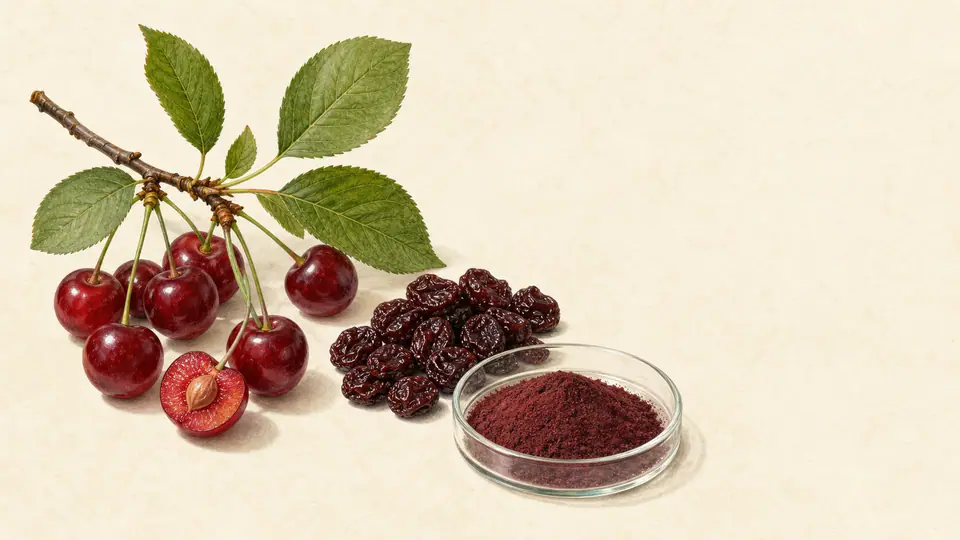
I have trouble sleeping; can I try drinking tart cherry concentrate?
I have trouble sleeping; can I try drinking tart cherry concentrate? To put it briefly, even though some studies exist, it is difficult to apply those results directly to the specific product you have in your hand. This is because juices, concentrates, powders, and capsules differ in sugar and polyphenol content, as well as the serving size per dose.
Tart cherries are a strongly acidic type of cherry, Prunus cerasus, and are also called sour cherries. Montmorency is a representative variety name, not a synonym for all tart cherries. What should be looked at first here is the product form rather than the name of the raw ingredient. In other words, you must verify if what you are consuming is the same as what was used in the research.
Common Questions
Questions about tart cherries usually start from three directions: people with sleep difficulties, those wanting to aid post-exercise recovery, and those concerned about uric acid or gout. While these three expectations all stem from the same red fruit, the subjects and formulations addressed in the research differ. A 2025 systematic review on sleep reported improvements in sleep indicators in some of the 7 intervention studies, but concluded that the evidence is limited and heterogeneous due to significant differences in dosage, duration, and participants. A 2019 review regarding uric acid and gout stated that an effective meta-analysis could not be performed because there were too few studies and the methods varied. A 2023 meta-analysis of 21 randomized trials showed no significant changes in blood pressure, heart rate, high-sensitivity CRP, or IL-6, and the certainty of changes in some inflammatory markers was also limited. As such, while expectations are widespread, evidence based on human subjects remains limited.
Identity and Name of the Ingredient
Tart cherries have the scientific name Prunus cerasus, and USDA data also categorizes sour or tart cherries under this scientific name. Montmorency is merely a representative variety name and is not a name that replaces all tart cherries. The first distinction is to not read the variety name on a product label as having the same meaning as tart cherries in general.
Reasons for the Expectations
Expectations such as sleep, exercise recovery, and uric acid management are attached to tart cherries. However, widespread expectations do not mean widespread evidence. The sleep review showed significant differences in dosage, duration, and participants by study, and the uric acid/gout review could not perform a meta-analysis due to a lack of studies and differing methods. One should not conclude the overall effect of the ingredient beyond the scope of evidence based on humans.
Different product forms lead to different results
Tart cherry is sold in various forms, such as fresh fruit, juice, concentrate, powder, and capsules. Because these products all differ in sugar and polyphenol content and serving size per dose, research results cannot be directly converted from one to another. Since there are significant differences in sugar and calories between juices and concentrates, you must check the nutrition facts and intake amount if you have diabetes or are managing blood glucose levels. For powders or capsules, you must also separately verify if they are the same formulation used in the research.
The relationship between prescription medications and supplements
Tart cherry foods do not replace gout medication or treatment for sleep disorders. Before taking them with sleep-related products or medications, you should first consider how to identify the cause of your insomnia. If the cause of insomnia is stress, the sleep environment, or an underlying medical condition, tart cherry juice will not resolve that cause. If you are taking medication for diabetes or gout, you must consider the sugar content of the juice and the risk of replacing your treatment. If you have a cherry allergy, take many medications, or are pregnant or breastfeeding, consult a professional before using concentrated supplements. Do not self-treat gout attacks, persistent insomnia, or severe allergic symptoms with food; seek medical evaluation.
Individual circumstances and safety signals
As important as efficacy are the safety signals. Because there are large differences in sugar and calories between juices and concentrates, those managing blood glucose should check the nutrition facts first. Those taking multiple medications or who are pregnant or breastfeeding should consult a professional, and those with a cherry allergy should avoid them. Gout attacks, persistent insomnia, or severe allergic symptoms should not be self-treated with food; medical evaluation is required.
The Gap Between Human Evidence and Expectations
While there is research on tart cherries, it is difficult to link those results directly to an individual's expectations. The 2025 sleep review reported improvements in sleep indicators in some of 7 intervention studies, but stated that the evidence is limited and heterogeneous due to differences in dosage, duration, and participants. The 2019 uric acid/gout review had so few studies and such differing methods that a meta-analysis could not even be performed. A 2023 meta-analysis of 21 randomized trials showed no significant changes in blood pressure, heart rate, high-sensitivity CRP, or IL-6. The certainty of changes in some inflammatory markers was also limited. This does not mean tart cherries have no effect. Rather, it means the evidence to date is not sufficient to support these expectations.
Differences from similar raw materials
When understanding tart cherries, one must distinguish between sweet cherries and tart cherries, fresh fruit and processed products, and the Montmorency variety versus tart cherries in general. Montmorency is just a representative variety of tart cherry, not a representative of all tart cherries. Juices, concentrates, powders, and capsules also differ in sugar and polyphenol content and serving sizes. It is important not to apply research results based solely on the same name.
Criteria to Check Today
So, what should be checked first today?
Evaluating tart cherry begins not with expectations regarding sleep or uric acid, but by first confirming which formulation is being taken, in what amount, and whether it is replacing existing treatments. For juices, check the sugar and calories. For capsules or powders, check the serving size per dose and the difference from the formulation used in studies. If sleep or gout symptoms persist, seek medical evaluation rather than increasing the intake of the ingredient. Tart cherry is an ingredient that started as a sour fruit and ended up in juice bottles and capsules. Its existence alone does not guarantee a person's sleep or the treatment of gout.
References
- USDA commodity table: sour (tart) cherry, Prunus cerasus.
- Tart cherry and sleep quality: systematic review.
- Cherries, uric acid and gout: systematic review.
- Tart cherry, blood pressure and inflammation: GRADE meta-analysis.
- Tart cherry supplement composition and reporting review.
This text explains the origin of the raw materials, the scope of research, and precautions before consumption. As this cannot replace individual diagnosis or treatment, please consult a medical professional if you are taking medication or if symptoms persist. If sudden and severe symptoms such as difficulty breathing or decreased consciousness occur after consumption, seek help from 119 or the emergency room.

Medical Staff Review
Director Choi Yeon-seung
Chief Director of Baekrokdam Korean Medicine ClinicTart Cherry Glossary Entry, reviewed the safety of expressions and the scope of verification before administration.
Review scope: Ingredient origin, human subject research, concomitant medications, intake safety · Last reviewed 2026-08-16
- Graduated from Kyung Hee University College of Korean Medicine
- Providing Korean medicine treatment since 2010
- Consultations for Gongjindan, Gyeongokgo, Nokyong (Deer Antler) restorative medicine, and customized restorative herbal medicine