Misunderstandings caused by the name: Polyamines inside the cell
If I take spermidine, which is said to be good for autophagy and longevity, will it slow down aging and improve memory? Is it the same as eating wheat germ?
The short answer is that it cannot be concluded yet. More importantly, what is actually being consumed and in what amount varies greatly under the name 'spermidine'.
An unfamiliar name, but polyamines are common in cells and on the dining table
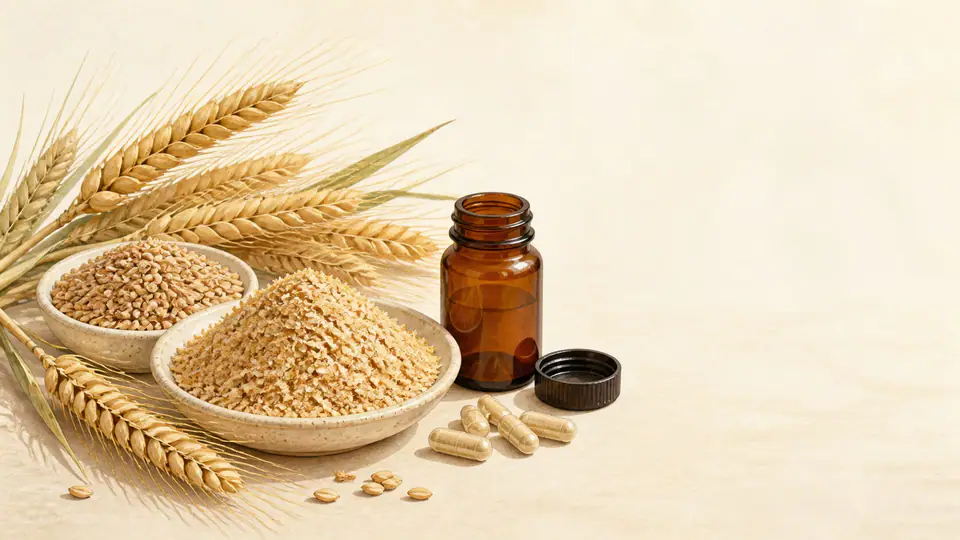
Spermidine is a polyamine present in human cells, gut microbiota, wheat germ, legumes, mushrooms, and fermented foods. Although it was named based on the history of its first isolation, it is not a substance found only in specific body fluids. It is a common substance involved in cell growth and homeostasis. Therefore, unlike the unfamiliar name first encountered in supplement capsules, it is a substance already established in our bodies and food.
Where the stories of autophagy and longevity began
Spermidine is highly anticipated because it is linked to autophagy mechanisms and research on extending animal lifespans. However, lifespan extension observed in animals does not directly prove the delay of aging in humans. Similarly, the activation of autophagy seen in cell experiments or animal models does not guarantee the prevention of dementia or improvement in memory. There is always a gap between the mechanism and clinical results.
Foods, wheat germ extracts, and high-purity ingredients are not the same exposure
Although the same term 'spermidine' is used, actual exposure is divided into three categories.
| Category | What it means |
|---|---|
| Spermidine in food | Natural state found in wheat germ, legumes, mushrooms, fermented foods, etc. |
| Wheat germ extract supplements | Low-dose extract form derived from wheat germ |
| High-purity single spermidine | Concentrated and purified single ingredient |
The amount of spermidine in food should not be compared in mg to the extract weight on a supplement label. The amount of spermidine in a plate of food and the extract weight in one capsule are entirely different things. You must also check whether the label refers to the mg of spermidine itself or the total weight of the raw extract.
What observational studies tell us and what they do not
In an observational study tracking 829 people, the group with high dietary spermidine intake had a lower mortality rate. However, this is not a randomized trial that proves causality. The lower mortality rate in the group that ate meals rich in spermidine is an observational result where it is difficult to separate the influence of overall diet and lifestyle habits. In other words, the possibility cannot be ruled out that the overall dietary pattern, rather than spermidine itself, is linked to health.
Randomized human trials did not show memory improvement
In a trial where 100 elderly individuals with subjective cognitive decline took 0.9 mg of wheat germ-derived spermidine or a placebo for 12 months, the primary memory outcomes and key secondary outcomes did not improve. The results of the inflammation and verbal memory exploration in the same trial are for hypothesis generation and are not evidence to advertise memory improvement efficacy. A small-scale exploratory study using high-purity 40 mg examined short-term safety and blood polyamine levels, but did not prove longevity or cognitive effects.
In other words, randomized trials in humans to date have not provided direct evidence that spermidine significantly improves memory.
Questions to consider when taking together or administering
When considering spermidine products alongside other supplements or medications, first check these three things:
- Whether it is wheat germ/fermented food, wheat germ extract, or a high-purity single ingredient
- Whether the label indicates the mg of spermidine itself or the total weight of the raw extract
- Whether you are undergoing cancer treatment, immunosuppressive therapy, are pregnant, breastfeeding, or have wheat/gluten allergies or celiac disease
In particular, since polyamine metabolism is linked to cell proliferation, high-dose supplementation during cancer treatment should be discussed with the tumor treatment team and must not be used as a substitute for treatment.
Individual circumstances and safety signals
For wheat germ-derived products, those with wheat allergies or celiac disease must verify the raw materials and gluten management. Safety data for long-term, high-dose single ingredients in pregnant women, breastfeeding women, and children are insufficient. If persistent vomiting, severe abdominal pain, or jaundice occurs, stop taking the product and seek a medical evaluation; for difficulty breathing, facial swelling, or decreased consciousness, seek help from 119 or the emergency room.
How to View Differences from Similar Ingredients
The same standards are needed when comparing spermidine with other ingredients. Do not treat spermidine in food and wheat germ extract supplements as the same, and distinguish between low-dose wheat germ products and high-purity single ingredients. Additionally, do not confuse the longevity associations found in observational studies with the cognitive results of randomized trials. Autophagy biomarkers and clinical outcomes such as dementia or lifespan are issues of a different dimension.
Realistic criteria to check today
What then should you look for? Rather than terms like longevity or autophagy, the criteria for choosing this ingredient are to verify the actual spermidine content, raw materials, allergens, and randomized human trial results, and to avoid extending dietary associations and animal lifespan results to anti-aging treatments.
References
- Dietary spermidine and mortality: prospective cohort study.
- Spermidine supplementation and cognition: 12-month randomized trial.
- High-purity spermidine 40 mg: exploratory randomized safety trial.
This text explains the origin of the raw materials, the scope of research, and precautions before consumption. As this cannot replace individual diagnosis or treatment, please consult a medical professional if you are taking medication or if symptoms persist. If sudden and severe symptoms such as difficulty breathing or decreased consciousness occur after consumption, seek help from 119 or the emergency room.

Medical Staff Review
Director Choi Yeon-seung
Chief Director of Baekrokdam Korean Medicine ClinicSpermidine Dictionary Entry, reviewed the safety of expressions and the scope of verification before administration.
Review scope: Ingredient origin, human studies, concomitant medications, safety of intake · Last reviewed 2026-08-17
- Graduated from Kyung Hee University College of Korean Medicine
- Providing Korean medicine treatment since 2010
- Consultations for Gongjindan, Gyeongokgo, Nokyong (Deer Antler) restorative medicine, and customized restorative herbal medicine