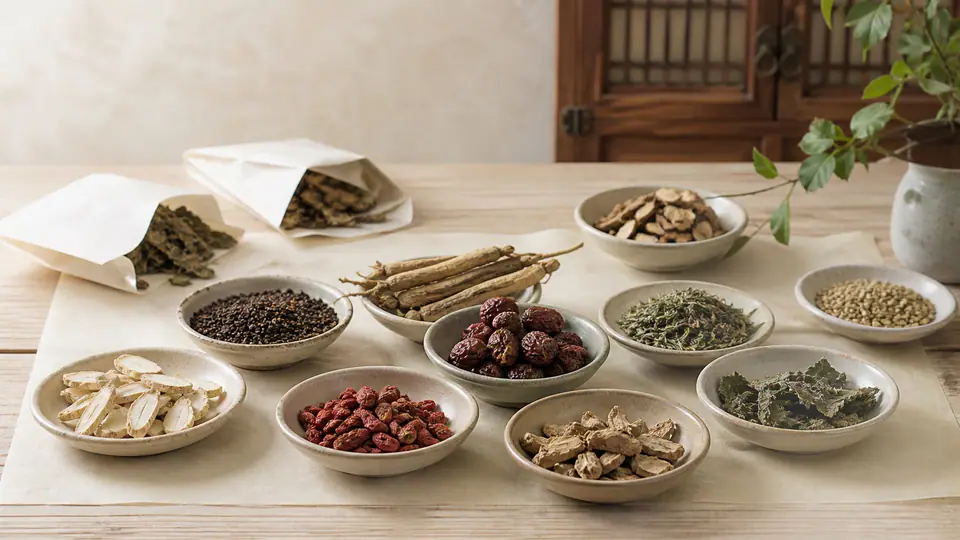
The Flower that Opens the Nose: Magnolia Flower (Shin-i-hwa) for Sinus Pain
The "Shennong Ben Cao Jing" lists Magnolia flower in the middle grade and records its effects such as "removing heat from the five viscera and treating emaciation of the body." Later, the "Myeong-ui Byeol-rok" noted its use for "warming the center, relieving cough and reversal, facial swelling and pain, nasal congestion, allergic rhinitis, and headaches." Through the "Jeung-ryu Bon-cho" and up to the present day, Magnolia flower has been passed down as a medicinal herb used for symptoms related to the "nose," particularly for the feeling of congestion and the resulting headaches. As the name suggests, this medicinal herb consists of the "flower buds of the Magnoliaceae family." While it is easily known as a fragrant flower, in herbal medicine, its fragrant dispersing power is more important for its ability to clear the nasal passages.
Many people view Magnolia flower simply as a "fragrant ornamental tree," but its role in Korean medicine is quite specific. It is used for conditions where the nose is blocked, and that blockage leads to pain in the forehead, cheeks, or general headaches, an area traditionally referred to as "Bi-yeon" (sinus congestion). The understanding that its fragrant and light nature rises to open the nose is not simply because "it smells good," but is aligned with the pharmacological interpretation that its dispersing energy relieves stagnation in the nasal region. Therefore, Magnolia flower is considered a medicinal herb that is most effective not only for nasal congestion but also when linked to headaches surrounding the nose.
However, this fragrant dispersing power is also the reason why caution is required. Because its power to open the nose is strong, it is important how much is used, who uses it, and within which prescription it is used. Nasal congestion in the early stages of a common cold (Sang-han) and chronic headaches caused by sinus congestion (Bi-yeon) are entirely different pathologies, and the prescriptions containing Magnolia flower differ for each. Below, we will examine step-by-step in what situations, in what combinations, and for what duration this medicinal herb is used.
Summary at a Glance
Magnolia flower (Shin-i-hwa) is a medicinal herb that uses the flower buds for medicinal purposes. The table below gathers only the core information needed to understand this herb in herbal medicine.
| Category | Content |
|---|---|
| Origin | Hanja Name: 辛夷花 / Scientific Name: (Unknown), The flower buds of the Magnoliaceae family are used medicinally. |
| Properties and Meridian Tropism | The properties are acrid (辛) and warm (溫), and it primarily acts on the Lung (肺) and Stomach (胃) meridians. |
| Representative Aliases | It is known by names such as Shin-i, Mok-pil-hwa, Du-gi, and Bang-jung-hwa. |
| Efficacy Recorded in Literature | The "Shennong Ben Cao Jing" records that it "removes heat from the five viscera and treats emaciation of the body," and the "Myeong-ui Byeol-rok" states it is used for warming the center, relieving cough and reversal, facial swelling and pain, nasal congestion, allergic rhinitis, and headaches. |
| Main Ingredients | Verification required. Please inquire during your consultation. |
| Combinations, Contraindications, and Precautions | As a medicinal herb with strong fragrant dispersing properties, it may not be compatible with restorative medicines intended to supplement Yang or Yin. Those who are pregnant, breastfeeding, children, or individuals with specific medical conditions must consult a Korean medicine doctor before prescription. |
Is this medicinal herb right for me?
Due to its fragrant and dispersing nature, Magnolia flower is used for nasal congestion and headaches, but because of this dispersing power, it is not suitable for everyone. Depending on your constitution or the nature of your symptoms, it may be appropriate, or it may conversely deplete your energy or cause irritation. Please check based on the following three criteria first.
- Generally suitable cases: It has been traditionally considered for cases where the nose is frequently blocked or there is excessive nasal discharge leading to a heavy head, especially when accompanied by a stifling headache around the forehead or eyes. It is also sometimes used in combination with other herbs when there is a tendency for nasal congestion and sneezing in the early stages of a cold.
- Cases requiring caution: Caution is needed for those whose faces redden easily, whose eyes are prone to congestion, or who have a red tongue and a tendency toward deficient body fluids, as the dispersing effect may become excessive. Additionally, those with a weak stomach, poor digestion, or those who are pregnant should decide whether to use it after consulting a Korean medicine doctor.
- Cases to avoid: It may not be suitable for those with clear deficiency heat (虛熱) due to Yin deficiency (陰虛), or when nasal symptoms present with a heat-like tendency. Furthermore, use should be avoided if you have an allergic reaction to Magnolia flower or a constitution sensitive to pollen or fragrant components.
Practical Q&A
We have gathered a few frequently asked questions about Magnolia flower from the clinic. The answers below are for general information, and suitability may vary depending on individual constitution or currently taken herbal or Western medicines. Please ensure you decide on specific use after consulting with a Korean medicine doctor.
What symptoms is Magnolia flower best suited for?
It has been traditionally used when the area around the nose feels stifled, leading to a heavy or stiff feeling in the forehead or facial area. It is often included in prescriptions specifically when nasal congestion or excessive secretions are accompanied by headaches. However, rather than taking it based solely on the symptom of "nasal congestion," it is important to first determine if you are in a state that "requires opening the nose" from a Korean medicine perspective.
Can I take Magnolia flower alone?
Magnolia flower is generally prescribed in combination with other medicinal herbs rather than alone. Because its fragrant and dispersing properties are strong, the traditional method of use is to pair it with compatible herbs tailored to the individual's constitution and symptom direction. We do not recommend taking individual herbs without consultation.
Can children or pregnant women use it?
In the case of pregnant women or children, extreme caution must be exercised due to the dispersing and stimulating nature of Magnolia flower. This requires verification. Please inquire during your consultation.
Is it okay to take it with Western medicine?
There is currently a lack of official evidence regarding potential interactions with antihistamines, nasal decongestants, or anticoagulants. If you are taking Western medicine, be sure to inform your Korean medicine doctor, and it is safer to adjust the timing and interval of administration.
It has a strong scent; is that scent the key to its efficacy?
The aromatic properties of Magnolia flower (Shin-i-hwa) are linked to its 'dispersing' action, which is understood to help relieve congestion around the nose. However, a stronger scent does not necessarily mean better effectiveness; in fact, an excessively strong scent may irritate the stomach in some individuals. Proper dosage and appropriate formulation are important.
What is the appropriate duration for intake?
Magnolia flower is a medicinal herb with strong dispersing power, so it is often used short-term according to the flow of symptoms rather than being taken continuously for a long period. Since the exact dosage and duration vary depending on an individual's condition, it is advisable to determine this through a consultation.
Relationship with Other Medicinal Herbs (Yakdae/Pairing)
Magnolia flower's utility becomes clearer when used with other medicinal herbs rather than alone. Especially in prescriptions dealing with nasal congestion and headaches, it is paired with herbs that complement or direct its dispersing properties. In traditional medicine, this pairing relationship is called "Yak-dae." Below are representative prescriptions where Magnolia flower forms a core combination.
-
Magnolia flower + Angelicae Dahuricae Radix (Baek-ji) This combination has been traditionally used to manage nasal congestion and headaches. Angelicae Dahuricae Radix is also a herb frequently used for nasal symptoms, and when used with Magnolia flower, their dispersing directions complement each other. This combination appears in literature such as the "Dongui Bogam" in relation to nasal pain (Bi-tong) and chronic sinusitis (Bi-yeon).
-
Magnolia flower + Scutellaria Baicalensis (Hwang-geum) + Angelicae Dahuricae Radix (Baek-ji), etc. — Biyeoncheongsim-tang: A prescription for managing Bi-yeon (chronic sinusitis, characterized by nasal headaches, purulent discharge, etc.), where Magnolia flower relieves nasal congestion and Scutellaria Baicalensis works to clear heat, each playing a different role. Our Baekrokdam Korean medicine clinic also provides information on this prescription on the page summarizing Bi-yeon related symptoms.
There is a lack of confirmed official evidence regarding combination contraindications. When using Magnolia flower with other medicinal herbs, the direction of symptoms, constitution, and currently taken herbal or Western medicines must be comprehensively considered. Therefore, please ensure you decide on specific combinations after consulting with a doctor of Korean medicine.
In what form is it consumed?
Magnolia flower is a medicinal herb where the fragrance is the primary active component. Therefore, the aromatic components can easily evaporate depending on the boiling method and time, which is an important consideration when choosing the form of administration. Below are the forms generally used in pharmacognosy and clinical practice.
- Tea While known as a form for lightly enjoying the scent, drinking Magnolia flower as a standalone tea is not common in clinical practice. It may be briefly steeped within a prescription for nasal congestion, but it is not recommended as a tea for long-term standalone consumption.
- Food It is not common to include Magnolia flower as a daily food ingredient. This is because the aromatic components change easily during the heating process, and there is a clear distinction between its pharmacognostic use and culinary use.
- Decoction (煎湯, herbal medicine decoction) This is the most traditional and commonly used form in clinical practice. Magnolia flower is decocted together with other herbs as part of a prescription to manage nasal congestion and headaches. However, since the aromatic components are sensitive to heat, a method of adding it later or boiling it for a shorter time (Hu-ha) may be considered depending on the prescription.
- Professional Prescription Korean medicine clinic prescriptions containing Magnolia flower vary based on an individual's constitution and symptom direction. A doctor of Korean medicine includes it in a prescription when dispersing power to clear the nose is needed, and it is often used with herbs such as Scutellaria Baicalensis, Angelicae Dahuricae Radix, and Saposhnikovia Root (Bang-pung) rather than alone. Please ensure you determine the specific prescription and intake period after consulting with a doctor of Korean medicine.
Interactions and Safety During Use
Due to its aromatic and dispersing properties, Magnolia flower is used for nasal congestion and headaches, but because of that dispersing power, it is not equally suitable for everyone. Particular caution is needed for those who are already depleted of energy, have internal dryness, or are pregnant or breastfeeding. Below are the primary contraindications and precautions generally identified in pharmacognosy and clinical practice.
- Pregnancy and Lactation The dispersing and nasal-clearing action of Magnolia flower may be inappropriate during pregnancy. If you are pregnant or breastfeeding, please decide whether to use it after consulting with a doctor of Korean medicine.
- Qi Deficiency (Gi-heo) or Yin Deficiency (Eum-heo) Constitution For those with insufficient energy or internal dryness, the dispersing power may actually aggravate symptoms. Particular caution is required if you tend to flush easily, have a dry mouth and throat, sweat excessively, or experience a racing heart.
- Nasal Mucosal Damage or Tendency for Bleeding If nasal symptoms are accompanied by severe inflammation or bleeding, dispersing herbs may further irritate the mucosa, so a professional evaluation is necessary.
- Sensitivity to Aromatic Components The primary medicinal effect of Magnolia flower depends on volatile aromatic components. Those with allergies to fragrances or pollen, or those with sensitive respiratory systems, must inform the provider before use.
- Concurrent Use with Western Medicine If you are taking antihistamines, nasal steroids, or blood-clotting related medications, the dispersing action of Korean medicine may overlap or conflict with the effects of your Western medication. Please consult with a Korean medicine doctor before deciding on concurrent use.
Shin-i-hwa (Magnolia flower) is a medicinal herb that is most effective when used for a short period and tailored to the appropriate constitution and symptoms. The belief that "it is safe because it is natural" does not apply to this herb; it is especially important for children, the elderly, and those with chronic diseases to confirm its use through a personal consultation. If you are unsure if it is suitable for your condition, please consult with Baekrokdam Korean medicine clinic.
If you experience these symptoms
If these symptoms appear
Shin-i-hwa is a medicinal herb with a strong fragrant and dispersing property. In appropriate cases, it helps relieve nasal congestion and headaches, but if used inappropriately for one's constitution or condition, it may instead deplete energy or further dry out the body's moisture. The following signs are known warnings that Shin-i-hwa may not be suitable for your body. If these symptoms appear, it is important to notify your attending Korean medicine doctor for adjustment rather than reducing the dose or stopping on your own.
- Tingling or burning sensations on the face or around the nose Excessive dispersing action may cause irritation to the mucous membranes or skin.
- Increased dryness in the mouth or throat, and severe thirst The drying and dispersing properties of Shin-i-hwa may act to further deplete moisture from the body.
- Worsening of dizziness or headaches For those who are already deficient in energy, herbs with strong dispersing properties can aggravate symptoms.
- Heart palpitations or chest tightness These are signs that may appear when the balance of energy and moisture is disrupted.
- Abdominal discomfort or diarrhea It may irritate the gastrointestinal tract and disrupt digestive function.
If symptoms are mild, stop taking the herb and consult your attending Korean medicine doctor. However, if systemic reactions occur, such as difficulty breathing, severe chest pain, clouded consciousness, or the rapid spread of red spots and swelling across the body, an allergic reaction or serious adverse reaction may be suspected. In such cases, please visit an emergency medical institution immediately.
Differences from other restorative medicines
Shin-i-hwa is closer to a "herb used for dispersing" rather than a "restorative tonic (Boyak)." Its action differs from restorative tonics that replenish deficient energy or nutrients in the body. If nasal congestion or headaches improve by releasing "blocked energy," Shin-i-hwa may be appropriate; however, if the symptoms are fundamentally caused by a deficiency in energy or blood, a restorative tonic should be considered first.
Representative restorative tonics such as Gongjin-dan or Gyeongok-go are prescriptions designed to replenish vital energy (Jeong-gi) and strengthen the body's foundation over the long term. In contrast, Shin-i-hwa is used to temporarily release blocked energy in the nose and head, characterized by short-term and localized dispersing action. It is difficult to compare the two simply by the standard of being a "good medicine." The key is whether the cause of the symptoms is "blockage" or "deficiency," and whether the current state of the body is sufficient to handle the dispersing action.
Therefore, if nasal congestion or headaches recur, it is advisable to consult a Korean medicine doctor to determine if this is simply due to blocked energy or if it is appearing from a deficient state that requires a restorative tonic. Using it only after confirming the appropriate direction will prevent the symptoms from worsening.
References
- Shin-i-hwa Evidence Material 1: Supporting data from data.go.kr.
- Shin-i-hwa Evidence Material 2: Korea Institute of Korean Medicine official data.
- Shin-i-hwa Evidence Material 3: Crude drug data from the National Institute of Food and Drug Safety Evaluation.
If you would like to check if this medicinal herb is right for you or which prescription it should be used with, please leave a medical inquiry. For those who find it difficult to visit the clinic, non-face-to-face consultations are available; we will provide guidance after first reviewing your current condition and current medications.

Medical Staff Review
Director Choi Yeon-seung
Chief Director of Baekrokdam Korean Medicine ClinicShin-i-hwa Dictionary Entry, reviewed the safety of expressions and the scope of verification before administration.
Review Scope: Clinical Accuracy, Pharmacology, Contraindications, Combinations, QA · Last Reviewed 2026-08-16
- Graduated from Kyung Hee University College of Korean Medicine
- Providing Korean medicine treatment since 2010
- Consultations for Gongjindan, Gyeongokgo, Nokyong (Deer Antler) restorative medicine, and customized restorative herbal medicine