I go to the bathroom often at night; would saw palmetto help?
"I wake up frequently at night to use the bathroom; should I try taking saw palmetto?"
In short, based on the most reliable review results to date, the use of saw palmetto alone appears to make little to no difference in urinary symptoms associated with benign prostatic hyperplasia. Therefore, it is not appropriate to start with a supplement without first identifying the cause of the symptoms.
Due to the familiar name 'prostate supplement,' this plant extract is often the first choice for many men. However, there is a significant gap between the familiarity of the name and the actual research evidence. By exploring that gap, it becomes clear what saw palmetto is, in what forms it has been studied, and what questions should be asked first.
The identity of this ingredient: plant name and extracts
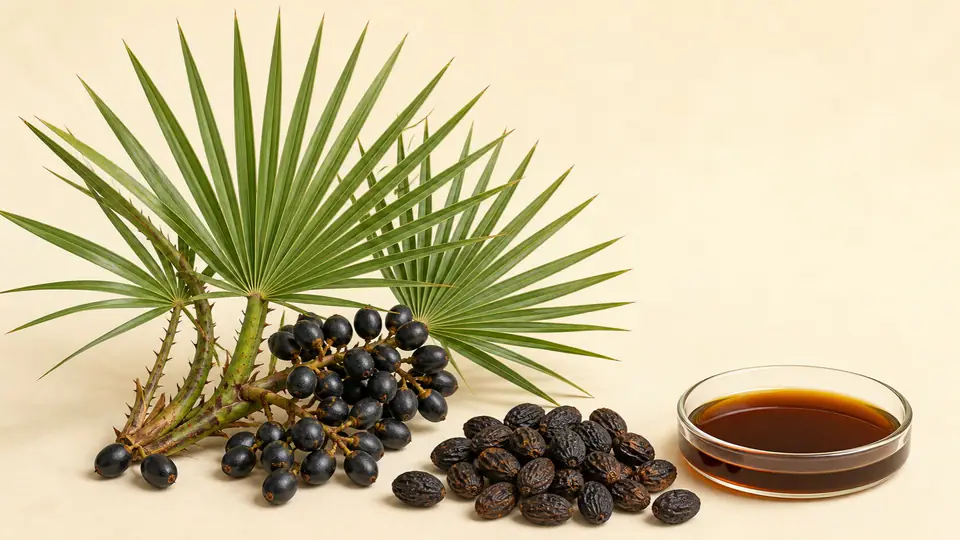
Saw palmetto is the name Serenoa repensof a plant in the palm family. What is used as a supplement is primarily an extract made from the berries of this plant. The subjects of research are also usually these specific extracts.
The important point here is that the single name 'saw palmetto' can lump together several different types of products. It is difficult to group them under the same evidence depending on whether it is a single extract, a complex product mixing several plants, or the method used for extraction. For example, in a review that separated hexane-extracted products from those using other methods, no difference in effectiveness for benign prostatic hyperplasia symptoms was found; however, this means that different products were all ineffective, not that they all work in the same way.
Therefore, just because a product label says 'saw palmetto,' you cannot conclude that it is the same substance used in the research.
Why are there high expectations for this ingredient?
Saw palmetto is known as a supplement that promotes both urinary symptoms and prostate health. However, a familiar association does not necessarily translate to effectiveness in humans. Increased expectations do not mean that the evidence has increased accordingly.
The NCCIH, under the U.S. National Institutes of Health (NIH), concludes that using saw palmetto alone is likely not helpful for urinary symptoms associated with benign prostatic hyperplasia. A 2023 Cochrane review of 27 studies also assessed that saw palmetto alone made little to no difference in short-term or long-term urinary symptoms and quality of life. In an NIH-funded randomized trial that incrementally increased doses from a standard amount, it did not reduce lower urinary tract symptoms more than a placebo.
These results point in the same direction: the effects were not as great as expected.
Differences in product form: berries, extracts, single-ingredient products, complex products
Raw saw palmetto berries, standardized extracts, single-ingredient products, and complex products mixing various plants all coexist on the market. While they share the same name, they are different things.
| Category | Why caution is needed |
|---|---|
| Saw palmetto berries vs. standardized extracts | Research generally focuses on specific extracts. The same evidence cannot be applied to raw materials or simple powders. |
| Single Saw Palmetto vs. Complex Products | In complex products, it is difficult to isolate the effects of other botanical ingredients from Saw Palmetto. |
| Urinary Symptom Scores vs. Prostate Size and Cancer Screening | A reduction in symptoms does not mean the condition of the prostate has changed. PSA tests and prostate cancer evaluations are separate matters. |
The reason for reviewing the table is simple: if you choose a product based solely on the name 'Saw Palmetto,' you may purchase something entirely different from what was reviewed in the research.
Urinary symptoms have more than one cause
Lower urinary tract symptoms, such as nocturia or a weak urine stream, have various causes beyond benign prostatic hyperplasia. A single plant extract cannot be used to determine the cause. A medical evaluation is necessary to determine if it is benign prostatic hyperplasia, another medical condition, or related to lifestyle habits.
In particular, if you have symptoms such as hematuria (blood in urine), inability to urinate, fever, or pain, you must seek medical evaluation first. These signals are not issues to be managed with simple supplements.
When taking with prescription medications or other supplements
While Saw Palmetto itself has been reported to be generally well-tolerated in research, this does not guarantee safety when used with other medications or supplements. If you are taking prescription medication, you should check for potential interactions with herbal products with your medical provider or pharmacist.
Additionally, if you are already taking prescription prostate medication or other complex supplements, you should first consider whether adding Saw Palmetto is meaningful. Overlapping multiple ingredients makes it more difficult to distinguish which components and conditions need to be monitored.
Safety: What is known and unknown
Research indicates that Saw Palmetto is generally well-tolerated, and adverse reactions such as gastrointestinal symptoms, dizziness, and headaches have been reported as rare and mild. While it does not appear to significantly alter PSA levels, this does not mean it can replace prostate screenings or prostate cancer evaluations.
As a rule, it should not be used during pregnancy or breastfeeding as it may not be safe.
Less evidence for other uses
Saw Palmetto is sometimes used for male pattern baldness, chronic prostatitis, or pelvic pain in addition to benign prostatic hyperplasia. However, there is currently insufficient evidence to reach a conclusion regarding these uses. In other words, it cannot be definitively stated that it is either ineffective or effective.
How to view differences with similar ingredients
When choosing Saw Palmetto, it is common to compare it with other prostate-related ingredients. The necessary comparison here remains within the scope of verified evidence. The key points are the difference between Saw Palmetto berries and standardized extracts, the difference between single Saw Palmetto and complex products, and the difference between urinary symptom scores and prostate size or cancer screening.
In other words, before choosing a product, you must first distinguish whether you are comparing the ingredients themselves or comparing symptom indicators with disease evaluations.
Criteria to Check Today
If you are considering Saw Palmetto, first check the following:
- Whether you have received an evaluation of the cause of your urinary symptoms and a prostate evaluation
- Whether you are taking prescription prostate medication or other complex supplements
- Whether you have symptoms that require prompt medical evaluation, such as hematuria, inability to urinate, fever, or pain
- Whether the product is a single saw palmetto extract or a complex product
- Whether that extract is in a form that has actually been studied
The final criteria when considering saw palmetto are to first verify the cause of symptoms, signs that medical evaluation is necessary, whether it is a single or complex product, and whether it is an extract that has actually been studied before choosing a product.
References
- NCCIH Saw Palmetto.
- Serenoa repens for lower urinary tract symptoms due to benign prostatic enlargement: Cochrane review.
- Effect of increasing doses of saw palmetto extract on lower urinary tract symptoms: randomized trial.
This text explains the origin of the raw materials, the scope of research, and precautions before consumption. As this cannot replace individual diagnosis or treatment, please consult a medical professional if you are taking medication or if symptoms persist. If sudden and severe symptoms such as difficulty breathing or decreased consciousness occur after consumption, seek help from 119 or the emergency room.

Medical Staff Review
Director Choi Yeon-seung
Chief Director of Baekrokdam Korean Medicine ClinicSaw Palmetto Glossary, reviewed the safety of expressions and the scope of verification before administration.
Review scope: Ingredient origin, human subject research, concomitant medications, intake safety · Last reviewed 2026-08-16
- Graduated from Kyung Hee University College of Korean Medicine
- Providing Korean medicine treatment since 2010
- Consultations for Gongjindan, Gyeongokgo, Nokyong (Deer Antler) restorative medicine, and customized restorative herbal medicine