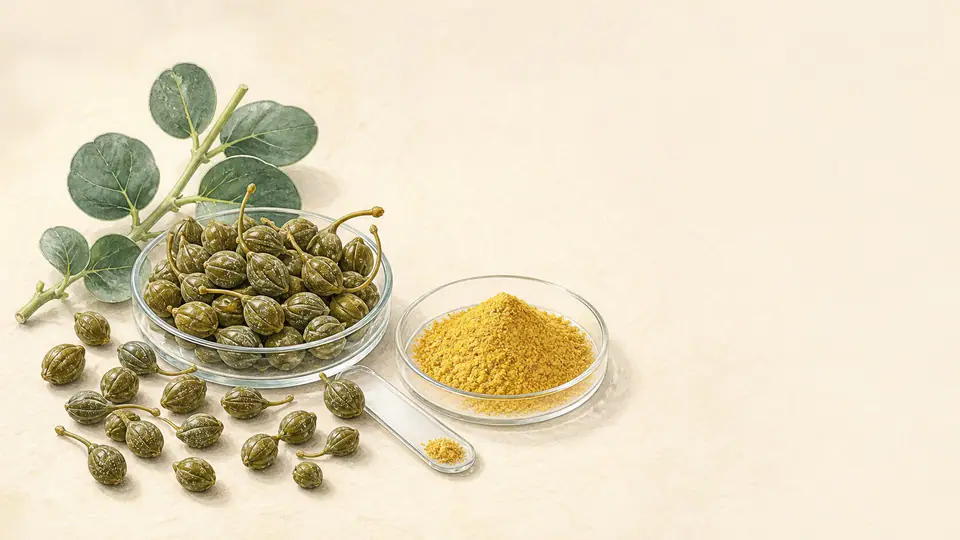
Quercetin: From flavonols in fruits and vegetables to high-dose capsules
Can I take quercetin supplements for blood pressure or inflammation? In short, while small average changes in blood pressure have been reported, this cannot be expanded to a therapeutic effect; you must first check the form of intake and your own medication and kidney status.
Quercetin is a flavonol widely distributed in plants. However, this brief definition carries expectations regarding antioxidants, blood pressure, and inflammation. This is because under the name 'quercetin,' glycosides in food, isolated aglycones, and high-dose supplements exist in different forms.
Which quercetin are we talking about?
Quercetin is a flavonol found in fruits and vegetables. Various quercetin glycosides exist in food. In contrast, supplements often use isolated quercetin aglycones or high-dose formulations. Although they share the same name, the form in which they enter the body and the amount of exposure differ. Therefore, applying the image obtained from food research directly to high-dose products exceeds the boundaries of the evidence. If the names are the same, what should we distinguish first? Form and exposure.
Expectations raised by the term 'antioxidant'
Expectations of antioxidant and anti-inflammatory effects are attached to quercetin. However, the broad term 'antioxidant' alone cannot be used to generalize the prevention or treatment effects for individual diseases such as infections, cancer, or fatty liver. Chemical properties and clinical effects are not the same thing. This distinction is the first point of tension in the discussion of quercetin.
What did blood pressure research show?
A meta-analysis of 7 randomized controlled trials involving 587 people reported a small average decrease in systolic and diastolic blood pressure. However, researchers stated that further research is needed regarding clinical significance and application by subject. More importantly, the fact that blood pressure figures changed does not prove that it replaces hypertension treatment or prevents cardiovascular events. In other words, a slight movement in numbers is not evidence to replace or discontinue medication.
Food vs. supplements: same name, different forms and exposure
Quercetin in food and isolated supplements differ in form and exposure. The situation of consuming it through food should not be viewed as having the same risk as isolated supplements. This difference requires different interpretations for both safety and efficacy.
| Category | Quercetin in food | High-dose supplements |
|---|---|---|
| Form | Complex forms, such as glycosides | Single forms, such as isolated aglycones |
| Exposure | Part of food | Isolated high-dose ingredients |
| Application of Evidence | Images from food research cannot be directly applied to supplements | Separate intervention studies and safety data are required |
Who should I consult when taking this with prescription medication?
There have been reports that short-term, high-dose quercetin may affect the bioavailability of certain medications. Therefore, if you are taking prescription medication, it is necessary to consult a pharmacist or medical professional. The extent of the effect on specific medications must be verified based on the product and the drug; furthermore, changes in blood pressure levels do not mean that medication therapy can be replaced.
Why Kidney Condition is Important
For individuals with existing kidney damage, it is recommended not to take high-dose supplements arbitrarily, as concerns have been raised that they may increase the risk of kidney toxicity. While adverse reactions reported in human intervention studies were rare and generally mild, data on long-term, high-dose use are insufficient. Therefore, you should be more cautious if you are planning long-term, high-dose use.
Distinguishing Between Two Similar Concepts
When evaluating quercetin, three comparisons are helpful. First, the difference between quercetin glycosides in food and isolated aglycones. Second, the difference between antioxidant properties and clinical therapeutic effects. Third, the difference between average changes in blood pressure and the treatment of hypertension. These distinctions help prevent mixing different things under the same name.
Criteria to Check Today
If you are considering quercetin supplements, first check three things: whether it is through food intake or an isolated high-dose supplement, whether you are taking blood pressure medication or other prescription drugs, and whether you have existing kidney disease or are planning long-term high-dose use. Rather than the word 'antioxidant,' the realistic criteria for evaluating this ingredient are first verifying the difference between food and isolated components, the evidence for each target disease, drug interactions, kidney condition, and the gap in long-term data.
References
- PubChem: Quercetin.
- Quercetin and blood pressure: systematic review and meta-analysis.
- Safety aspects of quercetin as a dietary supplement.
This text explains the origin of the raw materials, the scope of research, and precautions before consumption. As this cannot replace individual diagnosis or treatment, please consult a medical professional if you are taking medication or if symptoms persist. If sudden and severe symptoms such as difficulty breathing or decreased consciousness occur after consumption, seek help from 119 or the emergency room.

Medical Staff Review
Director Choi Yeon-seung
Chief Director of Baekrokdam Korean Medicine ClinicQuercetin Glossary Entry, reviewed the safety of expressions and the scope of verification before administration.
Review scope: Ingredient origin, human subject research, concomitant medications, intake safety · Last reviewed 2026-08-16
- Graduated from Kyung Hee University College of Korean Medicine
- Providing Korean medicine treatment since 2010
- Consultations for Gongjindan, Gyeongokgo, Nokyong (Deer Antler) restorative medicine, and customized restorative herbal medicine