The Gap Between Seed-Filled Fruit and Capsules
Can I take pomegranate extract for women's health or blood pressure? Is it the same as pomegranate juice? In short, research on juice cannot be applied directly to extracts.
Depending on which part of the fruit is used and how concentrated it is, the composition of sugars and polyphenols in pomegranate extract varies, and the dosages and safety profiles used in research differ by product line. Therefore, it is difficult to determine efficacy or safety based solely on the name 'pomegranate'.
Where the Questions Begin: Women's Fruit, Antioxidants, and Blood Pressure
Due to its red flesh and small seeds, pomegranate is often called a 'women's fruit' or an 'antioxidant fruit'. While this image is strong, the image itself is not a clinical classification that proves effects such as alleviating menopausal symptoms, skin health, or breast health. Terms like 'femininity' and 'antioxidant' commonly seen in product descriptions only suggest the potential of the raw materials; they do not guarantee the prevention or treatment of specific diseases. So, where does this potential come from, and how solid is it?
Identity of the Raw Material: Selected Parts, Not the Whole Fruit
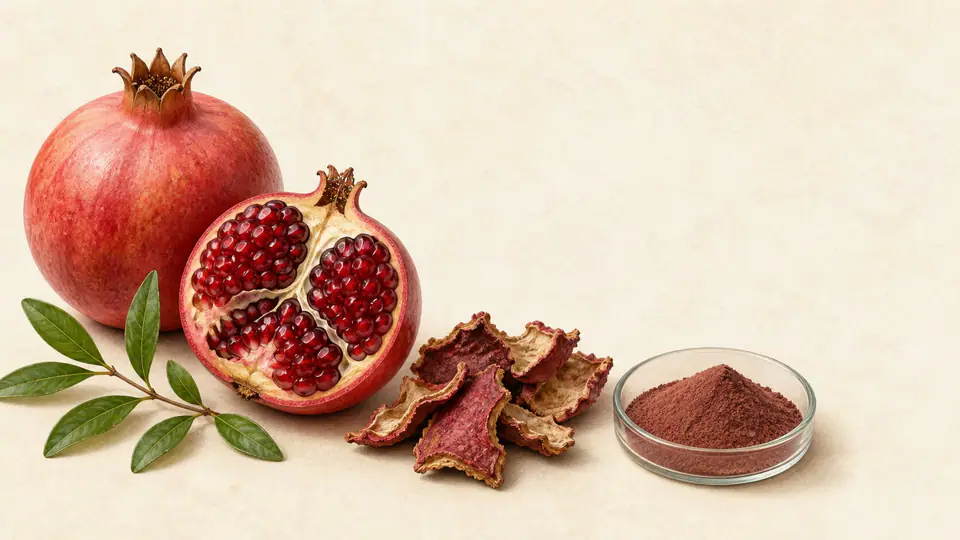
Pomegranate extract refers to Punica granatumthe entire group of products that concentrate components from the fruit of the pomegranate tree. Fresh fruit, juice, concentrates, peel extracts, and seed oils all fall under the name 'pomegranate', but their sugar and polyphenol compositions differ. Even from the same tree, juice squeezed from the pulp, capsules concentrating the peel, and oil pressed from the seeds are different raw materials. Therefore, when choosing a product, you should first look at specifically which part was processed and how, rather than the broad category of 'pomegranate extract'.
Why Expectations Exist: Most Research Began with Juice
The NCCIH, under the U.S. National Institutes of Health, emphasizes that a significant number of human studies on pomegranate used juice rather than supplements. In other words, much of the common claim that 'pomegranate is good for blood pressure' is based on results from people who drank juice, not those who took capsules. A 2024 meta-analysis of 22 randomized trials reported an average decrease in systolic blood pressure of approximately 7.9 mmHg and diastolic blood pressure of approximately 3.2 mmHg. However, heterogeneity between studies was high, reaching about 90% for each. This means it is likely that some studies showed significant changes while others showed almost none. While the NCCIH acknowledges the potential for blood pressure reduction, it concludes that more confirmatory research is needed and that no clear effect on lipids has been proven.
The situation is similar for blood glucose. A 2025 meta-analysis of 34 trials reported a small average decrease in fasting blood glucose, but HbA1c did not change significantly, and heterogeneity between studies was high. The important point here is that changes in surrogate markers for blood pressure or blood glucose do not directly prove the prevention of myocardial infarction, stroke, or diabetic complications. A slight movement in numbers does not provide a basis to replace medication.
Between Juice and Capsules: Same Name, Different Composition
In other words, there is insufficient evidence to directly apply the average signals from juice research to peel extract capsules or seed oils. Juice is a liquid containing pulp and some seeds, peel extract concentrates the polyphenols of the peel, and seed oil consists primarily of fat components. Different forms result in different types and amounts of ingredients, sugars, and safety profiles. In particular, peel extracts have different concentration levels than fresh fruit or juice, and the safety of consuming large amounts of roots, stems, or peels is not the same. Therefore, one cannot conclude that 'effects seen with juice' will 'appear identically with capsules'.
Differences Within the Body: The Same Product Varies by Person
Polyphenols such as ellagitannins are metabolized by gut microbiota. Even when taking the same product, the extent of exposure to metabolites can vary from person to person. This shows that research results may not be reproduced identically in every individual. Even if a small average change is observed, there may be almost no change or an unexpected reaction in a specific person.
When Taken with Medication: Monitor Levels and Do Not Reduce Medication
If you are taking blood pressure or diabetes medication, you should monitor changes in your levels when starting pomegranate products. However, you must not arbitrarily reduce or stop your medication. When choosing juice, you must also check the sugar content and the single dose. Extracts or capsules may contain less sugar than juice, but because the amount and part of the concentrated components differ, it cannot be concluded that they are 'stronger than juice.' It is necessary to know the type of medication you are taking and your target levels, and to consult with medical staff if there are any changes.
Individual Circumstances and Safety Signals: Gastrointestinal Issues, Allergies, Pregnancy, and Breastfeeding
Pomegranate juice is generally safe as a food, but extracts vary depending on the part of the fruit used and the concentration level. Gastrointestinal discomfort and allergic reactions have been reported; you must seek immediate evaluation if hives, difficulty breathing, or facial swelling occur. For those who are pregnant or breastfeeding, there is insufficient safety data regarding concentrated formulations other than juice. Therefore, the formulation and intake amount must be judged carefully during this period.
The Gap Between Human Evidence and Expectations
Research on pomegranate is currently at a stage that shows 'possibility.' Small average changes were observed in blood pressure and fasting blood glucose, but the connections were inconsistent and did not lead to disease outcomes. Images such as 'antioxidant' or 'women's fruit' are merely marketing and everyday language and do not guarantee the achievement of specific health goals. Lowering expectations is the first step toward establishing realistic selection criteria.
Summary of differences from similar ingredients
| Category | What is the difference? |
|---|---|
| Fresh fruit/juice vs. concentrated extract | Differences in sugar and polyphenol composition, research dosage, and safety |
| Fruit pulp/peel vs. seed oil | Differences in major component groups |
| Average change in blood pressure vs. hypertension treatment | Changes in surrogate markers do not prove disease prevention or medication replacement |
| Antioxidant components vs. claims of menopause/cancer prevention | The presence of a component does not automatically imply a clinical effect |
This table is not simply for comparing forms, but serves as a standard to dispel the misconception that 'if the name is the same, the effect is the same.'
Criteria to Check Today
When choosing pomegranate products, check the part of the fruit used, the formulation, sugar content, and standardized components before considering images of antioxidants or 'women's fruit.' It is important not to extrapolate juice research to all extracts and disease prevention. Specifically, you can check the following:
- Whether it is juice, concentrate, peel extract, or seed oil, and what the single dose, sugar content, and standardized components are
- What the actual goal and measurable indicators are among blood pressure, blood glucose, menopause, or skin
- Current medications such as blood pressure or diabetes medicine, pregnancy/breastfeeding status, and any allergies or gastrointestinal symptoms
When the answers to these questions become clear, pomegranate ceases to be just a fruit in an image and becomes a choice tailored to your own situation.
References
- NCCIH: Pomegranate—Usefulness and Safety.
- Pomegranate and blood pressure: 2024 systematic review.
- Pomegranate products and glycemic profile: meta-analysis.
- Pomegranate juice and blood pressure: systematic review.
This text explains the origin of the raw materials, the scope of research, and precautions before consumption. As this cannot replace individual diagnosis or treatment, please consult a medical professional if you are taking medication or if symptoms persist. If sudden and severe symptoms such as difficulty breathing or decreased consciousness occur after consumption, seek help from 119 or the emergency room.

Medical Staff Review
Director Choi Yeon-seung
Chief Director of Baekrokdam Korean Medicine ClinicPomegranate Extract Dictionary Entry, reviewed the safety of expressions and the scope of verification before administration.
Review scope: Ingredient origin, human studies, concomitant medications, safety of intake · Last reviewed 2026-08-17
- Graduated from Kyung Hee University College of Korean Medicine
- Providing Korean medicine treatment since 2010
- Consultations for Gongjindan, Gyeongokgo, Nokyong (Deer Antler) restorative medicine, and customized restorative herbal medicine