The look-alike of cholesterol from cell membranes
If cholesterol is high, can taking plant sterols alone replace medication?
The short answer is no. Plant sterols are ingredients that can contribute to lowering LDL cholesterol levels. However, they are not a basis for replacing or arbitrarily discontinuing medication. This is because improving numerical values is not the same as preventing myocardial infarction, stroke, or death.
These ingredients are sterols that naturally exist in plant cell membranes. Representative molecules include beta-sitosterol, campesterol, and stigmasterol. Because their structure resembles cholesterol, they competitively occupy absorption sites in the intestines. As a result, the body absorbs less cholesterol, which primarily affects LDL cholesterol. However, this single mechanism does not solve all cholesterol problems.
Where the questions begin: Between numerical values and clinical events
Many people seek plant sterol products when LDL levels come back high on a lipid panel. Is this a reasonable starting point? A decrease in LDL is certainly a meaningful change, and plant sterols can contribute to this change. However, improving LDL levels does not necessarily mean a reduction in myocardial infarction, stroke, or death. While there are many studies on LDL reduction, there is insufficient evidence from long-term randomized trials that this ingredient directly reduces cardiovascular events. There is still a gap between numerical values and actual events.
What it is: Sterols in plant cell membranes
Plant sterols are sterol molecules that make up plant cell membranes. They play a similar role to cholesterol in animals but are produced in plants. When understanding this ingredient, several forms must be distinguished. Hydrogenated plant stanols, ester forms combined with fatty acids, natural content in food, and fixed doses in fortified foods or capsules are all different. Keep in mind that exposure amounts and forms vary even under the same name.
Why there is expectation: Meta-analyses and regulatory interpretations
Expectations for plant sterols mainly stem from LDL reduction studies. A meta-analysis of 84 randomized trials reported that an average dose of 2.15 g/day lowered LDL by an average of approximately 8.8%. However, individual responses and product forms varied. The EFSA suggested a blood cholesterol reduction range of 7–10.5% with an intake of 1.5–2.4 g/day. This is not a treatment goal or an unconditional recommended dose. FDA health claims are predicated on the condition that it is part of a diet low in saturated fat and cholesterol, and they require the use of limited expressions such as 'may' or 'might'. In other words, they express possibility rather than a definitive declaration of efficacy.
Differences in product forms: Natural foods, fortified foods, capsules
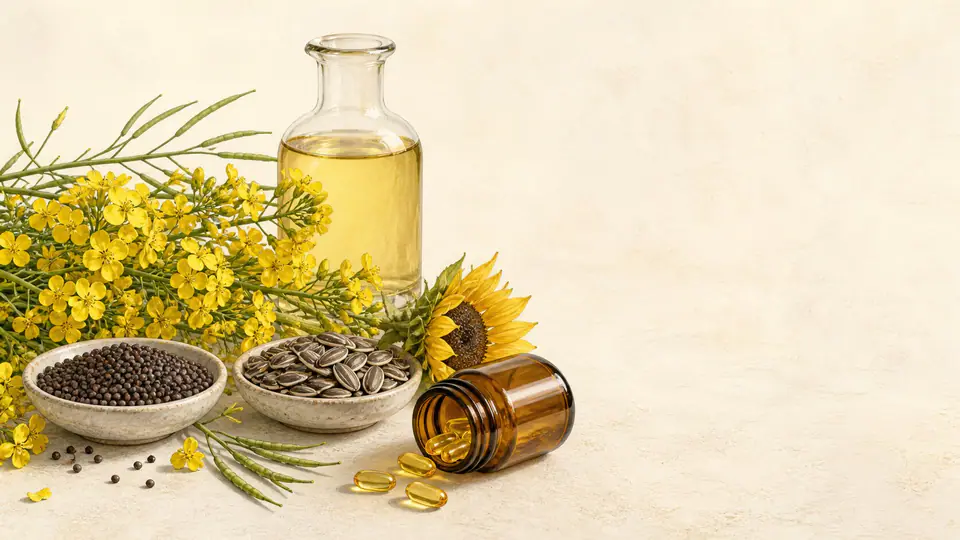
The most confusing point when encountering plant sterols is the form. They occur naturally in small amounts in nuts, seeds, and vegetable oils. The gram-unit exposure used in studies is often implemented through products such as fortified spreads, beverages, or capsules, making it difficult to compare directly with the consumption of natural foods. Additionally, while plant sterols and stanols are sometimes collectively called phytosterols, the way you read the grams on a label may differ depending on whether they are in free form or ester form, and which food matrix they are in. Since ester forms are broken down in the body to act, it is important to check the amount converted to free form.
Combination and treatment context: Why it cannot replace medication
If you are taking cholesterol medication while using plant sterols, you must not arbitrarily discontinue or replace the medication because of this ingredient. LDL response and overall cardiovascular risk should be evaluated with a healthcare provider. Since the competitive absorption mechanism works when this ingredient is taken with meals, it is worth checking whether to take the daily amount all at once or divide it across meals. You should first clarify what treatment you are currently receiving, such as statins or ezetimibe, and what your LDL goal is.
Individual circumstances and safety signals: Not the same ingredient for everyone
Although plant sterols are generally considered safe, they are not an ingredient that applies equally to everyone. People with sitosterolemia, a rare genetic disorder, should avoid plant sterol and stanol fortified products as they can worsen accumulation in the body. If there are unexplained early xanthomas, severe childhood hypercholesterolemia, hemolytic anemia, or thrombocytopenia, an evaluation for sitosterolemia takes priority over general supplementation. It is advisable not to consider long-term high-dose use, or use during pregnancy, lactation, or in infants and toddlers, as suitable for routine self-administration.
Similar Names, Different Things
Four comparisons can help in understanding plant sterols.
| Comparison | Key Point |
|---|---|
| Plant Sterols vs. Plant Stanols | Stanols are hydrogenated forms; while discussed in the same context, they differ in structure and properties. |
| Natural Foods vs. Fortified Foods/Capsules | Natural foods contain small amounts, whereas fortified products allow exposure in gram (g) units. |
| LDL Reduction vs. Reduction in Myocardial Infarction/Death | While LDL can be lowered, there is insufficient evidence for the reduction of long-term events. |
| General High Cholesterol vs. Sitosterolemia | The latter is a genetic disorder, and plant sterols may actually be harmful. |
Since the term 'phytosterols' encompasses both plant sterols and stanols, it can be difficult to know exactly what and how much you are consuming by looking at the product label alone. In that case, what should you look for? First, check whether the form listed on the label is the free form or the ester form, and if it is the ester form, determine the amount converted to the free form.
The Gap Between Human Evidence and Expectations
Plant sterols are ingredients that lower LDL by reducing cholesterol absorption in the intestines. This fact is consistently shown across various studies. However, a change in blood LDL levels is not the same as an actual reduction in cardiovascular events. While lowering LDL may be one pathway to reducing cardiovascular risk, there is still insufficient evidence from long-term randomized trials that plant sterols themselves directly reduce myocardial infarction, stroke, or death. In other words, this ingredient can be viewed as a supplementary tool for managing numerical values, but it should not be extrapolated as direct evidence of a preventive effect.
Criteria to Check Today
If you are considering plant sterols, first check these three things. First, what is the daily dose converted to the free form, and whether it is taken all at once or divided with meals. Second, your current LDL target, overall cardiovascular risk, and any treatments you are receiving, such as statins or ezetimibe. Third, whether you or your family have a history of sitosterolemia, unexplained pediatric high cholesterol, tendon xanthomas, or blood abnormalities.
The mere impression of being 'plant-based' is not enough. The starting point for using this ingredient correctly is to verify the daily amount converted to the free form, the context of meals, and current lipid therapy, and to avoid extrapolating LDL level improvement as direct evidence for the prevention of cardiovascular events.
References
- FDA: Authorized health claims for plant sterol/stanol esters.
- EFSA: Blood cholesterol reduction advice on phytosterols.
- Plant sterols dose-response meta-analysis of 84 trials.
- GeneReviews: Sitosterolemia.
This text explains the origin of the raw materials, the scope of research, and precautions before consumption. As this cannot replace individual diagnosis or treatment, please consult a medical professional if you are taking medication or if symptoms persist. If sudden and severe symptoms such as difficulty breathing or decreased consciousness occur after consumption, seek help from 119 or the emergency room.

Medical Staff Review
Director Choi Yeon-seung
Chief Director of Baekrokdam Korean Medicine ClinicPlant Sterols Dictionary Entry, reviewed the safety of expressions and the scope of verification before administration.
Review scope: Ingredient origin, human studies, concomitant medications, safety of intake · Last reviewed 2026-08-17
- Graduated from Kyung Hee University College of Korean Medicine
- Providing Korean medicine treatment since 2010
- Consultations for Gongjindan, Gyeongokgo, Nokyong (Deer Antler) restorative medicine, and customized restorative herbal medicine