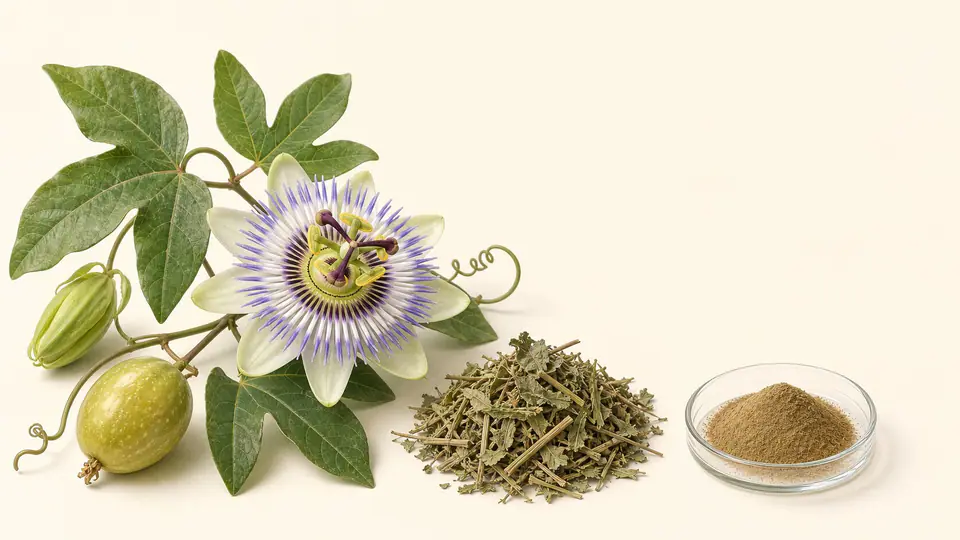
A Name Starting from a Flower Shape: How Far Will It Take You to Sleep?
On nights when a racing mind makes it hard to fall asleep, could passionflower tea or extracts be helpful instead of sleeping pills? In short, while it is known as a traditional herb used for mild tension or temporary sleep difficulties, its clinical effects are not established enough to replace prescription sedatives or a formal insomnia evaluation. It is not as simple as the comfort provided by its name and image.
Passionflower is a climbing plant of the Passiflora genus Passiflora incarnataand is a herb that primarily uses the dried aerial parts. Teas, powders, tinctures, dry extracts using different solvents, and combination products containing valerian, hops, or lemon balm all differ in components and evidence. Other Passiflora species, such as the edible passion fruit, cannot be used interchangeably with these medicinal aerial parts. Therefore, too many different things are mixed under the single name 'passionflower' to hold a single set of expectations.
The Name is Passion, the Use is Sedation
The name 'passion' does not come from passion in the emotional sense, but from Europeans who associated the shape of the flower with the Passion of Christ. A cultural history of long-term use is not, in itself, a clinical trial that measures the magnitude of efficacy. It must first be remembered that the effect is not as certain as the weight of the name suggests.
The tradition of using it as a calming herb in European folk medicine has led to modern sleep capsules. However, traditional use and established clinical effects are on different axes. The EMA also Passiflora incarnata specifies that dried aerial parts and certain teas, powders, and extracts are classified as traditional herbal medicinal products for the relief of mild mental stress and as sleep aids, but that these are not conclusions confirmed solely by clinical trials.
Why the Expectations: What Does the Research Show?
The NCCIH mentions that oral passionflower may be helpful for some anxiety, pre-procedure anxiety, and total sleep time. However, the amount of research is small, and results regarding sleep onset or sleep maintenance are mixed. A 2020 systematic review found 9 clinical trials, but concluded that it is difficult to group the results into a single standard dose or long-term effect because the durations ranged from 1 to 30 days and the formulations and evaluation tools differed.
Small-scale trials showing lower pre-surgery anxiety scores and the treatment of chronic nightly insomnia or anxiety disorders have different subjects and goals. The former is a short-term situation, while the latter is continuous condition management. Reading these on the same level increases expectations.
A Cup of Tea and a Capsule Are Not the Same Ingredient
Passionflower comes in various forms, including tea, powder, tincture, single extracts, and combinations with valerian, hops, lemon balm, or melatonin. These only share the same name; their component concentrations and evidence differ. The safety range of tea cannot be applied to extracts, nor can the research results of extracts be applied to tea.
The safety ranges summarized by the NCCIH are up to 7 days for tea and up to 8 weeks for extracts. This does not imply safety for long-term daily intake or for all formulations. Drowsiness or interactions from other ingredients in combination products must also be considered separately.
| Category | Points to Check |
|---|---|
| Whether it is a single agent or a combination product | If it contains valerian, hops, lemon balm, or melatonin, the effect of passionflower alone cannot be isolated |
| Formulation | Safety ranges and evidence differ for tea, powder, tincture, and extract |
| Duration | Approaches differ for short-term tension versus insomnia or anxiety lasting more than 2 weeks |
Three things to check before taking
When considering passionflower, it is advisable to check three things first. First, Passiflora incarnata whether it is a tea, powder, tincture, or single extract of the aerial parts, or a combination product containing other ingredients. Second, whether you are experiencing temporary tension for a few days, or if you have insomnia, anxiety, depression, panic, snoring, sleep apnea, or decreased daily functioning lasting more than 2 weeks. Third, whether you are using sleeping pills, anti-anxiety medications, sedating antihistamines, or alcohol concurrently, or if you have surgery or anesthesia scheduled within 2 weeks.
These three points are not simple checklists, but criteria to determine if this herb is appropriate for you. So, what should you look for? Specifically, the reaction the following day, medications used concurrently, and the duration of symptoms.
Combinations that become dangerous when taken together
Since drowsiness, dizziness, or confusion may occur, it is important not to arbitrarily combine it with alcohol, sleeping pills, anti-anxiety medications, or sedating antihistamines. A decision should be made after observing your reaction before driving or operating machinery the next day. Because central nervous system depression may overlap with medications used before and after anesthesia, it is safe not to use it within 2 weeks of a scheduled surgery without medical instruction and to inform the surgical team.
It is not used during pregnancy due to the possibility of inducing uterine contractions, and there is insufficient safety data for breastfeeding. If insomnia or anxiety persists or worsens for more than 2 weeks, or if there are thoughts of self-harm, extreme agitation, chest pain, or difficulty breathing, it is appropriate to seek a prompt medical evaluation immediately rather than experimenting with the herb.
Between traditional use and established efficacy
The EMA's conclusion on 'mild mental stress and sleep aid' falls under the category of traditional use based on experience over 30 years, not established use. This means that while it acknowledges a long history, it is not equivalent to evidence of modern medical efficacy.
Research is limited, formulations and durations vary, and results are inconsistent. Therefore, concluding that 'it works if you take it when you can't sleep' is an interpretation that goes beyond the evidence.
Similar names, different ingredients
Edible passion fruit and Passiflora incarnata the aerial parts are different parts and uses, even if they belong to the same Passiflora genus. Teas, tinctures, single extracts, and sedative herbal combination products are also different product groups under the same name. Traditional use and established clinical efficacy, as well as mild temporary tension and the treatment of anxiety disorders or chronic insomnia, are also different categories.
Blurring these distinctions increases expectations, and those expectations eventually lead to disappointment or side effects. In other words, the more beautiful the name, the more dispassionately you must examine exactly what to buy and how to use it.
Criteria to Check Today
Rather than the image of a 'bedtime herb,' you must first check the exact species, part, extraction method, combination ingredients, symptom duration, next-day drowsiness, and surgery plans. The final criterion is not to arbitrarily replace prescribed sedatives or insomnia evaluations. Passionflower is a herb with a beautiful name. That beauty does not guarantee the magnitude of its effect.
References
- NCCIH: Passionflower usefulness and safety.
- EMA: Passiflorae herba herbal medicinal product.
- Passiflora incarnata in neuropsychiatric disorders: systematic review.
This text explains the origin of the raw materials, the scope of research, and precautions before consumption. As this cannot replace individual diagnosis or treatment, please consult a medical professional if you are taking medication or if symptoms persist. If sudden and severe symptoms such as difficulty breathing or decreased consciousness occur after consumption, seek help from 119 or the emergency room.

Medical Staff Review
Director Choi Yeon-seung
Chief Director of Baekrokdam Korean Medicine ClinicPassionflower Dictionary Entry, reviewed the safety of expressions and the scope of verification before administration.
Review scope: Ingredient origin, human studies, concomitant medications, safety of intake · Last reviewed 2026-08-17
- Graduated from Kyung Hee University College of Korean Medicine
- Providing Korean medicine treatment since 2010
- Consultations for Gongjindan, Gyeongokgo, Nokyong (Deer Antler) restorative medicine, and customized restorative herbal medicine