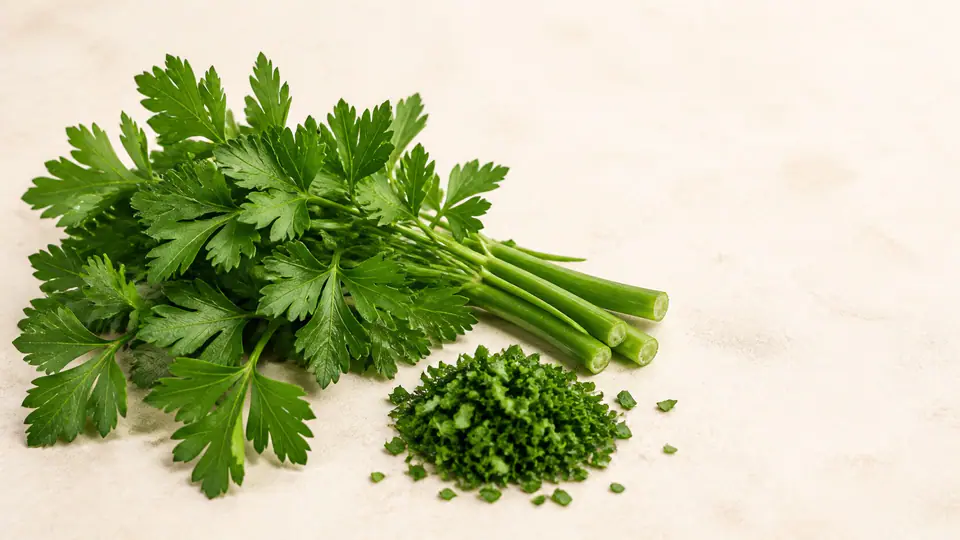
A question that started from the edge of a plate
Would drinking concentrated parsley juice or tea help with diuresis due to swelling or kidney health? In short, while you may feel a temporary increase in urine volume, this does not mean it treats kidney detoxification, edema, stones, or kidney disease. While parsley is a herb with a long history of culinary use, there is a significant lack of clinical trials and standardized research on humans regarding the diuretic and detoxifying effects of concentrated juices, seed extracts, or essential oils.
Then, what should we look at? Even if the name is the same, the answer varies depending on the part of the plant, the formulation, the level of research, and your own medications and health status. The further you move from fresh leaves on a plate to essential oils in a bottle, the harder it becomes to judge based on culinary experience alone.
What kind of ingredient is parsley?
Parsley is a plant from the Apiaceae (carrot) family Petroselinum crispumwhose leaves, stems, roots, and seeds are used for food or as spices. A handful of leaves, dried herbs, juices, teas, seed extracts, and essential oils all share the same name, but their components and exposure levels differ greatly. Curly parsley and Italian parsley differ only in appearance; there is no evidence to suggest a difference in therapeutic effect. In other words, a single name covers various forms and expectations simultaneously.
Why it is associated with kidney and diuretic effects
Most literature regarding the kidney and diuretic effects of parsley is based on cell and animal studies. Recent reviews have also concluded that there is a significant lack of human clinical trials and standardized research. While antioxidant, anti-inflammatory, and diuretic mechanisms are interestingly observed in preclinical stages, the effective plant parts, extraction methods, dosages, and long-term safety for humans have not been established. For this reason, terms like 'natural diuretic' or 'kidney detox' are easily applied, but the possibility of a mechanism and actual therapeutic effect are at different stages.
How far human research has progressed
There is an old crossover trial involving 14 healthy adults. This study only examined apigenin excretion and changes in some antioxidant enzymes after consuming parsley; it did not test the therapeutic effects on edema, stones, or kidney disease. The fact that components like apigenin were detected and antioxidant enzymes changed does not mean that parsley cleanses the kidneys or treats stones. An increase in urine or a temporary decrease in weight also does not signify body fat reduction or kidney detoxification, nor is it evidence that edema from an underlying disease was treated.
Culinary leaves and concentrated juices are not the same exposure
Parsley leaves can be included in various diets as food. However, the effects and safety of concentrated juices, seed extracts, and essential oils cannot be substituted by culinary experience. Adding fresh leaves to food is not the same exposure as daily intake of seeds, essential oils, or large amounts of juice. The amount used in food must be distinguished from highly concentrated juices, seeds, and oils, and as a rule, essential oils should not be ingested arbitrarily.
Why you must check concurrent medications and supplements
Consuming large amounts along with diuretics may potentially affect water and electrolyte balance. Therefore, it should not be used as a substitute for edema treatment, and it is necessary to inform your medical provider. Additionally, if you are taking anticoagulants or have allergies to the Apiaceae family (such as parsley, celery, or carrots), you must check the product ingredients and the repeated intake of large amounts. The important point here is not the claim that parsley can replace medication, but the possibility that balance may be disrupted when used simultaneously.
Pregnancy, breastfeeding, allergies, and emergency signals
The safety of seeds, highly concentrated extracts, and essential oils has not been established during pregnancy or breastfeeding. Self-administration beyond culinary amounts should be avoided. Sudden swelling in one leg, shortness of breath, chest pain, a sharp decrease in urine volume, or blood in the urine should not be monitored with parsley tea; you must seek medical evaluation immediately. These symptoms are signals that fall outside the scope of what parsley can address.
Differences between things that look similar
Four comparisons are helpful when understanding parsley. First, curly parsley and Italian parsley differ only in appearance. Second, leaves, roots, seeds, and essential oils differ in their essential oil and polyphenol composition depending on the part. Third, a plate of food and concentrated juices or extracts differ in exposure levels. Fourth, changes in urine volume or antioxidant markers are not the same result as the improvement of edema, stones, or kidney function. Without these four distinctions, small research results can sound like major therapeutic effects.
Criteria to Check Today
Rather than focusing on the label 'detox diuretic herb,' you must first consider which part of the plant is used, the formulation, and the dosage. Next, it is important to identify the cause of the swelling and any medications being taken, while recognizing the gap between small biomarker studies and the actual treatment of kidney disease. While parsley leaves on a plate are a safe and enjoyable food ingredient, concentrated products sold under that name do not yet have established therapeutic evidence in humans. Distinguishing between these two is the starting point for using this ingredient wisely.
References
- Kew Plants of the World Online: Petroselinum crispum.
- Parsley traditional uses, phytochemistry and pharmacology: updated review.
- Parsley and renal health: review of preclinical and limited human evidence.
- Parsley intake, apigenin and oxidative stress biomarkers: crossover study.
This text explains the origin of the raw materials, the scope of research, and precautions before consumption. As this cannot replace individual diagnosis or treatment, please consult a medical professional if you are taking medication or if symptoms persist. If sudden and severe symptoms such as difficulty breathing or decreased consciousness occur after consumption, seek help from 119 or the emergency room.

Medical Staff Review
Director Choi Yeon-seung
Chief Director of Baekrokdam Korean Medicine ClinicParsley Dictionary Entry, reviewed the safety of expressions and the scope of verification before administration.
Review scope: Ingredient origin, human studies, concomitant medications, safety of intake · Last reviewed 2026-08-17
- Graduated from Kyung Hee University College of Korean Medicine
- Providing Korean medicine treatment since 2010
- Consultations for Gongjindan, Gyeongokgo, Nokyong (Deer Antler) restorative medicine, and customized restorative herbal medicine