Papain: Can an enzyme that tenderizes meat soothe the stomach?
Will taking papain, which tenderizes meat, as a digestive enzyme make the stomach feel more comfortable?
In short, while the enzyme's ability to break down protein is clear, that ability alone is not enough to conclude that it can fix various symptoms such as digestive discomfort, reflux, or pancreatic enzyme deficiency. This article explores the boundaries between the various products and evidence grouped under the name papain.
Where the Questions Begin
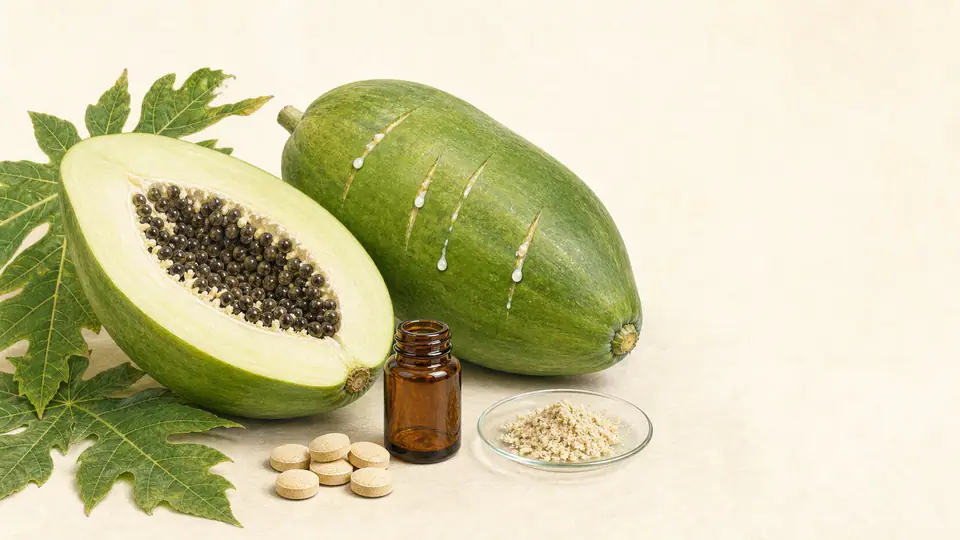
Papain is extracted from the latex obtained by wounding the stems or fruit of unripe papayas. That latex is a protein-digesting enzyme, and the phenomenon of this enzyme tenderizing meat can be visually confirmed. Naturally, this leads to the thought: if it has the power to break down protein in meat, couldn't it also help with the protein in food eaten by humans? However, breaking down protein in a test tube is a different matter from passing through a human's stomach and intestines to improve specific symptoms.
What is Papain: It is not the name of a fruit
Papain is not a nickname for the entire flesh of a papaya. It is a cysteine protease obtained from the latex of unripe papayas. In food processing, it is used for meat tenderization and protein hydrolysis. Ripe papayas eaten as fruit, papaya leaf products, meat tenderizers, digestive enzyme capsules, and topical agents used in the past for removing necrotic tissue from wounds all share the name papain or papaya, but their exposure routes and supporting evidence differ.
Why expectations exist: Visible action
The tenderizing action of papain is visible. The process by which unripe papaya latex breaks down the protein structure of tough meat directly demonstrates its biochemical capability. To go a step further and discuss human symptoms, separate clinical trials are required. Just because it breaks down protein in a test tube does not mean it treats functional dyspepsia, reflux, or pancreatic enzyme deficiency.
Differences in product form: Fruit, meat tenderizer, capsules, topical agents
Eating ripe papaya fruit and using papain derived from latex are not the same experience. A slice of ripe fruit cannot be viewed as the same as the mg in a capsule. Tenderizing action must also be distinguished from the improvement of human digestive symptoms. Oral enzymes and topical agents applied to wounds have different exposure routes. Single papain must also be distinguished from complex formulations containing multiple enzymes. Small-scale studies on papaya preparations or complex enzymes make it difficult to isolate the effect and appropriate dose of single papain, and high-quality, repeated clinical evidence for general digestive symptoms is limited.
The Gap Between Human Evidence and Expectations
The biochemical ability of papain to break down protein is established. However, that ability alone cannot confirm the therapeutic effect for different conditions such as functional dyspepsia, reflux, or pancreatic enzyme deficiency. Applying results from small-scale studies or complex enzyme preparations to the effect of single papain is crossing the boundary of evidence. Rather than concluding it is effective, one must look at the number of studies, consistency, and limitations together.
Safety: Allergies and warning signs
In 2008, the FDA took action to stop the sale of unapproved topical papain medications due to reports of serious hypersensitivity reactions, including anaphylaxis, and a lack of evidence for efficacy. Regulatory actions on topical agents cannot be transferred as the same risk rate for oral supplements. In other words, that action is neither data that denies the efficacy of oral papain nor data that calculated its risk rate. However, the possibility of cross-sensitivity to papain, papaya, and latex is a reason to check first.
People with papaya or latex allergies, or those who have developed asthma or rhinitis due to occupational exposure to enzyme powders, should avoid concentrated papain and consider a professional allergy evaluation. Swelling of the lips or tongue, generalized hives, wheezing, dizziness, or fainting are signs to stop use immediately and seek emergency help. Since the safety of concentrated papaya latex or papain products during pregnancy or breastfeeding has not been established, do not self-administer them; distinguish between food and supplements.
Personal circumstances to consider
When considering this ingredient, check three things first: whether it is a ripe papaya food, or whether it is papaya leaf, a meat tenderizer, single papain, or a complex digestive enzyme. Whether the stomach discomfort is temporary after overeating, or if there are evaluation signals such as difficulty swallowing, persistent pain, weight loss, or bloody stools. Whether there are allergies to latex, papaya, kiwi, figs, etc., or if there is pregnancy, breastfeeding, or use of anticoagulants. If there is persistent upper abdominal pain, repeated vomiting, difficulty swallowing, black or bloody stools, or unintended weight loss, evaluate the cause rather than masking it with enzymes.
Final Decision Criteria
Rather than the name 'natural digestive enzyme,' verify the product's ingredients, enzyme activity, complex components, and the cause of the symptoms; if there are papaya or latex allergies or warning symptoms, prioritize evaluation over self-testing. Papain is an enzyme that breaks down protein. Its action is clear, but that does not mean it is an immediate solution for specific symptoms.
References
- FDA Q&A on unapproved topical drug products containing papain.
- EFSA safety evaluation of papain from Carica papaya latex.
- Anaphylaxis involving a papain-containing oral drug: case and mechanism.
This text explains the origin of the raw materials, the scope of research, and precautions before consumption. As this cannot replace individual diagnosis or treatment, please consult a medical professional if you are taking medication or if symptoms persist. If sudden and severe symptoms such as difficulty breathing or decreased consciousness occur after consumption, seek help from 119 or the emergency room.

Medical Staff Review
Director Choi Yeon-seung
Chief Director of Baekrokdam Korean Medicine ClinicPapain Dictionary Entry, reviewed the safety of expressions and the scope of verification before administration.
Review scope: Ingredient origin, human studies, concomitant medications, safety of intake · Last reviewed 2026-08-17
- Graduated from Kyung Hee University College of Korean Medicine
- Providing Korean medicine treatment since 2010
- Consultations for Gongjindan, Gyeongokgo, Nokyong (Deer Antler) restorative medicine, and customized restorative herbal medicine