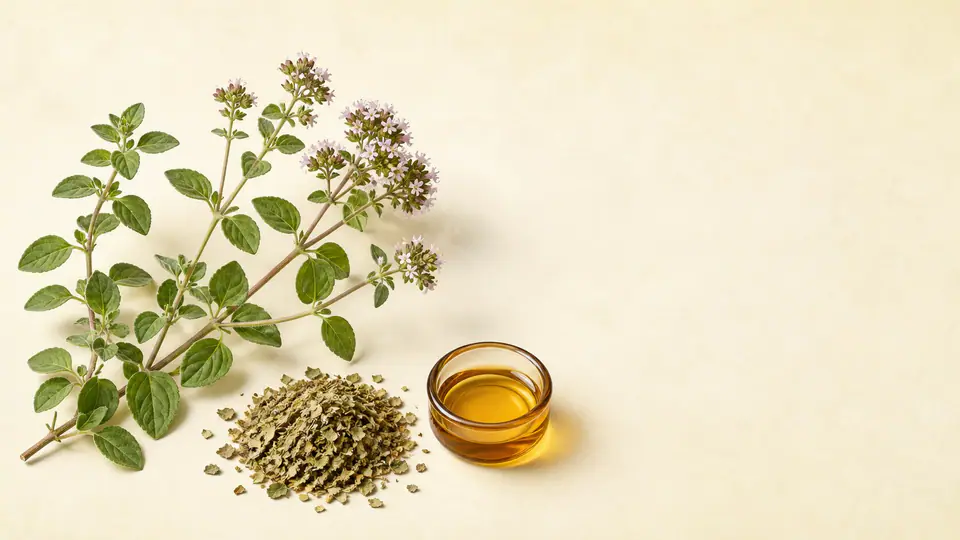
When a spice on a pizza becomes a drop of concentrate
Can I drink oregano oil mixed with water if it is good for colds, intestinal bacteria, or Candida? Is it the same as the oregano used in cooking?
In short, dried herbs sprinkled on pizza and concentrated essential oils diluted in water are not the same level of exposure. While oregano oil may sound like a natural antibiotic, the name covers a mix of products, including pure essential oils, liquids diluted in edible oils, and enteric-coated capsules, making it difficult to compare actual dosages.
Questions arise at the boundary between spices and essential oils
Oregano is a plant of the Lamiaceae family, and the volatile essential oil obtained from its leaves and flowers is called oregano oil. Kew Origanum vulgareclassifies it as a plant used for food or medicinal purposes, but this classification does not guarantee the clinical efficacy of the essential oil. While the plant itself is a known herb, there is no separate official recognition that its essential oil treats specific diseases. This difference leads to many misunderstandings.
The identity of the raw material varies by species, origin, and extraction method
Oregano oil usually refers to Origanum vulgare volatile essential oils obtained from the leaves and flowers of the related species, or products diluted from them. However, the composition of carvacrol, thymol, and linalool varies by species, origin, extraction method, and manufacturing batch. Even if they share the name oregano oil, they are close to being different substances if their chemotypes differ. Therefore, it is difficult to apply the results of one product directly to another.
Expectations are based on in vitro activity
Research showing that carvacrol and thymol in oregano oil exhibit antibacterial activity is Origanum reported as various preclinical activities in literature reviews. However, it is assessed that more conclusive evidence is needed to apply this to human diseases. The concentration required to inhibit microbial growth in a test tube differs from the concentration a human can safely ingest to reach the site of infection. This gap is the tension inherent in the term 'natural antibiotic.'
The maze of product forms: dried herbs, pure essential oils, diluted oils, and capsules
Dried oregano for cooking and highly concentrated essential oils are not the same level of exposure. While dried herbs are consumed as a small amount of spice, essential oils are a massive concentration of the plant's aromatic components. Pure essential oils, carrier oil dilutions, and enteric-coated capsules are also different from one another. Under the name 'oil of oregano,' pure essential oils, liquids diluted in edible oils, and enteric-coated capsules are mixed, making it difficult to compare actual dosages.
| Category | Characteristics | Points to Check |
|---|---|---|
| Dried herbs | Used in small amounts as a spice | Whether it is for cooking or an essential oil |
| Pure essential oil | Concentrated volatile substances | Do not swallow undiluted oils intended for fragrance or skin use |
| Diluted oil | Diluted in carrier oil | Dilution ratio, edible labeling |
| Enteric-coated capsules | Designed to dissolve in the intestines | Single dose, carvacrol and thymol content |
Concurrent use and individual circumstances depend on the type of treatment combined
Consult a medical professional if you have allergies to plants in the Lamiaceae (mint) family, are taking diabetes medication or anticoagulant therapy due to concerns regarding hypoglycemia or platelet function, or are preparing for surgery. Replacing antibiotics or antifungals required for infections with oregano oil may lead to missing the appropriate window for treatment. Claims that it treats colds, Candida, parasites, or SIBO have not been confirmed by robust human clinical trials. The NCCIH also states that there is no strong evidence that oregano oil alone prevents or treats the common cold.
Consider how concentrated essential oils come into contact with the body
Concentrated essential oils can irritate the mouth, esophagus, gastrointestinal tract, and skin. Do not swallow undiluted fragrance oils arbitrarily diluted with a few drops of water. Because oil and water do not mix well, the undiluted oil may come into direct contact with the mucous membranes. Avoid medical ingestion of highly concentrated essential oils during pregnancy due to a lack of safety data. Seek evaluation for severe abdominal pain, repeated vomiting, or signs of bleeding; for difficulty breathing, facial swelling, or fainting, call 119 or seek help at an emergency room.
Understand the gap between human-based evidence and expectations
Preclinical studies show interesting directions, but they do not translate directly into the treatment of colds, fungi, or intestinal infections in humans. Antibacterial activity in a test tube and the treatment of infections in humans are different metrics. Placing oregano oil on the same level as antibiotics or antifungals is a confusion of the level of evidence. In other words, the fact that an essential oil showed the ability to kill microorganisms does not mean it can replace the diagnosis or prescribed treatment of a specific infection.
Distinguish between different raw materials under similar names
Based on the name alone, it is impossible to distinguish whether oregano oil is a pure essential oil, a diluted oil, a capsule, or dried herbs. A distinction must also be made between antibacterial activity in a test tube and the treatment of colds, fungi, or intestinal infections in humans. So, what should you look for? Origanum vulgareCheck whether it is a pure essential oil, diluted oil, capsule, or dried herb; check for carvacrol and thymol content, dilution ratio, edible labeling, and single dose; check for diabetes medication, anticoagulant therapy, scheduled surgery, or pregnancy; and check if infection treatment is being delayed.
Criteria to Check Today
Rather than using the term "natural antibiotic," verify the exact species, carvacrol/thymol composition, dilution, and edible labeling, and do not use test-tube antibacterial activity as a substitute for diagnosed and prescribed treatment. When choosing oregano oil, it is safer to first verify what form the product actually is under its name, the extent of human-based evidence, and how it interacts with your current treatments or health status.
References
- NCCIH: Travel-related ailments and oregano oil evidence.
- Kew Plants of the World Online: Origanum vulgare.
- Origanum phytochemistry, biological activity and clinical evidence review.
This text explains the origin of the raw materials, the scope of research, and precautions before consumption. As this cannot replace individual diagnosis or treatment, please consult a medical professional if you are taking medication or if symptoms persist. If sudden and severe symptoms such as difficulty breathing or decreased consciousness occur after consumption, seek help from 119 or the emergency room.

Medical Staff Review
Director Choi Yeon-seung
Chief Director of Baekrokdam Korean Medicine ClinicOregano Oil Dictionary Entry, reviewed the safety of expressions and the scope of verification before administration.
Review scope: Ingredient origin, human studies, concomitant medications, safety of intake · Last reviewed 2026-08-17
- Graduated from Kyung Hee University College of Korean Medicine
- Providing Korean medicine treatment since 2010
- Consultations for Gongjindan, Gyeongokgo, Nokyong (Deer Antler) restorative medicine, and customized restorative herbal medicine