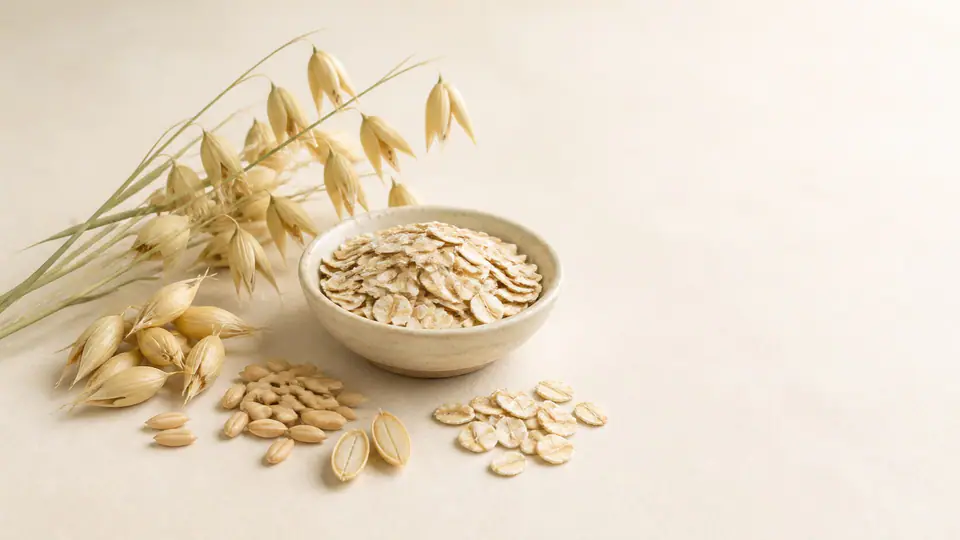
As a Single Grain is Broken Down
Would eating oats help manage blood sugar or cholesterol? In short, while changes in some values were observed when whole-food oats replaced refined grains, it is difficult to say that these changes can replace medication or prevent cardiovascular disease. More importantly, various forms are mixed under the name 'oats'.
Kew classifies oats as an edible grain of the genus Avena in the grass family, Avena sativa. As this single species of grain is divided into whole groats, chopped steel-cut, thick rolled flakes, thin quick oats, instant oats, and isolated beta-glucan, the same word 'oats' comes to refer to different postprandial responses.
Where the Questions Begin: What to Eat and How
Many people approach oats as a grain that is good for blood sugar and cholesterol. This question is simple, but the answer depends on the form of the oats and what they are replacing. Postprandial blood glucose responses can vary depending on whether they are whole oat groats, thick flakes, quick oats, or instant products. Even for the same oat, the finer the particle is ground, the faster the digestion speed, and consequently, the postprandial response changes. So, what should we look for? It starts with checking the state in which the oats are consumed.
What Oats Are: An Edible Grain of the Grass Family
Oats are the grain of the grass plant Avena sativa. As per Kew's classification, this is a recognized edible grain species. Whole oats, steel-cut, thick rolled oats, quick oats, instant oats, and isolated oat beta-glucan all start from the same raw material, but their degree of processing and structure differ. This difference is not just a matter of texture, but determines where research results can be applied. In other words, evidence for whole oats should not be applied directly to instant oats or beta-glucan supplements.
Why the Expectation: Research on Blood Sugar and Cholesterol
In a 2021 meta-analysis of randomized trials, whole oat groats and thick oat flakes showed lower postprandial blood glucose and insulin responses compared to refined grain control diets. However, this difference was not observed in thin quick oats and instant flakes. In other words, one cannot expect results based on the name 'oats' alone; the thickness of the particle and the degree of processing are important.
A 2024 review of 17 trials involving 1731 patients with dyslipidemia showed that oat products tended to lower LDL and total cholesterol. However, there was little effect on HDL and triglycerides, and only one study provided direct data on cardiovascular events. There is insufficient evidence to conclude that changes in these values lead to the prevention of cardiovascular disease. What the research showed was the average change in values, not direct evidence of reducing disease risk.
Differences in Product Form: Whole Oats, Quick Oats, and Beta-Glucan are Different Stories
Whole-food oats, isolated beta-glucan, and sweetened oat products are not the same intervention. Quantitative results from beta-glucan research cannot be applied identically to every bowl of oatmeal or oat drink. Different standards are needed when comparing whole oats to quick/instant oats, when comparing oat foods to isolated beta-glucan, and when comparing changes in postprandial blood glucose or LDL to the treatment of diabetes or cardiovascular disease.
For sweetened instant oats, granola, or oat drinks, you must separately check the sugar content, the serving size per portion, and the actual beta-glucan content. Choosing a product based on the name alone may lead to results different from what you expect.
When Consumed Together: Relationship with Medications
Average changes in postprandial values or LDL are not evidence for replacing diabetes medications or lipid-lowering agents. Even if blood glucose or lipid levels change, you must not arbitrarily reduce or stop prescription medications using oat foods. Oats can be considered part of a dietary pattern, but there is no evidence that they replace drug therapy. If you are currently taking medication, eating oats does not provide a reason to adjust your medication.
Individual circumstances and safety signals
Suddenly increasing oat fiber may cause gas, bloating, diarrhea, or nausea. It is necessary to increase the amount while monitoring the bowel response. For those with celiac disease or a need for strict gluten avoidance, you must check for labels that meet gluten cross-contact standards rather than general oats. According to FDA standards, gluten-free labeled oats must contain less than 20 ppm of gluten, including unavoidable cross-contact.
The Gap Between Human Evidence and Expectations
Research has only shown changes in values for specific forms of oat foods. Generalizing this to all oat products or expanding it to suggest that diseases can be managed without medication is an interpretation that goes beyond the evidence. Rather than concluding that it 'is effective,' one must look at the number of studies, consistency, and limitations. Let's reflect on one thing: is the product you are currently eating the same form that showed changes in the research?
Similar Names, Different Choices
Whole oats and quick/instant oats do not have the same postprandial response even if they come from the same raw material. Oat foods and isolated beta-glucan are different interventions. Changes in postprandial blood glucose or LDL are different concepts from the treatment of diabetes or cardiovascular disease. These three comparisons should be kept in mind when making a choice.
Criteria to Check Today
When choosing oats, rather than just looking for the name 'oats,' first check the grain size, the degree of processing, what food is being replaced, the beta-glucan content, labels for added sugar or processing, gluten cross-contamination, and your current treatments. By checking whether it is whole oats, steel-cut, rolled, quick, or instant; whether you are replacing or adding to existing grains; the actual beta-glucan content; and whether you have celiac disease, need to avoid gluten, or are taking medications for blood sugar or lipids, you can distinguish between the various possibilities hidden behind the name 'oats.'
References
- Kew Plants of the World Online: Avena sativa.
- Oat processing and postprandial glucose: systematic review.
- Oats for dyslipidemia: systematic review and meta-analysis.
- FDA gluten-free labeling questions and answers.
This text explains the origin of the raw materials, the scope of research, and precautions before consumption. As this cannot replace individual diagnosis or treatment, please consult a medical professional if you are taking medication or if symptoms persist. If sudden and severe symptoms such as difficulty breathing or decreased consciousness occur after consumption, seek help from 119 or the emergency room.

Medical Staff Review
Director Choi Yeon-seung
Chief Director of Baekrokdam Korean Medicine ClinicOats Dictionary Entry, reviewed the safety of expressions and the scope of verification before administration.
Review scope: Ingredient origin, human studies, concomitant medications, safety of intake · Last reviewed 2026-08-17
- Graduated from Kyung Hee University College of Korean Medicine
- Providing Korean medicine treatment since 2010
- Consultations for Gongjindan, Gyeongokgo, Nokyong (Deer Antler) restorative medicine, and customized restorative herbal medicine