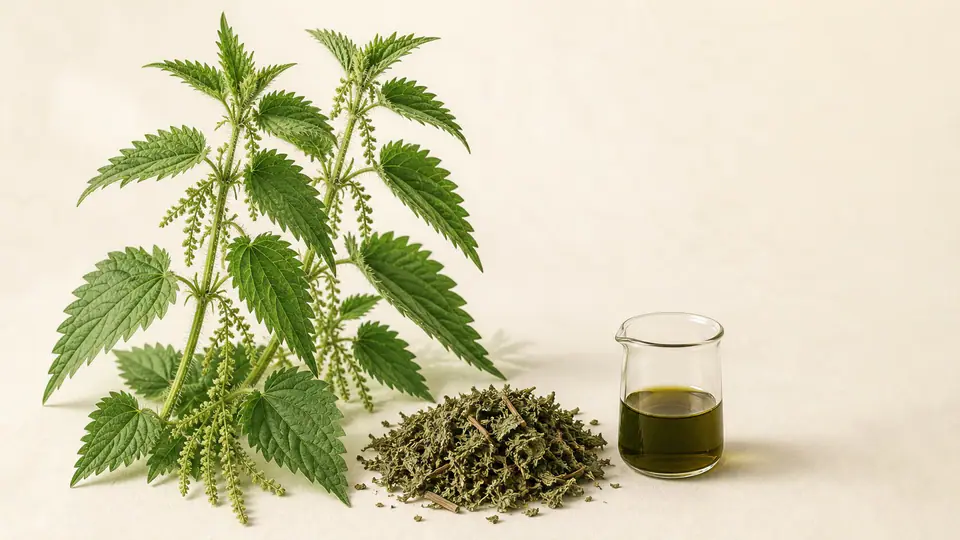
One wild plant name encompasses many different faces
“My urine stream has weakened; can I try taking stinging nettle root, and does leaf tea have the same effect?” This question captures the most common confusion surrounding stinging nettle in a single sentence. In short, while there are some studies on root extracts, these results cannot be applied to the efficacy of leaf tea or leaf extracts, nor is there evidence to replace standard prostate treatments. Furthermore, since urinary symptoms are not caused by prostate issues alone, a cause evaluation must come first if symptoms first appear or worsen.
This plant, called stinging nettle, encompasses very different things under one name. From the stinging hairs of raw leaves, young leaves eaten cooked, tea brewed from leaves, and leaf extracts, to root extracts studied for prostate symptoms, both the plant part and the type of exposure differ. Under the same name, it is easy to mix up contact toxicity, edible use, claims regarding allergies and joints, and urinary research.
Where the Questions Begin
The reason people seek stinging nettle for uncomfortable urinary symptoms stems from the fact that root extracts have shown signals of improvement in urinary symptoms in studies related to benign prostatic hyperplasia (BPH). However, because those studies varied in formulation, dosage, and subjects, they do not provide sufficient evidence to replace standard prostate treatment. A 2001 systematic review concluded that there was no convincing evidence that stinging nettle preparations alone are effective for BPH, and subsequent research has not secured consistent evidence to replace standard care.
However, these root research results cannot be used to support claims that leaf tea or leaf extracts treat allergic rhinitis, joint pain, or edema. This is because the research subjects were different. The term “stinging nettle” causes all plant parts and formulations to be conflated.
Identity of the raw material: Species and plant parts must be distinguished
Stinging nettle can refer to several plants in the Urticaceae family, but the species most commonly dealt with in supplement research is Urtica dioica L. Kew records this species as a recognized plant and describes both the stinging hairs of the leaves and stems, and the young leaves eaten cooked for food.
In other words, Urtica dioica has two faces within the same plant: raw leaves with stinging hairs and young leaves that become vegetables when cooked. In the supplement market, leaf tea, leaf extracts, and root extracts are added to this. Even for the same species, the way it interacts with the body changes completely depending on the part used and the processing method.
Why expectations exist: Root research and claims about leaves were not separated
Research on prostate enlargement symptoms primarily targets root preparations. Using those results to claim that leaf tea or leaf extracts help with allergies or joints is a misinterpretation by changing the research subject. Claims about leaves require separate evidence, but urinary research on roots is often conveyed as the efficacy of leaf preparations under the general name “stinging nettle.”
To put it another way, transferring signals from the root to the leaf is crossing the boundary of evidence. The first point a reader should verify is whether the product is Urtica dioica, and whether it is raw leaf, cooked leaf, tea, leaf extract, or root extract.
Differences in product form: Contact, ingestion, and concentration are different types of exposure
| Form | Characteristics | Points to Consider |
|---|---|---|
| Raw leaf | Stinging hairs deliver substances to the skin | Avoid bare-hand harvesting or skin irritation therapy |
| Cooked young leaves / Tea | Traditional use recorded as edible | Not the subject of prostate research |
| Leaf extract | Concentrated form | Insufficient evidence for allergy or joint claims |
| Root extract | Primary subjects of prostate urination studies | Not evidence for replacing standard treatment |
This table is simply for distinguishing forms. Even with the same raw material, if the method of exposure and research purpose differ, they must be viewed as different products.
When taking with medications or supplements
Oral nettle preparations may cause gastrointestinal discomfort or allergies, and there is insufficient data on long-term safety by body part. Additionally, as they may affect urination, blood pressure, and blood glucose, it is necessary to consult medical staff before using concentrated products if you are taking related medications or have kidney disease.
If you have a planned surgery or are taking prostate medication, diuretics, blood pressure medication, or diabetes medication, these questions serve as a starting point for assessing combined safety. While this context is not visible when looking at nettle in isolation, actual selection is made within the context of an individual's medication use and disease status.
Individual circumstances and safety signals
There is insufficient safety data regarding medicinal dosages during pregnancy or breastfeeding. Urination symptoms cannot be used as a substitute for prostate examinations or prescription medications. If you experience a complete inability to urinate, hematuria (blood in urine), fever with flank pain, severe lower abdominal pain, dyspnea (difficulty breathing), or facial edema, you must seek emergency evaluation immediately.
Urination symptoms can appear not only in benign prostatic hyperplasia but also in infections, drug reactions, bladder diseases, neurological diseases, and prostate cancer. Therefore, if symptoms first appear or worsen, a cause evaluation must come first. It is more important to check for danger signs before considering nettle products.
The Gap Between Human Evidence and Expectations
Slightly easing urination symptoms is a different question from treating or ruling out prostate size, urinary retention, or cancer risk. Findings from root extract research are closer to the former, and there is no evidence for the latter. When considering the number and consistency of studies, as well as differences in preparation, dosage, and subjects, expectations should be limited.
What then should be looked at? The species name and the part used on the product label, and which research it referenced. If a leaf tea cites root research, that is a transfer of evidence.
Differences from similar raw materials
Urtica dioica and other nettle species may differ by species. Contact with raw leaves and cooked young leaves or tea are different exposures of the same plant. Leaf preparations and root extracts have different research purposes. Urination symptom scores and prostate size, urinary retention, and prostate cancer are different evaluation targets.
These four comparisons are criteria for distinguishing points that are easily blurred when choosing nettle. Having the same name does not mean they are the same, and an improvement in symptoms does not mean the disease has been cured.
Final Decision Criteria
Rather than the single name 'nettle', you must verify the exact species, part used, formulation, and danger signs of the symptoms. The key criterion when choosing this material is not to transfer urination research of the root to the allergy or joint efficacy of leaf tea or the treatment of prostate disease. If urination symptoms are new or worsening, first receive a cause evaluation, and if you have current medications or diseases, consult medical staff before selecting a product.
References
- Kew Plants of the World Online: Urtica dioica.
- NCCIH: Benign prostatic hyperplasia and complementary approaches.
- Urtica dioica for benign prostatic hyperplasia: systematic review.
- Urtica dioica root extract in BPH: randomized trial.
- Urtica dioica in BPH: randomized placebo-controlled crossover trial.
This text explains the origin of the raw materials, the scope of research, and precautions before consumption. As this cannot replace individual diagnosis or treatment, please consult a medical professional if you are taking medication or if symptoms persist. If sudden and severe symptoms such as difficulty breathing or decreased consciousness occur after consumption, seek help from 119 or the emergency room.

Medical Staff Review
Director Choi Yeon-seung
Chief Director of Baekrokdam Korean Medicine ClinicNettle Dictionary Entry, reviewed the safety of expressions and the scope of verification before administration.
Review scope: Ingredient origin, human studies, concomitant medications, safety of intake · Last reviewed 2026-08-17
- Graduated from Kyung Hee University College of Korean Medicine
- Providing Korean medicine treatment since 2010
- Consultations for Gongjindan, Gyeongokgo, Nokyong (Deer Antler) restorative medicine, and customized restorative herbal medicine