How trace elements in legumes and grains become 'detox minerals'
Do I need to take molybdenum separately because it is required for detox enzymes? Is the several hundred micrograms in a multivitamin safe? In short, most people do not need to take it separately. Since several hundred micrograms can be several times higher than the adult recommended intake of 45 mcg, it cannot be considered a necessary dose simply because it is lower than the upper limit of 2,000 mcg. The idea that 'taking more leads to more detox' is also unfounded.
While this ingredient is an essential trace element, there is no general population at risk of deficiency, nor is it a standard treatment for any disease. However, because the word 'detox' is attached to its name, it is often read as if high-dose single supplements are necessary. Let's examine that tension.
What is Molybdenum: A trace element that creates cofactors
Molybdenum is an essential trace element used to create the molybdenum cofactor. Without this cofactor, several enzymes do not function. This is why the explanation 'required for detox enzymes' exists. However, the fact that it is required does not mean that deficiency is common in the general public, nor does it mean that taking more increases detox capacity. There is a difference between the body using a certain amount and the capacity increasing proportionally when additional amounts are added.
The National Institutes of Health (NIH) Office of Dietary Supplements (ODS) suggests a daily recommended intake of 45 mcg for adults and 50 mcg for pregnant or lactating women. The adult upper limit is 2,000 mcg. There is nearly a thousand-fold difference between the recommended intake and the upper limit; problems arise when these two are confused as target amounts. The upper limit is simply the threshold to avoid risk, not a value to be intentionally approached for health.
Why it was named 'Detox'
Some enzymes containing molybdenum are related to metabolism in the body. This fact is often exaggerated into expressions such as 'detox mineral' or 'toxin breakdown.' However, it is not a standard treatment for any disease, and there are no studies comparing bioavailability across different supplement forms. In other words, there is a lack of systematic data showing how differently molybdenum from food is absorbed compared to molybdenum in capsules. Just because a function exists, it cannot be concluded that it is possible to increase that function through a product.
Food, supplements, and industrial exposure are not the same
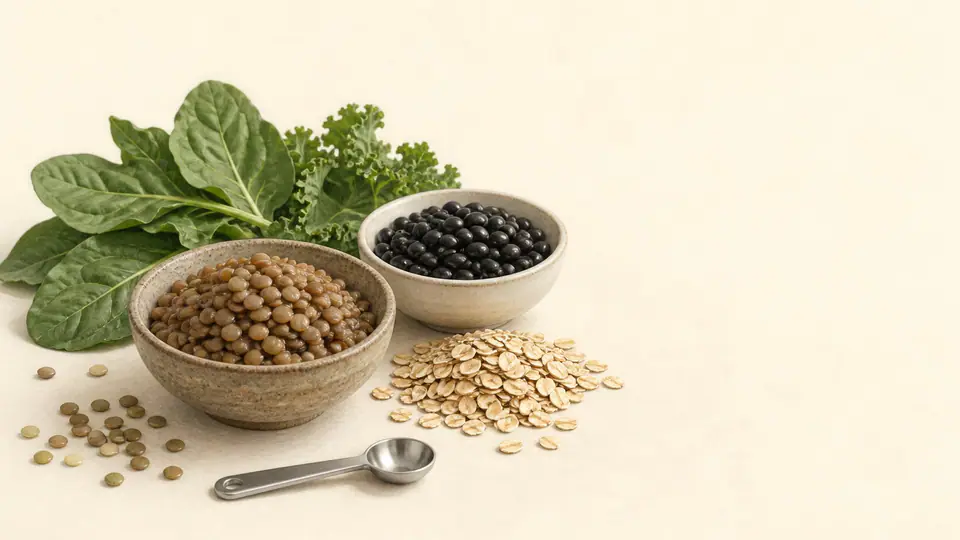
Molybdenum is found in various foods such as legumes, grains, nuts, and dairy products. Molybdenum as a dietary trace element, molybdenum from industrial metal exposure, and hereditary molybdenum cofactor deficiency are not the same situation. There is a thousand-fold difference between the mcg levels that enter moderately through food and the mg levels encountered through exposure to air or dust.
Joint pain, gout-like symptoms, and hyperuricemia have been reported at environmental exposure levels of 10–15 mg/day. This is a completely different realm from the mcg levels taken as supplements. However, the word 'detox' can make high-dose intake seem justified. Here, the difference in units between mcg and mg is important. A mcg is one-millionth of a gram, and a mg is one-thousandth of a gram. It is a difference of more than a thousand times.
Distinguishing between rare deficiency and general insufficiency
Acquired molybdenum deficiency is represented by a single case of a patient whose long-term parenteral nutrition solution lacked molybdenum. Hereditary deficiency is a severe disease appearing early in infancy. Both are severe metabolic disorders, different from a general lack of supplements. In other words, it is very rare for an adult with a normal diet to develop symptoms due to molybdenum deficiency. Since there is no known general risk group for deficiency, the status is typically not measured in clinical practice.
Despite this, the name 'detox mineral' creates an illusion that expands rare deficiencies into a need for high doses for the general public. Hereditary cofactor deficiency is not a simple insufficiency that can be solved with supplements, but a congenital defect in the metabolic pathway itself.
Multivitamins vs. single supplements: What is the total daily amount?
One multivitamin tablet often contains about 50–200 mcg of molybdenum. Compared to the adult recommended intake of 45 mcg suggested by the NIH ODS, this is a level that is slightly lower or slightly higher. If taken as a single supplement, they are usually 250–500 mcg, and some products are even higher. The important thing is to know the total daily amount in mcg from food, multivitamins, and single supplements.
As long as the recommended intake and the upper limit are not confused as target amounts, the level in multivitamins falls far short of the 2,000 mcg upper limit. However, if single supplements are added, the total amount may approach the upper limit. This accumulation occurs especially when multiple mineral products are taken together for the purpose of 'detox.'
When taking together: Concurrent use and individual circumstances
There are no known significant drug interactions. However, this does not imply long-term safety at high doses. People with gout, hyperuricemia, or kidney disease should avoid taking high doses arbitrarily. If you are in a professional environment with industrial exposure, you should pay closer attention to the total amount of supplements.
While NIH ODS recommended intakes for pregnancy and lactation are slightly higher than for adults, this is a baseline for nutrient requirements, not a medical indication. It is important to first distinguish whether the intake is for self-administration for purposes such as detoxification or energy boosting, or if it is based on a medical indication. If so, what should be reviewed? The total daily mcg, the reason for intake, and whether there is a history of gout, hyperuricemia, kidney disease, pregnancy, lactation, or industrial exposure.
Warning Signs and When to Seek Evaluation
You must seek immediate evaluation if severe joint pain, changes in consciousness, or seizures occur, or if respiratory symptoms develop following industrial exposure. These are signals that may include not only supplement side effects but also the possibility of industrial metal poisoning. While such symptoms do not typically appear at the level of general multivitamins, the situation changes when high-dose single supplements, overlapping doses, or occupational exposure are involved.
The Gap Between Human Evidence and Expectations
Molybdenum is an essential nutrient. However, consistent evidence from human studies has not been presented to show that detoxification capacity or health indicators improve when general adults take more through supplements. It is not a standard treatment for any disease, nor are there comparative studies on bioavailability across different supplement forms. There is a difference between a function being important and it being proven that this function can be increased through a product.
In other words, while molybdenum is indispensable, there is no guarantee that adding more will lead to better results. Recognizing this gap is the starting point for properly understanding this ingredient.
Differences from Similar Ingredients: Essential Functions vs. Additional Effects
Four axes are helpful when distinguishing molybdenum from other 'detox minerals': the difference between food/supplements and industrial exposure; the difference between mcg nutritional doses and mg high doses; the difference between essential enzyme function and additional detox effects; and the difference between general deficiency and genetic disorders or parenteral nutrition deficiency. These axes are not criteria for comparing molybdenum to other ingredients, but rather criteria for separating confusing concepts within the same ingredient.
Criteria to Check Today
The practical judgment criterion for this ingredient is to check the total mcg and the reason for intake rather than the name 'detox mineral,' and to avoid expanding rare deficiencies into a need for high doses in the general population. The several hundred micrograms found in multivitamins are generally safe between the recommended intake and the upper limit, but this is because they are at a nutritional level near the recommended intake, not because they provide a 'detox effect.' There is insufficient evidence to add a separate high-dose single supplement.
References
- NIH ODS: Molybdenum fact sheet for health professionals.
- NIH ODS: Molybdenum consumer fact sheet.
- ATSDR Toxicological Profile for Molybdenum.
This text explains the origin of the raw materials, the scope of research, and precautions before consumption. As this cannot replace individual diagnosis or treatment, please consult a medical professional if you are taking medication or if symptoms persist. If sudden and severe symptoms such as difficulty breathing or decreased consciousness occur after consumption, seek help from 119 or the emergency room.

Medical Staff Review
Director Choi Yeon-seung
Chief Director of Baekrokdam Korean Medicine ClinicMolybdenum Dictionary Entry, reviewed the safety of expressions and the scope of verification before administration.
Review scope: Ingredient origin, human studies, concomitant medications, safety of intake · Last reviewed 2026-08-17
- Graduated from Kyung Hee University College of Korean Medicine
- Providing Korean medicine treatment since 2010
- Consultations for Gongjindan, Gyeongokgo, Nokyong (Deer Antler) restorative medicine, and customized restorative herbal medicine