From Medical Nutritional Fats to Diet and Brain Health Oils
Will taking MCT oil on an empty stomach lead to weight loss and mental clarity? Is it the same as coconut oil or ketone supplements? In short, an increase in ketone levels is not synonymous with weight loss or cognitive improvement. While MCT oil is a fat that can raise ketones because it is oxidized relatively quickly in the liver, that increase in ketones itself does not guarantee fat reduction or improved brain function. Furthermore, its composition and supporting evidence differ from those of coconut oil, ketone salts, and ketogenic diets.
This ingredient was initially used as a medical nutritional fat for people with difficulty in digestion and absorption, but it has now established itself as 'bulletproof' oil added to a sip of coffee or as a supplement claimed to aid the brain and weight loss. In between, technical facts such as absorption speed, ketone levels, calories, and the ratio of C8 to C10 have become intertwined with popular health narratives. This article explores that boundary.
Where the questions began: The gap between ketone numbers and weight/cognition
The reason MCT oil attracts attention is quite simple. Medium-chain triglycerides are processed quickly in the liver to increase ketone bodies, and ketones can be used by the brain as an alternative energy source. However, the physiological signal that "ketones have risen" does not directly translate into clinical results such as "weight is being lost" or "memory is improving."
In a meta-analysis of randomized controlled trials, there were signals of slight decreases in weight and waist circumference when long-chain fats were replaced with MCT. However, this was the result of replacing existing fats, not the result of adding MCT on top of a meal. MCT is also a fat with approximately 9 kcal per 1 g. Adding two spoonfuls to coffee increases total calories. Therefore, it is important to note that the same effect cannot be expected.
Regarding cognitive function, signals of improvement in ketones and some cognitive scores were seen in studies on mild cognitive impairment and Alzheimer's disease, but the studies were small and heterogeneous, and they are not evidence that MCT replaces medication or prevents dementia. If you target only ketone levels, you may move further away from meaningful results.
What the ingredient is: Triglycerides centered on C8 and C10
MCT oil is primarily a triglyceride product where medium-chain fatty acids C8 (caprylic acid) and C10 (capric acid) are bound to glycerol. While MCT products generally contain medium-chain fatty acids from C6 to C12, commercial diet products are mainly C8 and C10. Ketone production varies depending on the composition.
There are various products under the three letters 'MCT'. C8 single oil, C8/C10 mixed oil, coconut oil (which is high in C12/lauric acid), medical MCT diets, and ketone salts all differ in composition, metabolism, and evidence. Just because a commercial MCT oil is "more refined than coconut oil" does not mean the same clinical studies can be applied to all of them.
Why expectations grew: The characteristic of being a fast-absorbing fat
The core characteristic of MCT is that after being absorbed in the intestines, it enters the liver directly without passing through the lymph, where it is oxidized relatively quickly. This characteristic first led to its use as a medical nutritional fat for patients with impaired digestive and absorptive functions. However, as this 'speed' expanded into health functionality, it grew into the narrative that "taking it on an empty stomach causes ketones to spike, which helps the brain and weight loss."
The problem is that the rise in ketones must be separated from weight and cognitive outcomes. Ketones are merely an alternative energy pathway; they do not directly signify fat burning or the regeneration of brain cells. While there is a metabolic difference where C8 raises ketones more than C10 or C12, this is not clinical evidence that it is necessarily superior in long-term weight or cognitive outcomes.
Differences in product forms: C8 single oil, mixed oil, coconut oil, ketone salts
The first thing to check when choosing is the composition.
| Category | Characteristics | Points to Note |
|---|---|---|
| C8 single oil | Relatively large increase in ketones | Ketone increase ≠ weight/cognitive improvement |
| C8/C10 mixed oil | Common form of commercial MCT oil | Ketone production varies by ratio |
| Coconut oil | High in C12 | Ketone effects or clinical research applicable to refined C8/C10 products cannot be applied |
| Ketone salts | Direct intake of exogenous ketones | Works differently from MCT oil |
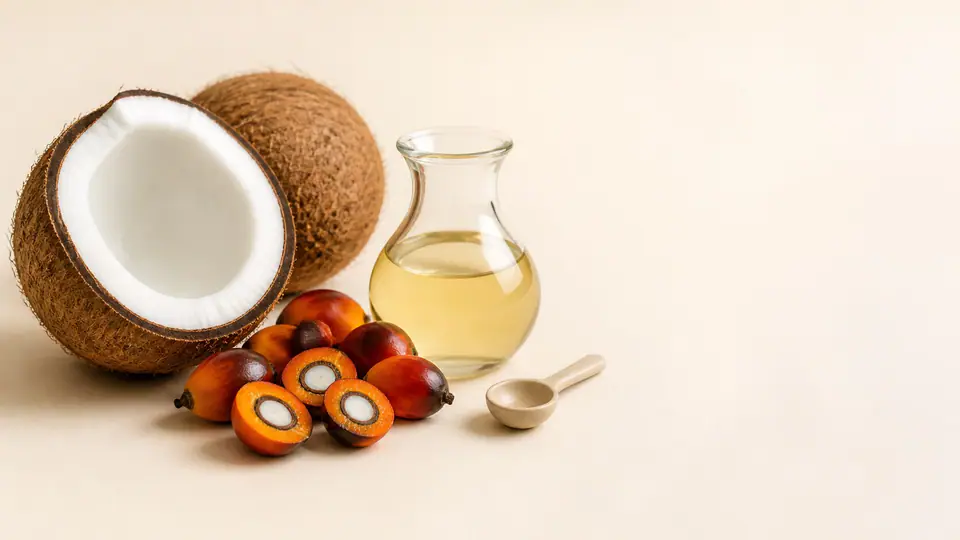
Coconut oil contains a large amount of C12. While C12 is classified as a medium-chain fatty acid, its absorption and metabolism are slower than C8 and C10, and it produces fewer ketones. Therefore, you should not assume that "coconut oil has the same effect because it also contains MCT." Ketone salts involve directly drinking the ketones the body makes, whereas MCT oil provides the materials for the body to create its own ketones. These two operate on different principles.
When taking with medications or supplements
Rather than interacting directly with specific medications, caution is needed regarding changes in ketone levels when using MCT oil alongside diabetes medications or insulin. For those with diabetes or a risk of ketoacidosis, it is safer not to conduct self-experiments targeting only ketone levels. Additionally, if you have lipid abnormalities, you must consider the total amount of saturated fats and the fats being replaced by MCT, and undergo follow-up tests.
If you are taking dementia medication, you should not interpret cognitive-related research as a replacement for your treatment. The research only showed some signals in cognitive scores and is not a basis for changing medication.
Individual circumstances and safety signals
The most common side effects of MCT oil are gastrointestinal. Taking a large amount at once often leads to diarrhea, abdominal pain, cramping, nausea, and vomiting. It is advisable to avoid high doses on an empty stomach. The general approach is to start with a small amount and increase it while checking for tolerance.
If you have liver, pancreatic, or gallbladder disease, or a congenital fatty acid oxidation disorder, you must not use it without medical instruction. If persistent vomiting, severe abdominal pain, changes in consciousness, or rapid and deep breathing occur, stop intake and call 119 or seek evaluation at an emergency room.
The Gap Between Human Evidence and Expectations
The evidence for MCT can be summarized as follows: there were small signals of reduction in weight and waist circumference, but this was the result of replacing long-chain fats. Lipid meta-analyses showed that MCT can increase triglycerides compared to unsaturated fats such as olive oil, indicating it is not unconditionally beneficial for cardiovascular health. Cognitive function research is small and heterogeneous, and does not prove it as a replacement for treatment or for the prevention of dementia.
In other words, MCT oil is neither a "bad fat" nor a "miracle fat." It is a fat that shows small signals under specific conditions, and the key is to accurately see in what situation those signals appeared.
Criteria for Distinguishing Between Similar Ingredients
When choosing MCT oil, you must consider four axes simultaneously. First, whether it is pure C8, a C8/C10 blend, or coconut oil. Second, the amount per serving and the total daily calories. Third, whether it replaces existing fats or is added to coffee or meals. Fourth, whether the goal is weight, ketones, or cognition.
If all four of these are not answered, the statement "MCT is good" becomes vague. For example, if the goal is weight loss, whether it replaces existing fats is most important. If the goal is cognitive function, you must consider the relationship with current dementia medications and the limitations of the research.
Realistic criteria to check today
Then, what should you look at? Rather than fasting ketone numbers, first check the C8/C10 composition, total calories, what is being replaced, gastrointestinal tolerance, and your disease status. The increase in ketones should be viewed separately from weight and cognitive results.
MCT oil is a raw material with the physical property of being a fast-absorbing fat. Depending on how that property is used, it can become a medical nutritional fat or an ingredient in bulletproof coffee. The important point is that this physical property does not automatically translate into a health benefit. Checking the composition, calories, whether it is a replacement or an addition, and your own disease status is the realistic starting point for evaluating this material.
References
- NCBI Bookshelf: Fats and satiety—medium-chain triglycerides.
- MCT oil and blood lipids: systematic review and meta-analysis.
- MCT and weight loss in overweight or obesity: systematic review and meta-analysis.
- MCT and Alzheimer-related cognitive impairment: systematic review and meta-analysis.
This text explains the origin of the raw materials, the scope of research, and precautions before consumption. As this cannot replace individual diagnosis or treatment, please consult a medical professional if you are taking medication or if symptoms persist. If sudden and severe symptoms such as difficulty breathing or decreased consciousness occur after consumption, seek help from 119 or the emergency room.

Medical Staff Review
Director Choi Yeon-seung
Chief Director of Baekrokdam Korean Medicine ClinicMCT Oil Glossary Entry, reviewed the safety of expressions and the scope of verification before administration.
Review scope: Ingredient origin, human studies, concomitant medications, safety of intake · Last reviewed 2026-08-17
- Graduated from Kyung Hee University College of Korean Medicine
- Providing Korean medicine treatment since 2010
- Consultations for Gongjindan, Gyeongokgo, Nokyong (Deer Antler) restorative medicine, and customized restorative herbal medicine