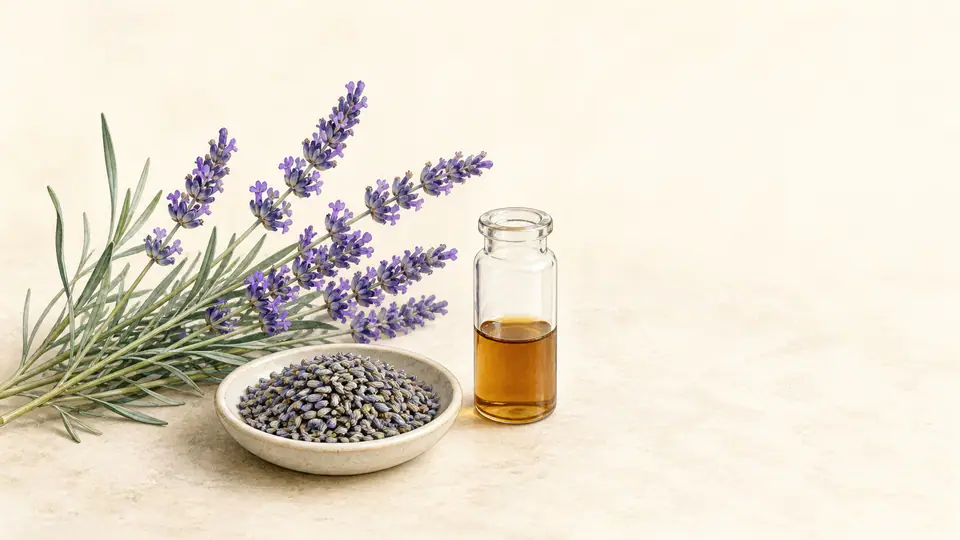
From flowers in a linen drawer to ingredients for anxiety
When I can't sleep and feel anxious, would smelling lavender or taking oil capsules help? Can I drink essential oils like tea?
In short, fragrance and capsules are different forms of exposure, and it is not appropriate to drink essential oils intended for fragrance. Because there are various species and methods of use under the name 'lavender,' the specific product and how it is used determine its effectiveness and safety.
Various species and parts under one name
Lavender is a general term encompassing several Lavandula species. Clinical research and products primarily use Lavandula angustifoliaflowers, essential oils, or specific standardized oral lavender oils. Therefore, you should not assume they are the same ingredient just because they are called "lavender." You must first check if the species are different, whether it is the flower or essential oil, and if it is for inhalation, skin application, or oral use.
Fragrance, skin application, tea, and capsules are not the same form of exposure
Aromatherapy for inhalation, products applied to the skin, teas for drinking, and capsules for ingestion all have different entry routes and amounts into the body, even if they are all lavender. Dosages from research on inhalation cannot be converted to research on ingested products. Results from a study on 80 mg of a specific standardized oral oil are not the same as those for lavender tea, diffusers, skin-use oils, or essential oils not labeled for oral consumption. Therefore, it is not valid to apply research results from one form directly to another.
To what extent is the research on anxiety recognized?
The NCCIH recognizes signals that specific oral lavender oils may relieve anxiety, but points out limitations in study size, independent verification, and participant diversity. A 2019 systematic review examined oral, inhalation, and massage studies together, but the overall quality of the research was low and there was significant heterogeneity in administration methods. In other words, while there is potential, the evidence is still limited to view it as a definitive therapeutic effect.
What level of sleep effects can be expected?
While the potential for sleep effects from aromatherapy has been suggested, it is not definitive enough to replace the evaluation of causes for chronic insomnia or proven treatments. The subjective experience of feeling relaxed while smelling a scent must be viewed separately from the therapeutic effect on insomnia. The same applies to the relaxation effect of the massage itself versus the effect of the lavender itself. Therefore, when someone says "lavender is good for sleep," you must ask who used it, in what form, how much, and in what condition.
Comparison by product form
| Form | Characteristics | Caution |
|---|---|---|
| Dried flower tea | Raw material form | Essential oil concentrates and other exposures |
| Essential oils | Mostly for fragrance or topical use | Do not swallow unless labeled for edible use |
| Standardized oral oils | Capsules for clinical research with specific compositions | Not the same as general essential oils |
| Inhalation of fragrance or massage | Sensory and tactile pathways | Distinguish between subjective comfort and therapeutic effect |
When people say “lavender oil,” both essential oils and oral capsules come to mind, but they are not the same product. It is also necessary to distinguish between specific Silexan research and general essential oils.
Drowsiness may increase when used together
You must consider the possibility of increased drowsiness when used with sedatives, calming herbs, or alcohol. Check if you are using substances that increase drowsiness, such as sleeping pills, anti-anxiety medications, antihistamines, or alcohol. It is advisable to inform your medical team before surgery. Combining these is not a matter that can be dismissed simply by saying, “It's okay because it's a natural ingredient.”
What side effects may occur?
Oral lavender products may cause nausea, diarrhea, headache, or belching; inhalation may cause headache or cough; and topical products may cause contact allergies. Fragrance or topical essential oils are not the same as teas labeled for edible use or oral capsules for clinical trials, so do not swallow them arbitrarily. If you experience difficulty breathing, facial swelling, decreased consciousness, or thoughts of self-harm, you must seek help from 119 or the emergency room.
Limited data for pregnancy, breastfeeding, and children
Data on the use of these for medical purposes during pregnancy, breastfeeding, and in children are limited. Therefore, in these situations, it is necessary to consult with a medical professional rather than applying data intended for general adults.
How long have insomnia or anxiety persisted?
Before considering lavender, it is necessary to first examine your own condition. You must check how long the insomnia or anxiety has lasted and whether there are separate warning signs such as respiratory issues, mania, or thoughts of self-harm. Temporary tension is different from anxiety disorders or chronic insomnia. For the latter, cause evaluation and proven treatments take priority.
Criteria to Check Today
In other words, rather than the single name “lavender scent,” you must verify the species, formulation, administration route, and whether it is standardized. The key is not to apply research on anxiety using a specific oral product to the ingestion of fragrance oils or as a replacement for sleeping pills. So, what should you look for? Lavandula angustifoliaA realistic starting point for choosing this ingredient is to first determine if it is a different species, whether it is in the form of inhalation, topical, tea, or oral capsules, if it is labeled for edible use, if it is being used with substances that increase drowsiness, and whether the anxiety or insomnia is a short-term state or requires a medical evaluation.
References
- NCCIH: Lavender usefulness and safety.
- Kew Plants of the World Online: Lavandula angustifolia.
- Effects of lavender on anxiety: systematic review and meta-analysis.
This text explains the origin of the raw materials, the scope of research, and precautions before consumption. As this cannot replace individual diagnosis or treatment, please consult a medical professional if you are taking medication or if symptoms persist. If sudden and severe symptoms such as difficulty breathing or decreased consciousness occur after consumption, seek help from 119 or the emergency room.

Medical Staff Review
Director Choi Yeon-seung
Chief Director of Baekrokdam Korean Medicine ClinicLavender Dictionary Entry, reviewed the safety of expressions and the scope of verification before administration.
Review scope: Ingredient origin, human studies, concomitant medications, safety of intake · Last reviewed 2026-08-17
- Graduated from Kyung Hee University College of Korean Medicine
- Providing Korean medicine treatment since 2010
- Consultations for Gongjindan, Gyeongokgo, Nokyong (Deer Antler) restorative medicine, and customized restorative herbal medicine