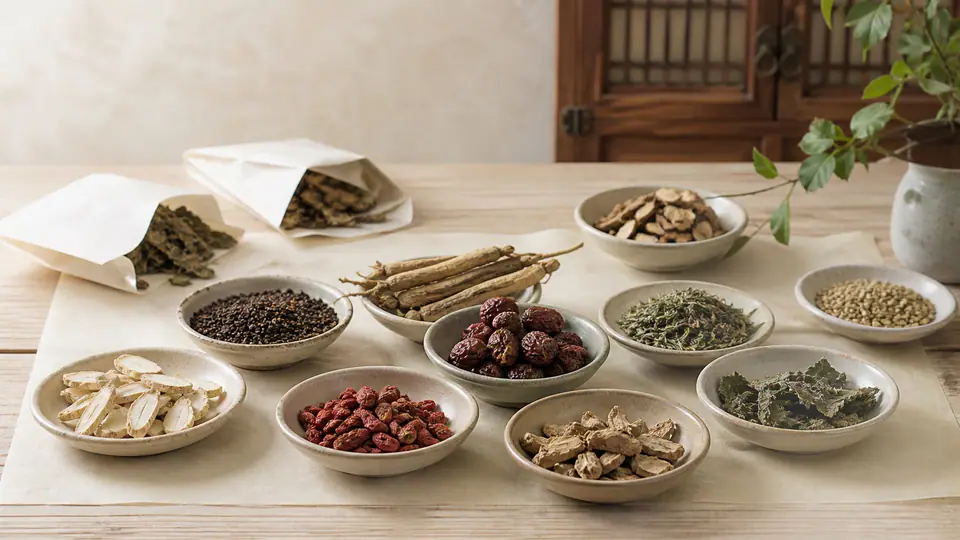
The Root that Knows Water, Zimo (Anemarrhena asphodeloides)
The Shennong Bencaojing classifies this root as a 'middle grade' herb, stating that it "eliminates pathogenic factors, reduces swelling in the limbs, promotes urination, supplements deficiencies, and boosts energy." There are several theories regarding the origin of the name 'Zimo' (知母), but the most widely told story is that it was named so because it treats fever and thirst as if it "knows (知) the mother's (母) illness." The Mingyi Bielu adds that it "treats the distressing fever of cold damage and chronic malaria, pathogenic factors below the ribs, accumulations in the chest, wind-sweat, and internal jaundice." The Bencao Gangmu summarizes the properties of this medicinal herb in one sentence: "Below, it moistens the dryness of the kidneys to supplement Yin; above, it clears the metal of the lungs to drain fire." It creates an image of a stream of water moistening both the top and bottom simultaneously.
Many people think of 'Zimo' simply as a 'herb good for blood sugar' or a 'restorative medicine to lower menopausal heat.' However, classical records paint a slightly different picture. Chen Shiduo of the Bencao Xinbian warned that while "Zimo is best at draining fire from the stomach and kidneys, relieving thirst, and stopping fever," this "substance should only be used for a short time and must not be taken long-term." The Bencao Zeyao Gangmu also draws a line, stating, "It drains the fire of the kidneys and serves as an assistant to promote urination. Zimo is used to rescue the kidneys, not to supplement them." In other words, Zimo is closer to a 'digestive aid' that temporarily manages a state where heat has surged excessively, rather than a 'restorative medicine' that fills a deficiency. The classics repeatedly emphasize that if its cold and lubricating properties remain for too long, they may instead damage the warm energy of the stomach and spleen.
Therefore, when using Zimo, 'how much,' 'with whom,' and 'for how long' become particularly important. Since it is a cold-natured herb that captures heat, the key to this medicine is knowing its precise scope and duration of use. Below, we will guide you step-by-step on which prescriptions Zimo is used in, what role it plays, and which constitutions or conditions require caution.
Summary at a Glance
While the name Jimo might sound like 'a plant that knows its mother' in a herbal medicine dictionary, it is actually a rhizome medicinal herb used to clear heat and replenish body fluids. The table below provides a concise summary of Jimo's identity and key characteristics.
| Category | Content |
|---|---|
| Origin | Hanja Name 知母, Scientific Name Anemarrhena asphodeloides Bunge. Uses the rhizome of plants in the genus Anemarrhena of the Liliaceae or Asparagaceae family. |
| Properties and Meridian Tropism | Taste is bitter, and nature is cold. The Bencao Gangmu describes it as non-toxic, and the Bencao Xinbian describes it as greatly cold. It primarily acts on the Lung, Stomach, and Kidney meridians. |
| Representative Aliases | Various aliases are passed down, including Zimo (知母), Gumo, Lianmu, Gumu, Huamu, Dizhen, Shuizhen, and Guxin Laoren. |
| Efficacy Recorded in Literature | Shennong Bencaojing: "Eliminates pathogenic factors, reduces limb edema, promotes urination, supplements deficiencies, and boosts energy." Mingyi Bielu: "Treats the distressing fever of cold damage and chronic malaria, pathogenic factors below the ribs, accumulations in the chest, wind-sweat, and internal jaundice." Bencao Gangmu: "Below, it moistens the dryness of the kidneys to supplement Yin; above, it clears the fire of the lung-metal." |
| Main Ingredients | Saponin components such as Timosaponin A-I/III and Chimonin are known as the primary active ingredients. |
| Combinations and Contraindications | Mainly used in prescriptions for clearing heat and draining fire (Cheong-yeol-sa-hwa) and nourishing Yin to lower fire (Ja-eum-gang-hwa). Because its nature differs from restorative medicines that supplement Yang or Yin, it can be difficult to use them together. Caution is required for those with cold symptoms, such as loose stools/diarrhea due to spleen deficiency (Bi-heo), coldness and deficiency of the stomach and spleen (Wi-bi-heo-han), or cough with cold phlegm (Han-eum-hae-su). |
Is this medicinal herb right for me?
Zimo is a medicinal herb with a clear direction of cooling heat and supplementing body fluids. Therefore, it is useful when 'fire' remains in the body, but conversely, it may deplete energy in a state where 'fire' is lacking. It is recommended to first assess based on the following three criteria:
- Generally suitable cases: Traditionally used for cases of dry mouth and throat, night sweats due to rising heat, and dark, scanty urine. It may also be considered in appropriate combinations for those who lose sleep due to excessive heat or have a dry cough.
- Cases requiring caution: Caution is needed for those with frequent diarrhea, weak digestion, or a cold constitution, as the cold nature and lubricating effect of Zimo may exacerbate symptoms. Pregnant women, breastfeeding women, children, and the elderly should avoid taking it alone without professional consultation. Those taking diabetes medication or anticoagulants should definitely consult a professional before combined use, as there are theoretical concerns regarding interactions.
- Cases to avoid: Zimo should be avoided in cases of loose stools/diarrhea due to spleen deficiency, cold and weak stomach/spleen, cough due to cold phlegm, or cold symptoms of an external cold (wind-cold exterior syndrome), as it may draw pathogenic factors inward or deepen the cold condition.
Practical Q&A
Inquiries about Zimo usually start with questions like "I feel hot, would this be right for me?", "Can I take it for a long time?", or "Can I use it with other medicines?" Below is a summary of answers to frequently asked questions during consultations, based on verified classical and academic evidence. It is essential to confirm your individual constitution and symptoms through a consultation with a Korean medicine doctor.
What symptoms is Zimo mainly used for?
Zimo is traditionally used to cool heat and supplement body fluids. The Shennong Bencaojing states that it "eliminates pathogenic factors, reduces swelling in the limbs, promotes urination, supplements deficiencies, and boosts energy," and the Mingyi Bielu adds that it "treats the distressing fever of cold damage and chronic malaria, pathogenic factors below the ribs, accumulations in the chest, wind-sweat, and internal jaundice." The Bencao Gangmu summarizes that it "below, moistens the dryness of the kidneys to supplement Yin; above, clears the metal of the lungs to drain fire." The modern Pharmaceutical Information Center classifies it as a heat-clearing and fire-draining medicine, noting that it primarily acts on the Lung, Stomach, and Kidney meridians.
Can I take Zimo for a long time?
Long-term use should be approached with caution. The Bencao Xinbian records that "this substance is good for short-term use, but should not be taken for a long time." Zimo is cold in nature, bitter in taste, and has a lubricating tendency, which can damage the Yang energy of the stomach. In particular, those with weak digestion, a tendency toward diarrhea, or deficiency in the stomach and spleen need to be more cautious about long-term use.
Which medicinal herbs pair well with Zimo?
Representative combinations include the following:
- Zimo + Gypsum (Seok-go): This is a combination used in Baekho-tang from the Shanghan Lun. It is recorded as a structure where Gypsum lowers the fire of the stomach and Zimo assists in this process.
- Zimo (Anemarrhena rhizome) + Hwangbaek (Phellodendri Cortex): A representative combination used to treat Yin deficiency with hyperactivity of fire in formulas such as Jibakjihwang-hwan or Daeboeum-hwan.
- Zimo (Anemarrhena rhizome) + Paemo (Fritillaria bulb): Used together in Imosan to treat coughing caused by lung heat.
- Zimo (Anemarrhena rhizome) + Jihwang (Rehmannia root): Frequently found in prescriptions that nourish Yin while reducing heat.
When should Zimo be avoided?
Due to its cold and lubricating properties, Zimo is generally avoided or used with caution in the following cases:
- Spleen Deficiency with Loose Stools: For those with a deficient spleen and frequent diarrhea
- Cold-Phlegm Cough: For those coughing due to cold and damp energy lingering in the lungs
- Spleen and Stomach Cold Deficiency: For those who cannot tolerate cold well due to a lack of Yang energy in the stomach and spleen
- Exterior Wind-Cold Syndrome: The exterior syndrome stage of an early cold, characterized by chills and a lack of perspiration
- Yang Deficiency with Coldness/Edema: For those whose bodies are cold and prone to swelling
Can Zimo be used during pregnancy or breastfeeding?
Official clinical trial data or official warnings from the Korean Ministry of Food and Drug Safety regarding pregnancy and breastfeeding have not been confirmed. Some Chinese medical information sources describe it as a contraindication or advise cautious use due to concerns that the cold nature of Zimo may affect the fetal energy. Therefore, it is safest to decide only after consulting with a Korean medicine doctor during pregnancy or breastfeeding.
Are there precautions when using it with Western medications?
Specific clinical interaction cases or mechanism studies have not been secured. However, the following cases require caution in theory:
- Hypoglycemic agents: Since animal experiments have reported that Zimo has a blood-glucose-lowering effect, there are concerns about the possibility of hypoglycemia when used concurrently.
- Anticoagulants/Antiplatelets: Caution is required as saponin components may theoretically affect coagulation functions.
- Immunosuppressants: There is a theoretical possibility of interaction due to immunomodulatory effects.
- Diuretics: There are concerns regarding electrolyte imbalance when used for long periods or in excessive amounts.
If you are taking Western medicine while receiving Korean medicine treatment including Zimo (Anemarrhena asphodeloides), please be sure to share the medications you are taking with your attending Korean medicine doctor.
Relationship with Other Medicinal Herbs (Yakdae/Pairing)
Zimo is often used in pairs with other medicinal herbs rather than alone to reveal its properties. In traditional medicine, these core combinations are called "Yakdae," and in the case of Zimo, it is frequently paired with herbs that maintain the cooling effect while varying the location and depth of action. Below are representative combinations confirmed in classical texts.
- Zimo + Seokgo (Gypsum) Used in the Baekho-tangof the "Shanghan Lun" and "Jingui Yaolue". In this structure, Seokgo lowers strong heat while Zimo supports this and replenishes body fluids; it has been traditionally used when the body is very hot, with excessive sweating and severe thirst.
- Zimo + Hwangbaek (Phellodendri Cortex) Used in the Jibak-jihwang-hwanof the "Uijong Geumgam". By adding Zimo and Hwangbaek to Jihwang-based prescriptions, it is traditionally utilized to manage heat caused by Yin deficiency.
- Zimo + Paemo (Fritillaria) Used in the Imo-sanof the "Hwaje Gukbang". These two herbs are used together to manage coughing caused by lung heat.
- Zimo + Jihwang (Rehmannia), Geopan (Tortoise Plastron) Used in the Daebo-eum-hwanof the "Dan-gye Sim-beop". It is traditionally used to manage evening heat sensations, night sweats, and coughing up blood resulting from Yin deficiency and hyperactive fire.
- Zimo + Gyeji (Cinnamon Twig), Jakyak (Peony Root) From the 《Geumgye-yoryak (Essential Prescriptions from the Golden Cabinet)》, Gyeji-jagyak-jimo-tang (Cinnamon Twig, Peony, and Anemarrhena Decoction)is used. It is known as a prescription for treating swollen and painful joints, referred to as Yeokjeolpung (wandering wind in the joints).
Contraindications based on combination are similar to those of Anemarrhena (Jimo) used alone. Caution is required for prescriptions containing Anemarrhena in cases of Spleen Deficiency (Bi-heo) with frequent diarrhea, a cold and weak stomach, or coughing due to Cold-Phlegm (Han-eum). In particular, combinations with Gypsum (Seok-go) possess a strong cold property, so they may not be suitable for those with a cold constitution or a deficiency in Yang energy (Yang-gi).
In what form is it consumed?
Anemarrhena is a medicinal herb made from dried rhizomes, and traditionally, the most common Decoction The most common form is a decoction boiled in water. In modern times, it is also available as concentrated extracts, powders, or pills. However, since Anemarrhena has a cold nature and a distinct effect on managing moisture, the form of use is important when considering both taste and efficacy.
- Tea Steeping Anemarrhena alone as a tea is not common. Because its nature is cold and it strongly supplements body fluids, it may burden digestive functions if it does not match the individual's constitution.
- Food It is not commonly used as a daily food ingredient. It is used as a Korean herbal medicine in the form of prescriptions or professional processed products.
- Decoction This is the most traditional and common form. The rhizome is boiled in water for consumption, and this method is used in prescriptions such as Baekho-tang (White Tiger Decoction) from the 《Shanghanlun》 and Gyeji-jagyak-jimo-tang from the 《Geumgye-yoryak》.
- Professional Prescription Anemarrhena is a herb whose purpose becomes clearer when combined with other herbs in a prescription rather than when used alone. It is often used with herbs that maintain the cooling effect but target different areas, such as Gypsum (Seok-go), Phellodendrond Cortex (Hwang-baek), Coptis Rhizome (Hwang-ryeon), or Rehmannia (Ji-hwang).
The appropriate dosage and duration of Anemarrhena use vary depending on the individual's constitution, symptoms, and the other herbs used. Generally, academic materials suggest a decoction dosage range of 3–9g as a reference, but for safety, actual use should be determined by a doctor of Korean medicine's diagnosis and prescription. Since long-term use or high doses require consideration of the functional state of the stomach and intestines, professional consultation is recommended.
Interactions and Safety During Use
As Anemarrhena is a herb with a clear direction of cooling heat and supplementing body fluids, it is helpful when there is 'fire' remaining in the body, but in the opposite state, it may instead deplete energy. Here is a summary of precautions repeatedly noted in classical and modern records.
- Bi-heo-byeon-dang (Constitution with weak digestion and tendency toward diarrhea): Because Anemarrhena's nature is cold and it strongly manages moisture, it may worsen diarrhea in this constitution.
- Han-eum-haesu (Coughing caused by cold foods or a cold constitution): Herbs with cold properties are not suitable for Cold syndromes (Han-jeung).
- Bi-wi-heo-han (A state where the energy of the stomach and spleen is cold): There are records that long-term use may damage the Yang energy of the spleen and stomach.
- Oe-gam-pung-han-pyo-jeung (Early cold symptoms characterized by chills and shivering): There is a concern that the cold property may draw pathogenic factors (Sa-gi) further inside the body.
- Chills and edema due to Yang deficiency: The action of supplementing Yin and cooling heat may instead harm Yang energy.
For pregnant, breastfeeding, infants/toddlers, and elderly patients, the cold property of Jimo may affect the fetal Qi (胎氣) or immature internal organs, so cautious use is recommended. Additionally, concomitant use with diabetes medications or anticoagulant/antiplatelet agents requires theoretical caution, and any specific plans for concomitant use should be discussed with a Korean medicine doctor.
Prescriptions containing Zimo (Anemarrhena asphodeloides) vary depending on an individual's constitution and symptoms. During the medical evaluation, we examine the combination of heat sensations, dry mouth, sleep, digestion, and cold sensations to determine whether to include Zimo and which other medicinal herbs to combine it with.
If you experience these symptoms
If these signs appear
Zimo is a medicinal herb with distinct properties for cooling and managing moisture. While it is helpful when residual heat remains in the body, the appearance of the following signals during intake may indicate that it is not suited to your constitution or symptoms, or that it is acting excessively. In such cases, it is important not to reduce the dose or stop taking it on your own, but to first notify the attending Korean medicine doctor who provided the prescription.
- Increased frequency of diarrhea or loose stools This is a representative signal that appears when Zimo may be damaging the energy of the spleen. Extra caution is needed, especially for those who originally have weak digestion or loose stools.
- Abdominal cooling or slowed digestive function This occurs when abdominal coldness, loss of appetite, or post-meal discomfort newly develops or worsens.
- Chills or cold hands and feet This may manifest as the body's yang energy being suppressed because the cooling effect has become excessive.
- Loss of energy and increased fatigue While Zimo replenishes bodily fluids, it can actually deplete energy in constitutions for which it is not suited.
- Symptoms not weakening or instead recurring If heat sensations, dry mouth, or insomnia do not decrease but persist or worsen after intake, the direction of the prescription must be re-evaluated.
If these signals appear, please stop taking the medicine immediately and consult your attending Korean medicine doctor. In particular, if accompanied by diarrhea and dehydration, severe abdominal pain, decreased consciousness, or difficulty breathing, or if symptoms worsen rapidly, it is safe to visit an emergency medical institution.
Differences from other restorative medicines
Contrary to the impression its name may give, Zimo is not simply a 'herb that cools the body.' Because its properties for cooling and managing moisture are distinct, it is highly effective when used in states where heat remains and bodily fluids are dried up; however, in the opposite situation, it can actually deplete energy. Therefore, even within the broad category of 'restorative medicine,' Zimo does not occupy the same position as any other restorative medicine.
Traditional restorative agents such as Gongjindan or Gyeongokgo are primarily focused on supplementing energy and enhancing essence. In contrast, Zimo focuses on cooling heat and replenishing bodily fluids, so it is more frequently considered for cases of night sweats, dry mouth, or restlessness caused by residual heat in the body. The Bencao Gangmu (Compendium of Materia Medica) describes Zimo as 'moistening the dryness of the kidneys and supplementing yin below, and clearing the gold of the lungs and draining fire above.' This means Zimo is not just a cooling herb, but one that replenishes fluids where there is heat while simultaneously lowering the 'fire.'
Additionally, Zimo is used alongside Hwangbak (Phellodendron bark) in prescriptions like Jibakjihwang-hwan to treat Yin deficiency with hyperactivity of fire, or in prescriptions like Daeboeum-hwan as a supplement to restorative medicine. In these cases, Zimo itself does not possess the restorative power, but rather plays the role of clearing residual heat upon the foundation created by other restorative herbs. It is similar to how a hot furnace must be cooled first before repairs to a house can begin.
Therefore, to determine whether Zimo is necessary or if other restorative medicines like Gongjindan or Gyeongokgo are more appropriate, one must first distinguish whether 'heat' remains in the body or if 'energy' is lacking. Since this distinction is often difficult to make alone, it is safest to choose after confirming your constitution and symptoms through a consultation at our Baekrokdam Korean medicine clinic.
References
- Evidence material related to Zimo 1: Supporting data from data.go.kr.
- Evidence material related to Zimo 2: koreantk.com evidence materials.
- Evidence material related to Zimo 3: GBIF plant classification data.
- Evidence material related to Zimo 4: Royal Botanic Gardens Kew Plant Classification Data.
- Evidence material related to Zimo 5: Crude drug data from the National Institute of Food and Drug Safety Evaluation.
- Evidence material related to Zimo 6: Korea Institute of Korean Medicine official data.
- Evidence material related to Zimo 7: Korea Institute of Korean Medicine official data.
- Evidence materials related to Zimo (Anemarrhena asphodeloides) 8: health.kr supporting data.
If you would like to check if this medicinal herb is right for you or which prescription it should be used with, please leave a medical inquiry. For those who find it difficult to visit the clinic, non-face-to-face consultations are available; we will provide guidance after first reviewing your current condition and current medications.

Medical Staff Review
Director Choi Yeon-seung
Chief Director of Baekrokdam Korean Medicine ClinicZimo Dictionary Entry, reviewed the safety of expressions and the scope of verification before administration.
Review Scope: Clinical Accuracy, Pharmacology, Contraindications, Combinations, QA · Last Reviewed 2026-08-16
- Graduated from Kyung Hee University College of Korean Medicine
- Providing Korean medicine treatment since 2010
- Consultations for Gongjindan, Gyeongokgo, Nokyong (Deer Antler) restorative medicine, and customized restorative herbal medicine