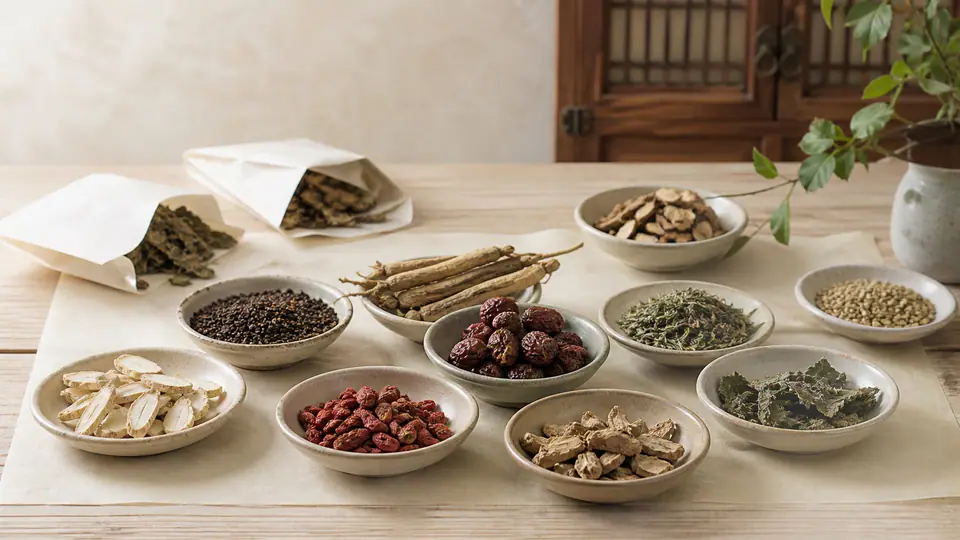
A Small Boat That Pierces Through Wind, The Origin and Use of Jigak (Citrus reticulata Peel)
The classic text 《Gaerye》 states, “Jisil pierces through wind, and Jigak pierces through Qi.” Although they come from the same tree, Jisil (using immature fruit) and Jigak (using slightly more mature fruit with the peel removed) have been distinguished since ancient times. In particular, Jigak is recorded as being used to resolve states where ‘Qi’ is blocked and congested.
Today, many people remember Jigak only as a ‘common medicinal herb used when digestion is poor.’ However, the state that Jigak refers to in classic texts is closer to ‘Qi stagnation’ (Gi-ul-gi), energy that stays in one place and does not flow, rather than simple ‘indigestion.’ This herb is used when the abdomen feels full and oppressive, or when there is a feeling that something is not moving downward. It is more accurate to view it as a ‘herb that reorganizes the flow of Qi’ rather than simply a ‘digestive aid.’
However, because its power to clear this flow is strong, it is crucial who uses Jigak, how much is used, and within which prescription it is included. It can be a herb that may actually exacerbate symptoms in individuals whose energy is already deficient or in a sagging state. On this page, we will guide you through the identity of Jigak and the conditions under which it works safely.
Summary at a Glance
Even though they come from the same tree, the uses of Jigak and Jisil are distinct; in classic texts, Jigak was used to resolve states where Qi is blocked and congested. The key information is summarized in the table below.
| Category | Content |
|---|---|
| Origin | Hanja name: 枳殼 / Please check the raw material list of the actual prescription for the source plant and the part used. |
| Properties and Tropism | Verification required. Please inquire during your consultation. |
| Representative Alias | Verification required. Please inquire during your consultation. |
| Efficacy recorded in literature | Traditionally used to resolve states where Qi is blocked and congested (《Gaerye》). |
| Main Ingredients | Verification required. Please inquire during your consultation. |
| Combinations and Contraindications | Caution is required when used concurrently with restorative herbal medicines intended to supplement Yang or Yin. Please confirm specific interactions during your consultation. |
Is this medicinal herb right for me?
The clinical context in which Jigak is used lies where the traditional description of ‘blocked and congested Qi’ overlaps with the digestive functions observed in modern research. However, since suitability varies depending on a person's constitution, symptoms, and the other herbs used together, we categorize it based on the following three criteria.
- Generally suitable cases: Traditionally considered for cases where the chest or flanks feel oppressive, or when the abdomen feels bloated or digestion feels slow after eating. Jigak is used to resolve the stagnation of energy expressed as ‘Qi stagnation’ (Gi-ul-gi).
- Cases requiring caution: Caution is required for those with an empty stomach (fasting) or a constitution where the gastrointestinal tract is sensitive and reacts easily to stimulation. Because Jigak tends to push energy downward and pierce through blockages, it may be burdensome to a weak or sensitive stomach. If you are pregnant or breastfeeding, you must consult your attending Korean medicine doctor.
- Cases to avoid: In cases of symptoms where Qi is deficient and sagging (e.g., tendency toward organ prolapse, chronic diarrhea, or a feeling of sagging in the lower abdomen), Jigak may actually worsen the condition. Additionally, as a rule, it is not used in cases of clear inflammation or damage, such as gastrointestinal bleeding or acute gastroenteritis.
These three criteria are not for independent judgment but are items that a Korean medicine doctor verifies through pulse diagnosis, physical examination, and medical interview before prescribing. When receiving a prescription containing Jigak, providing information about your current Western medications, health supplements, and gastrointestinal history will allow for safer adjustment.
Practical Q&A
While Jigak is used within a prescription to ‘resolve the state of blocked Qi,’ it is not a herb to be taken alone; its suitability depends on symptoms, constitution, and the other herbs used. Therefore, we have compiled frequently asked questions from the clinic so you can consider them before your consultation.
How is Jigak different from Jisil?
Even though they are fruits from the same tree, the harvest time and processing methods differ. Jisil uses the immature fruit as is, while Jigak is made by peeling and drying the fruit that has grown further. The 《Gaerye》 records that “Jisil pierces through wind, and Jigak pierces through Qi,” showing that their uses have been distinguished since ancient times. In actual prescriptions, one of the two is selected based on the depth and location of the symptoms and the other herbs used together.
Is Jigak used when digestion is poor?
Prescriptions containing Jigak are often used for those complaining of indigestion. However, traditionally, it is described as resolving a state of ‘Qi stagnation’ (Gi-ul-gi), where Qi stays in one place and does not flow, rather than simply ‘poor digestion.’ Therefore, it is often included in prescriptions when the abdomen feels oppressive and tight, or when there is a feeling that food is not moving down. An accurate determination requires a consultation with a Korean medicine doctor.
What effects of Jigak have been reported in modern research?
There are papers where flavonoid components of Citrus genus plants related to Jigak have been studied as candidate substances for treating liver disease. Additionally, research has evaluated flavonoid preparations of immature citrus fruit (Aurantii Fructus Immaturus) in a randomized, double-blind, placebo-controlled clinical trial for patients with functional dyspepsia, and results of subacute and genotoxicity tests on water-soluble extracts have been reported. However, as many of these studies targeted the entire Citrus genus or similar herbs rather than Jigak itself, there are limitations in applying them directly to Jigak.
Can it be taken during pregnancy or by children?
There is a lack of confirmed official evidence regarding specific dosage and duration standards for pregnancy safety or pediatric use. Since Jigak is a herb that acts to pierce through Qi, it is necessary to decide after consulting a Korean medicine doctor if you are pregnant, breastfeeding, or treating a child.
What should I be careful about when taking it with Western medicine or other supplements?
Herbal medicine prescriptions containing Jigak may interact with other drugs or health supplements. In particular, if you are taking medications that may affect digestive function or liver metabolism, it is important to inform your doctor of all current medications and health supplements before the prescription. Specific compatibility will be confirmed during your consultation.
What are the representative prescriptions that include Zigak (Aurantii Fructus Immaturus)?
Zigak plays a role in penetrating and releasing stagnant Qi, occupying a supportive yet important position in various prescriptions. It is frequently seen in prescriptions related to Qi stagnation in classics such as the Bangyakpyeon. Since the exact selection of a prescription is made after a comprehensive evaluation of symptoms and constitution, please decide through a consultation rather than using the information on this page for self-diagnosis or self-prescription.
Relationship with Other Medicinal Herbs (Yakdae/Pairing)
Zigak is rarely used alone. In Korean medicine, medicinal herbs gain meaning not by acting individually, but when they fulfill their role within a prescription by pairing with other herbs; such pairs are called 'Yakdae'. Because Zigak tends to release states where Qi is blocked and clumped, its efficacy varies depending on whether it is combined with herbs of a similar nature or paired with herbs of an opposite nature.
Examples of combinations that can be found in public data are as follows:
- Zigak + Baekchul (Atractylodis Rhizoma Alba) + Hubak (Magnoliae Cortex), etc. Verification is required. Please inquire during your consultation.
Since Zigak has a tendency to disperse Qi, caution must be taken to avoid using it alone or in excess for those with weak Qi or in states of Qi deficiency, such as after childbirth or severe hemorrhage. Additionally, during pregnancy, special caution is needed when combined with herbs that may pull energy downward or stimulate the uterus; it is recommended to confirm specific applicability through a medical consultation.
In what form is it consumed?
Zigak is generally used together with other medicinal herbs within Korean medicine prescriptions rather than being used alone as a tea or food ingredient. The details are organized by form below.
- Tea: Not common. Zigak is mostly used in combined forms within prescriptions rather than as a standalone tea ingredient.
- Food: Not common. Traditional use as a spice or food ingredient has not been confirmed.
- Jeontang (Decocted Korean herbal medicine): This is the most common form. Zigak has been traditionally used in decoction prescriptions, where it is boiled in water with other herbal medicines, to release blocked states of Qi.
- Professional Prescription: Common. Zigak is used through combinations with other herbs in professional prescriptions configured by a Korean medicine doctor to match an individual's symptoms and constitution. Specific prescriptions and dosages are determined through a medical consultation.
Interactions and Safety During Use
Zigak is used within prescriptions to release blocked states of Qi. If you are pregnant, taking other medications, or have digestive symptoms, please inform your Korean medicine doctor before taking it. You can check the medications to take together and situations requiring caution below.
- Pregnancy and Breastfeeding: Sufficient clinical safety data regarding the use of Zigak during pregnancy has not been confirmed. If you are pregnant, breastfeeding, or planning to become pregnant, please be sure to consult a Korean medicine doctor.
- Digestive Sensitivity: Because Zigak tends to move Qi, it may exacerbate symptoms in individuals with a weak stomach or frequent diarrhea. Verification of constitution and symptoms is required before use.
- Interactions with Western Medicine: To date, no official evidence regarding interactions between Zigak and specific Western medicines has been confirmed. If you are taking Western medicine, please be sure to inform us before the prescription.
Zigak is most often used in combination with other herbs rather than taken alone, and its suitability varies depending on symptoms, constitution, and the other herbs used. If you find it difficult to determine if it is right for you, please consult Baekrokdam Korean medicine clinic.
If you experience these symptoms
While Zigak is used to release blocked states of Qi within a prescription, if the following signals appear during use, it may be a warning that the herb does not suit your body or is related to overdose or long-term use. In such cases, rather than reducing the dose or stopping on your own, it is important to first notify the prescribing Korean medicine doctor and have the dosage adjusted.
- When abdominal bloating increases or pain worsens: Although Zigak has a tendency to release Qi, abdominal discomfort may actually increase depending on the state of the gastrointestinal tract or the combination with other herbs.
- When diarrhea or the urge to bowel move becomes more frequent: As this is a medicinal herb that can affect digestive function, there are cases where intestinal motility becomes excessively active.
- When new heartburn or reflux occurs or worsens: Caution is required for individuals with gastric acid reflux or gastric mucosal irritation.
- When dizziness occurs or the heartbeat becomes irregular: Herbs that move Qi (vital energy) may cause reactions in constitutions where they can affect blood pressure or heart rate.
- When accompanied by abdominal pain or bleeding during pregnancy: Since sufficient clinical data on the use of Zigak (Fructus Aurantii) during pregnancy has not been confirmed, you must stop use immediately and notify your obstetrician or Korean medicine doctor.
If adverse reactions are severe or accompanied by difficulty breathing, decreased consciousness, severe abdominal pain, vomiting, or bleeding, it is safe to visit an emergency medical institution.
Differences from other restorative medicines
Zigak is a medicinal herb with different properties from Boyak (restorative medicine), which means 'medicine that supplements energy.' While Boyak focuses on filling states where the body's Qi, blood, or Yin-Yang are deficient, Zigak has a strong tendency to resolve states where Qi is blocked and congested. Therefore, the situations in which it is used differ from traditional restorative tonics such as Gongjindan or Gyeongokgo.
Gongjindan is a prescription focused on supplementing the constitution and filling Qi and blood through long-term intake, and Gyeongokgo is also known as a restorative and blood-tonifying prescription based on Heojeung (deficiency pattern). These are considered when the body is 'empty' and needs replenishment. In contrast, Zigak is often used in combination with other herbs within a prescription for states where the body is not so much empty as it is feeling stifled and congested due to blocked Qi flow, for example, when the chest feels tight, the abdomen is bloated, and digestion is slow.
Therefore, to determine whether Zigak is necessary or if restorative medicines like Gongjindan or Gyeongokgo are more appropriate, one must distinguish whether their symptoms are Heojeung (deficiency pattern) or Siljeung (excess pattern), and whether Qi is deficient or blocked. As this distinction is often difficult to make alone, it is safest to design a prescription after examining both symptoms and constitution. We recommend visiting Baekrokdam Korean medicine clinic for a consultation to determine the right direction for you.
References
- Evidence material related to Zigak 1: Supporting data from data.go.kr.
- Evidence material related to Zigak 2: Korea Institute of Korean Medicine official data.
- Evidence material related to Zigak 3: Crude drug data from the National Institute of Food and Drug Safety Evaluation.
- Evidence material related to Zigak 4: PubMed academic paper.
- Evidence material related to Zigak 5: PubMed academic paper.
- Evidence material related to Zigak 6: PubMed academic paper.
- Evidence material related to Zigak 7: NCBI original academic data.
If you would like to check if this medicinal herb is right for you or which prescription it should be used with, please leave a medical inquiry. For those who find it difficult to visit the clinic, non-face-to-face consultations are available; we will provide guidance after first reviewing your current condition and current medications.

Medical Staff Review
Director Choi Yeon-seung
Chief Director of Baekrokdam Korean Medicine ClinicZigak Dictionary Entry, reviewed the safety of expressions and the scope of verification before administration.
Review Scope: Clinical Accuracy, Pharmacology, Contraindications, Combinations, QA · Last Reviewed 2026-08-16
- Graduated from Kyung Hee University College of Korean Medicine
- Providing Korean medicine treatment since 2010
- Consultations for Gongjindan, Gyeongokgo, Nokyong (Deer Antler) restorative medicine, and customized restorative herbal medicine