Layered names and the gaps within
Can I continue taking Jeol-paemo powder for a cough or phlegm? In short, there is insufficient evidence to recommend long-term use before first confirming the cause and duration of the cough, as well as the species, formulation, and concentration level of the product. While Jeol-paemo is known as a long-standing herbal medicine for coughs, various species and formulations are mixed under the same name, so the term 'Paemo' alone cannot be used to conclude that the raw materials are the same.
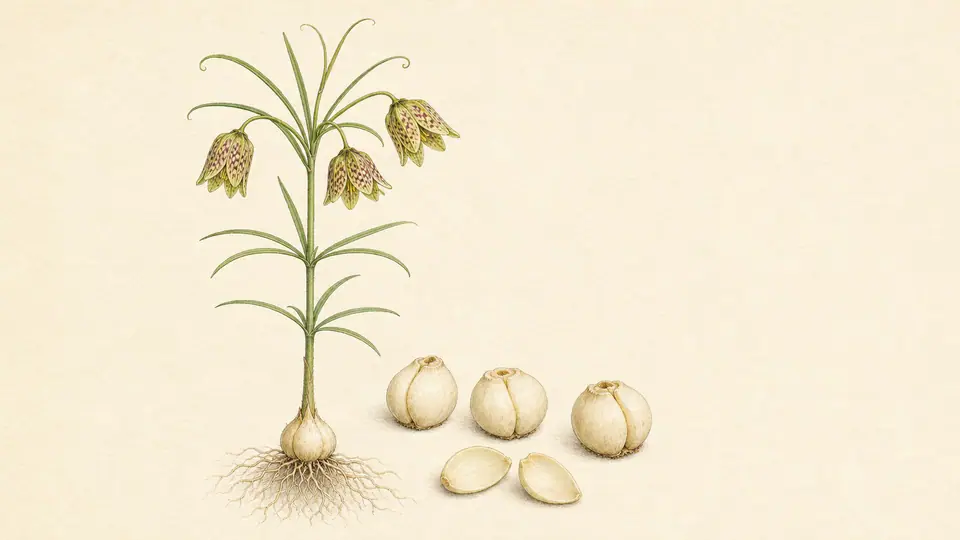
It is essential to distinguish that gap. Jeol-paemo is the bulb of Fritillaria thunbergii Miquel. The National Institute of Food and Drug Safety Evaluation classifies these bulbs into Dae-pae, Ju-pae, and Jeol-pyeon based on size and processing form. However, in the market, the name 'Paemo' often encompasses not only this species but also other Fritillaria species, including Cheon-paemo, and even total alkaloids or isolated components. The fact that things called by the same name actually possess different identities and exposure levels is the first point of caution regarding this material.
A medicine to suppress coughing, or a time to care for the cause
Coughs have diverse causes, including infection, asthma, reflux, medication, and cardiopulmonary diseases. Therefore, it can be dangerous to prolong a cough while taking Jeol-paemo powder. If a cough lasts for more than 3 weeks or is accompanied by shortness of breath, chest pain, blood-streaked phlegm, or high fever, medical evaluation takes priority over taking more of the material. Jeol-paemo is not a substitute for identifying the cause of a cough, but merely a candidate herbal medicine used in specific contexts.
The identity of Jeol-paemo: Distinguishing species and forms
The identity of Jeol-paemo is the bulb of Fritillaria thunbergii Miquel. Cheon-paemo and other Fritillaria species, as well as Dae-pae, Ju-pae, and Jeol-pyeon based on size, and raw herbal medicines versus total alkaloids or isolated components, do not share the same identity or exposure. This is not just a matter of taxonomy. It means that when we say 'Paemo', what we ingest may be a different biological raw material or chemical concentrate every time.
The definition provided by the National Institute of Food and Drug Safety Evaluation serves as the starting point for this distinction. Depending on whether it is the raw bulb, ground into powder, or an extract concentrating alkaloids, the amount and type of components the body encounters change. However, product labels often only list the name 'Paemo'.
Reasons for expectation: How far has the research come
Expectations for Jeol-paemo stem from pharmacological signals such as expectorant and anti-inflammatory effects. A 2021 review of F. thunbergii summarizes alkaloids and various pharmacological signals, but explains that more standardized human clinical trials and safety studies are needed. In other words, it cannot be concluded that phenomena observed in cell or animal experiments, or in isolated alkaloids, act in the same amount and manner in humans with chronic coughs.
A significant portion of the research remains at the cell, animal, or alkaloid extract stage. While this is an interesting starting point, it is not a stage that guarantees the actual efficacy of powder or capsules in a teacup. It is more appropriate to read this as 'such signals were observed' rather than 'it is effective'.
Between raw materials and extracts: The distance of concentration
Raw bulbs, powders, and total alkaloid extracts may all be called 'Paemo', but they are different product forms. Raw materials or powders involve ingesting complex components at relatively low concentrations. In contrast, total alkaloid extracts concentrate specific component groups and may be closer to the subjects that showed signals in animal toxicity studies.
Reviews on Fritillaria toxicity summarize signals such as tremors, anxiety, drowsiness, convulsions, and respiratory abnormalities in high-dose extract animal tests, but these are not data that establish the risk dose for humans using the raw herbal medicine. Therefore, the practical standard derived from current evidence is to avoid long-term use of Paemo powder or extracts where the origin species, total alkaloid content, and concentration ratio are unclear.
| Category | Characteristics | Points to Consider |
|---|---|---|
| Raw bulb/powder | Complex components, low concentration | Caution regarding long-term use if species, formulation, or origin is unclear |
| Total alkaloid extract | Concentration of specific component groups | Gap between animal toxicity signals and human safety data |
Zhe Bei Mu and Chun Bei Mu: Different species, different data
It is common to view Zhe Bei Mu and Chun Bei Mu as the same raw material. However, comparative studies between F. cirrhosa and F. thunbergii show that components and effects can differ by species. Therefore, data for Chun Bei Mu cannot be applied directly to Zhe Bei Mu. Applying results from one species to another may lead to differences in the types and proportions of components, as well as the intensity and direction of the effects.
This distinction is not merely an academic detail, but the first item consumers should check when choosing a product. If the label only says 'Bei Mu', you should ask whether it is F. thunbergii, another Fritillaria species, or a mixture of several species.
When taking together: Concurrent use and individual circumstances
What should be checked when using Zhe Bei Mu with other medications or supplements? First, it is necessary to verify whether it is F. thunbergii (Zhe Bei Mu) or Chun Bei Mu/other Bei Mu species; whether it is the raw bulb, powder, or total alkaloid extract and what the concentration ratio is; how long the cough has persisted and if there is shortness of breath, chest pain, blood-streaked sputum, or high fever; and whether antitussives or sedatives are being used concurrently.
Since human safety data is insufficient for pregnant or breastfeeding women, children, people with liver or kidney disease, or those taking it long-term, it is advisable not to use it without medical confirmation. If severe drowsiness, tremors, vomiting, respiratory abnormalities, or convulsions occur after intake, stop use and seek medical evaluation immediately.
Between human clinical trials and expectations: Gaps yet to be filled
There is a gap between the expectations for Zhe Bei Mu and the actual evidence. Antitussive signals in cells or animals are not the same as chronic cough in humans. The expectation for cough relief and the diagnosis of the cause are different goals. We often assume that the phrase 'long-used medicinal herb' implies sufficient human clinical trials. However, in the case of this material, that assumption may diverge from the actual evidence.
This is why a 2021 review stated that 'more standardized human clinical trials and safety studies are needed.' Expectations are high, but verification is still incomplete.
Criteria to Check Today
In other words, when choosing Zhe Bei Mu, you should not group species and formulations together based solely on the common name 'Bei Mu'. First, check if the product is Fritillaria thunbergii or another species, whether it is in the form of raw bulb, powder, or extract, and what the total alkaloid concentration ratio is. You must also disclose whether you are pregnant, breastfeeding, a child, have liver or kidney disease, or are taking other medications.
Separate from verifying the raw material, the timeline of the cough itself is important. Has the cough lasted more than 3 weeks? If accompanied by shortness of breath, chest pain, blood-streaked sputum, or high fever, medical evaluation takes priority over choosing Zhe Bei Mu.
These criteria go beyond a simple yes/no of 'can I take Zhe Bei Mu' and lead to questions of 'which Zhe Bei Mu, for which cough, and how much'. This is the realistic judgment we must maintain amidst the names of these layered bulbs.
References
- National Institute of Food and Drug Safety Evaluation Herbal Medicine Standards: Zhe Bei Mu.
- Fritillaria thunbergii phytochemistry and pharmacology review.
- Fritillaria toxicity review.
- Fritillaria cirrhosa and F. thunbergii comparison.
This text explains the origin of the raw materials, the scope of research, and precautions before consumption. As this cannot replace individual diagnosis or treatment, please consult a medical professional if you are taking medication or if symptoms persist. If sudden and severe symptoms such as difficulty breathing or decreased consciousness occur after consumption, seek help from 119 or the emergency room.

Medical Staff Review
Director Choi Yeon-seung
Chief Director of Baekrokdam Korean Medicine ClinicZhe Bei Mu Dictionary Entry, reviewed the safety of expressions and the scope of verification before administration.
Review scope: Ingredient origin, human studies, concomitant medications, safety of intake · Last reviewed 2026-08-17
- Graduated from Kyung Hee University College of Korean Medicine
- Providing Korean medicine treatment since 2010
- Consultations for Gongjindan, Gyeongokgo, Nokyong (Deer Antler) restorative medicine, and customized restorative herbal medicine