Can red clay stop diarrhea?
Can I take Jeokseokji powder to stop diarrhea?
In short, there are things to verify before starting. Jeokseokji is a mineral derived from soil, and just because soil can adsorb substances does not mean it will safely stop diarrhea occurring in your body.
The first thing to do when trying to stop diarrhea
The key to managing acute diarrhea is replenishing fluids and electrolytes and evaluating the cause. Jeokseokji powder is not a substitute for the diagnosis of bloody stools, infectious diarrhea, or chronic diarrhea. You must seek medical evaluation if you have bloody or black stools, high fever, severe abdominal pain, decreased urination, signs of dehydration such as dizziness, or diarrhea that lasts for more than 2 to 3 days. This is the prerequisite before considering Jeokseokji.
Jeokseokji is a mineral, not a plant
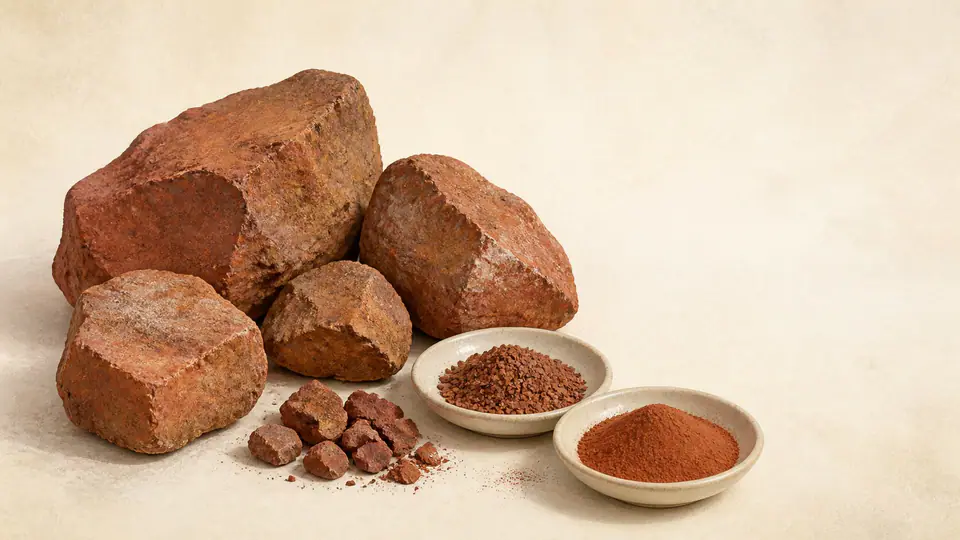
Jeokseokji is not a plant. The National Institute of Food and Drug Safety Evaluation describes Jeokseokji as a mineral primarily composed of halloysite, specifying a hydrated aluminum silicate composition and a heavy metal limit of 20 ppm. The mineral identity is Halloysite (hydrated aluminium silicate)recorded as such. Although the character 'ji' (meaning land/soil) in its name makes it feel like red clay, the identity of this raw material is a hydrated aluminum silicate mineral with high adsorptive properties. Therefore, the discussion should begin with the 'physical and chemical properties of the mineral' rather than 'natural herbs.'
Expectations created by the property of adsorption
It has long been noted that clay can adsorb certain toxins. This property is why red minerals that hold water and bind other substances came to be regarded as medicinal materials to stop diarrhea. However, adsorption does not selectively target only toxins. Adsorptive minerals can affect the absorption of prescription medications, iron, and nutrients. In other words, it is not a vessel that holds only what is desired, but has a property of binding various substances it comes into contact with.
Product form and quality vary even under the same name
Jeokseokji, general yellow clay, edible clay, kaolin pharmaceuticals, and purified halloysite nanotubes do not have the same quality or exposure levels. The Jeokseokji presented by the National Institute of Food and Drug Safety Evaluation is a standardized mineral with heavy metal limits, but it cannot be assumed that all yellow clay or clay powders on the market meet those standards. Furthermore, biomaterial research on purified halloysite nanotubes and the oral safety of raw mineral powder must be distinguished, as quality, particle size, impurities, and exposure amounts differ. Just because research discusses the potential of materials for drug delivery does not mean it is safe for humans to ingest Jeokseokji powder.
Why animal studies cannot be converted to human risk levels
In animal studies of purified halloysite nanotubes, aluminum accumulation in the liver and toxicity signals were observed depending on the dose. However, this cannot be directly converted to the human risk level for domestic Jeokseokji. Biomedical reviews of halloysite also discuss potential as a material for drug delivery, but long-term human safety data are lacking. In other words, even if there are interesting experimental results, they do not guarantee the safety of daily consumption.
Three questions to check before taking it with other medications
What then should be considered? First, distinguish whether it is official standardized Jeokseokji or a general yellow clay, edible clay, or kaolin product. Second, check if there are test reports for heavy metals such as lead, arsenic, and mercury, as well as particle and microbial tests. Third, check the duration of diarrhea, the presence of bloody stools, high fever, or dehydration, and whether prescription medications, iron, or minerals are being taken at the same time. These three points are the gateway to determining if the raw material is safe and if your current situation is appropriate before considering efficacy.
| Category | Verification Criteria |
|---|---|
| Ingredient Identity | Whether it is official grade Jeokseokji (red clay stone), or general yellow ocher, edible clay, or kaolin products |
| Safety Testing | Presence of test reports for heavy metals, particles, and microorganisms |
| Concurrent Use and Symptoms | Administration time of prescription drugs, iron, and minerals; duration of diarrhea and danger signs |
Adsorption is a double-edged sword
The adsorptive property of clay creates the possibility of trapping some toxic substances, but simultaneously creates the possibility of interfering with the absorption of medications and nutrients. If you take adsorptive minerals at the same time as prescription drugs, iron, or nutrients, the medication may not work properly. It is necessary to verify concurrent use and the required time interval with a medical professional or pharmacist. You must remember that adsorption is not unconditionally helpful, but rather a property where you cannot control what is being trapped.
Extra caution is required for specific individuals and situations
Self-administration should be avoided for pregnant or breastfeeding women, children, and those with kidney disease, as there is insufficient safety data for these groups and for long-term use. Do not consume yellow ocher, clay, or mineral powders that have not undergone heavy metal, particle, and microorganism testing. Reviews on edible and therapeutic clays note that the raw materials themselves can be sources of exposure to toxic elements and heavy metals. Even 'natural' ingredients considered safe can pose other risks if there is no evidence that they are uncontaminated.
The Gap Between Expectation and Evidence
Expectations for Jeokseokji stem from its adsorptive properties. However, to conclude that it is effective, one must consider the number of studies, consistency, and limitations. Biomedical reviews on halloysite leave open the possibility of its use as a material, but long-term human safety data is lacking, and toxicity signals from animal studies cannot be converted to human dosages. The core treatment for diarrhea lies in fluid and electrolyte replacement and cause evaluation. Jeokseokji cannot replace these.
Final Decision Criteria
Do not mistake the property of strong adsorption for a selective therapeutic effect; first verify the mineral identity, contamination tests, medication intervals, and danger signs of diarrhea. You must simultaneously consider what Jeokseokji is, what the specific product is, and your current physical condition. If you have suspicious symptoms or are taking concurrent medications, speaking with a medical professional or pharmacist first is the first step in choosing this ingredient.
References
- National Institute of Food and Drug Safety Evaluation Herbal Medicine Standards: Jeokseokji.
- Edible and healing clays review.
- Halloysite nanotubes biomedical toxicity review.
- Halloysite nanotubes biomedical applications and toxicity review.
This text explains the origin of the raw materials, the scope of research, and precautions before consumption. As this cannot replace individual diagnosis or treatment, please consult a medical professional if you are taking medication or if symptoms persist. If sudden and severe symptoms such as difficulty breathing or decreased consciousness occur after consumption, seek help from 119 or the emergency room.

Medical Staff Review
Director Choi Yeon-seung
Chief Director of Baekrokdam Korean Medicine ClinicJeokseokji Dictionary Entry, reviewed the safety of expressions and the scope of verification before administration.
Review scope: Ingredient origin, human studies, concomitant medications, safety of intake · Last reviewed 2026-08-17
- Graduated from Kyung Hee University College of Korean Medicine
- Providing Korean medicine treatment since 2010
- Consultations for Gongjindan, Gyeongokgo, Nokyong (Deer Antler) restorative medicine, and customized restorative herbal medicine