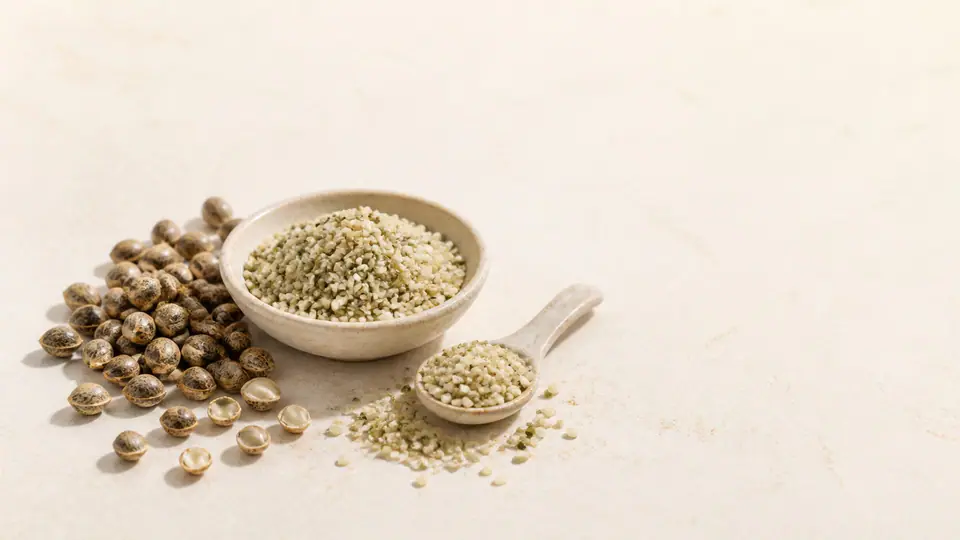
Seeds are just seeds; different names open different paths
If I consume hemp seeds, will I be exposed to cannabis components or face issues with drug tests? Can I also expect Omega-3 effects? In short, THC and CBD are not naturally present in the seeds themselves, but other parts of the plant may be mixed in during harvesting and processing, so it is necessary to verify the source and quality control. The Omega-3 effect comes from plant-based ALA, which is not the same as the EPA and DHA found in fish.
This question is not simply about a single ingredient. Under the same plant name, the identity of the product varies depending on whether it is the seed, the flower and leaves, the whole seed, the hulled heart, the oil, or the protein powder. The story of hemp seeds is ultimately a story of how 'the same name covers different raw materials.'
1. Boundaries created first by names
Hemp seeds are Cannabis sativathe seeds of cannabis used as food. They are also called cannabis seeds. Kew classifies this plant as an annual plant used for food, fiber, and medicinal purposes, but the identity of the product is determined by which part of the plant was used and how it was processed. Seeds are different parts from the flowers and leaves. Hemp hearts, whole seeds, protein powder, and seed oil obtained from seeds have different raw material parts and components than CBD oil, hemp extracts, and cannabis products obtained from flowers and leaves.
When people hear the words 'hemp' or 'cannabis,' they often think of the components of the flowers and leaves. However, seeds follow a different path.
2. What is naturally absent from seeds, but may be present as contamination
The FDA explains that while THC and CBD are not naturally present in cannabis seeds themselves, trace amounts may be present due to contact with other plant parts during harvesting and processing. This also means that 'zero detection' cannot be guaranteed for products of unknown origin.
The FDA has not challenged the GRAS (Generally Recognized as Safe) conclusion for specific food uses of hulled hemp seeds, hemp seed protein powder, and hemp seed oil. However, this is not an approval of efficacy for treating diseases, nor is it a contamination-free certification for all products. In other words, while there is a food safety evaluation for the seed product group, that alone does not prove therapeutic effects or the impossibility of contamination.
3. How the form changes when the shell is removed
When seeds are hulled, pressed, or ground, they become hemp hearts, seed oil, or protein powder. In this process, the ratios of fiber, protein, and fat change. Almost no protein or fiber from the seed remains in hemp seed oil. Seeds and hemp hearts contain calories. Therefore, it is necessary to check the nutrition facts and quantity for each formulation.
| Formulation | Characteristics | Points to Check |
|---|---|---|
| Hulled hemp hearts | Hulled seed hearts | Protein, fat, fiber ratio, and calories |
| Whole seeds | Whole seeds (with shells) | Relatively higher fiber content |
| Protein powder | Concentrated form of protein | Protein content and other ingredients |
| Seed oil | Mainly composed of fats | Fatty acid composition (such as ALA) and calories |
Even with the same raw materials, the purpose of consumption varies depending on how they are processed. Your choice depends on whether you want protein supplementation, fat supplementation, or simply a specific texture and flavor.
4. What are the realistic expectations for Omega-3?
The plant-based Omega-3 in hemp seeds is ALA. It is not the same fatty acid as the EPA and DHA found in fish or algae, nor does it share the same clinical evidence. This distinction is important for managing expectations. While some ALA is converted into EPA and DHA in the body, the conversion rate is low and varies by individual. Therefore, it is not appropriate to view hemp seed oil on the same level as products rich in EPA and DHA.
In a 4-week crossover trial conducted in 2026 with 30 adults with normal blood glucose levels who were overweight or obese, the fatty acid composition changed reflecting the intake, but there were no differences in blood lipids, blood glucose, insulin, blood pressure, or body composition. In a 12-week trial of 86 healthy adults, 2 g of hemp seed oil capsules per day did not significantly change blood lipids, LDL oxidation, platelets, or inflammatory markers.
Both studies showed changes in fatty acid composition, but it is difficult to conclude that these led to disease-related outcomes such as changes in blood pressure, lipids, blood glucose, or inflammation. There is a gap between the fact that a product 'contains Omega-3' and the claim that 'it prevents or treats a disease.'
5. Between Nutritional Supply and Disease Treatment
Hemp seeds or seed oils should not be used as substitutes for blood pressure medication, lipid-lowering medication, or diabetes treatment. This distinction is key to determining safety. Nutritional supply as food and the treatment of disease are different domains. While hemp seeds can be a source of protein, fat, and fiber, expecting pharmacological effects goes beyond the scope of the evidence.
What should you look for then? First, check whether the product is derived from the seeds or if it is a CBD/hemp extract derived from the flowers and leaves. Next, distinguish whether you are seeking nutritional protein and fat supplementation or treatment for cholesterol, blood pressure, or inflammation. Finally, check for a history of allergies, pregnancy, breastfeeding, current medications, or situations where even trace contamination is critical, such as doping or drug tests.
6. Concurrent Use and Individual Circumstances
Hemp seeds can be viewed as general food; however, for those who are pregnant, breastfeeding, or taking multiple medications, safety data for concentrated products beyond general food are limited, so it is advisable not to increase intake arbitrarily. If you have seed or nut allergies, or if you experience oral itching, hives, vomiting, or difficulty breathing after consumption, stop use immediately; severe symptoms require prompt medical evaluation.
Those for whom doping or drug tests are important should not confuse hemp seeds with CBD or hemp extracts and should verify the part of the plant used, THC test reports, and manufacturing quality. However, an absolute negative result cannot be guaranteed. This means the possibility of trace contamination cannot be completely ruled out.
7. Similar Names, Different Materials
The following are commonly compared in relation to hemp seeds:
- Hemp seeds, hemp hearts, protein powder, and seed oil: These come from the same seed but differ in processing methods and nutritional ratios.
- Hemp seed oil vs. CBD oil and hemp extracts: These differ in whether the raw material is the seed or the flowers and leaves.
- Plant-based ALA vs. EPA and DHA: Even within the Omega-3 family, the types of fatty acids and clinical evidence differ.
- Nutritional composition vs. blood pressure, lipids, and disease outcomes: The fact that a component is present must be viewed separately from the improvement of disease outcomes.
In other words, under the name 'cannabis/hemp,' seed-based products and extract-based products tell completely different stories. Treating these two as the same raw material leads to mismatched expectations and choices.
8. Criteria to check today
Rather than focusing on the image of hemp as a superfood, the criteria for choosing this ingredient should be verifying whether the raw material is the seed or an extract from the flowers and leaves, the product form and verifiable quality control, the difference between ALA and EPA/DHA, and the distinction between nutritional supplementation and disease treatment.
Hemp seeds have long been viewed with caution due to their name, but the seeds themselves are different from other parts of the plant. The problem is that the name still encompasses other raw materials. If you first ask whether it is the seed, what form it takes, and what you expect from it, hemp seeds become a clearer food option.
References
- Kew Plants of the World Online: Cannabis sativa.
- FDA response to GRAS notices for hemp seed-derived food ingredients.
- Hemp food ingredients and the 2018 Farm Bill: FDA testimony.
- Hemp product intake and cardiometabolic outcomes: randomized crossover trial.
- Hempseed oil and cardiovascular biomarkers: randomized trial.
This text explains the origin of the raw materials, the scope of research, and precautions before consumption. As this cannot replace individual diagnosis or treatment, please consult a medical professional if you are taking medication or if symptoms persist. If sudden and severe symptoms such as difficulty breathing or decreased consciousness occur after consumption, seek help from 119 or the emergency room.

Medical Staff Review
Director Choi Yeon-seung
Chief Director of Baekrokdam Korean Medicine ClinicHemp Seed Glossary, reviewed the safety of expressions and the scope of verification before administration.
Review scope: Ingredient origin, human studies, concomitant medications, safety of intake · Last reviewed 2026-08-17
- Graduated from Kyung Hee University College of Korean Medicine
- Providing Korean medicine treatment since 2010
- Consultations for Gongjindan, Gyeongokgo, Nokyong (Deer Antler) restorative medicine, and customized restorative herbal medicine