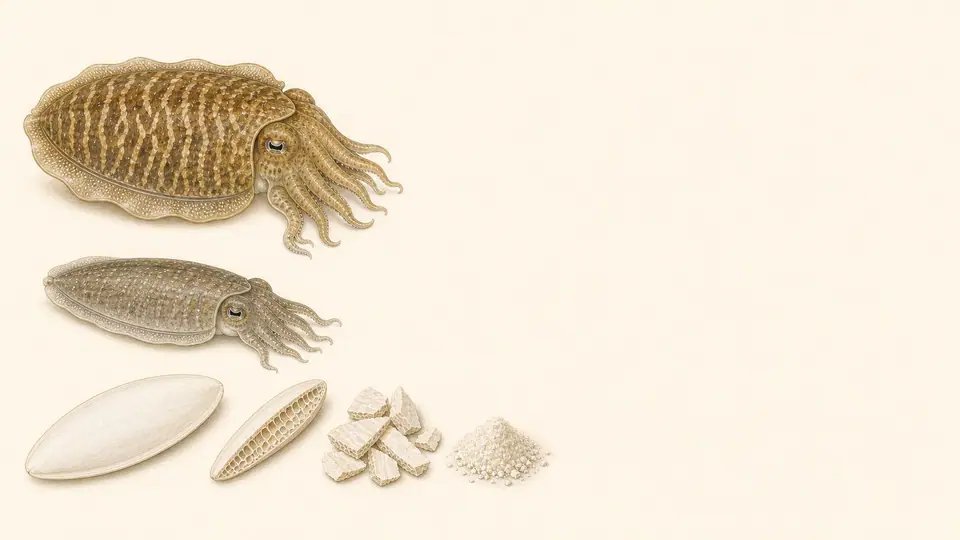
From a buoyancy control organ in the ocean to a medicinal ingredient
Can I take Haepyochu powder for heartburn or calcium supplementation? In short, the fact that it contains a lot of calcium carbonate alone does not mean it can replace gastrointestinal medications or calcium supplements. One must first consider the origin of the raw material, how it was processed, the results of heavy metal and microbial tests, and the cause of the current symptoms.
Haepyochu is not cuttlefish meat. It is the calcareous internal shell that looks like a bone from Sepia esculenta or Sepiella maindroni. While alive, it was a lightweight shell used to control buoyancy; once dried and processed, it is used as a medicinal ingredient, and in laboratories, it is handled as a biomaterial utilizing its porous structure. Just because they come from the same cuttlefish, the meat, ink, internal shell, and purified calcium are not all the same raw material. A single name can blur this distinction.
Why this question arises
Heartburn or concerns about calcium are common daily symptoms. The image of a natural ingredient containing calcium carbonate simultaneously evokes expectations for both 'antacid' effects and 'bone health.' However, raw Haepyochu powder is not the same as purified antacids or clinically validated calcium supplements. It is important to first recognize the gap between the reasons for these expectations and the actual evidence.
Haepyochu is the cuttlefish internal shell
The National Institute of Food and Drug Safety Evaluation defines Haepyochu as the bone-shaped internal shell of S. esculenta or S. maindroni. The calcium carbonate content of the dried product is specified as 80% or more. This specification is merely an indicator for judging quality; it is not a confirmed standard for how much is absorbed by humans or what effects it has on the gastrointestinal tract or bones. This means that a high calcium carbonate content does not immediately determine efficacy or the appropriate dosage.
Reasons for expectations: Calcium carbonate and porous structure
Calcium carbonate is known as an antacid component, and the porous calcareous structure of Haepyochu has garnered attention in biomaterial research. However, systematic reviews of cuttlefish bone biomaterials summarize tissue engineering research, most of the evidence for which is at the laboratory and animal stages. Evidence regarding sintered or converted hydroxyapatite cannot be transferred to the oral calcium absorption or fracture prevention evidence of raw Haepyochu powder. The research subjects are different, and the route of ingestion is different from the route of bone implantation. What then should be examined? One must look at how far the research has progressed and in which formulation that research was conducted.
Raw powder, biomaterials, and purified calcium are different formulations
Cuttlefish internal shell, edible meat/ink, Haepyochu calcium carbonate, purified calcium supplements, and hydroxyapatite bone graft materials are not the same raw material or formulation. Raw Haepyochu powder may be simply dried, or it may have undergone washing, sintering, and purification. Heavy metal and microbial status also vary depending on the processing method. Therefore, when looking at a product, you should check not only the name 'Haepyochu' but also whether it is raw powder or a processed form, and whether there are test reports for heavy metals and microbes.
| Category | Characteristics | Points to Check |
|---|---|---|
| Raw cuttlefish internal shell powder | Dried and pulverized calcareous internal shell | Species of origin, washing, heavy metal/microbial tests |
| Purified calcium supplement | Formulation of purified calcium carbonate, etc. | Content, dosage, drug interaction information |
| Hydroxyapatite material | Subjects of biomaterial and bone graft research | A different domain from the evidence for oral intake |
When Taken with Other Medications or Supplements
Calcium and antacid components may affect the absorption of thyroid hormones, iron, and certain antibiotics. It is advisable to consult your medical team regarding the appropriate dosing interval. If you are using Haepyocho powder along with other supplements or prescription medications, do not simply assume it is fine because it is a 'natural ingredient'; you must check the components and administration times. While the name 'Haepyocho' implies a natural raw material, it actually falls into the same category as antacid components, such as calcium carbonate, which can interfere with the absorption of other drugs.
Who should be more cautious
Those with kidney stones, hypercalcemia, kidney disease, or those who are pregnant, breastfeeding, or pediatric patients should avoid arbitrary powder intake. If you experience hematemesis (vomiting blood), melena (black stools), difficulty swallowing, persistent vomiting, or unexplained weight loss, medical evaluation takes priority over attempting powder use. Persistent heartburn requires an evaluation of various causes such as reflux disease, ulcers, or medications; human evidence has not been established that Haepyocho can replace standard antacids or Helicobacter pylori treatment. In other words, alleviating symptoms and treating the cause of the disease are different issues.
The Gap Between Human Evidence and Expectations
Expectations for Haepyocho stem from the general properties of calcium carbonate and the porous structure found in biomaterial research. However, there are insufficient clinical standards to confirm the effects on gastrointestinal symptom improvement or bone health in humans. Given the number and stage of studies, most are still laboratory or animal research. Rather than concluding that it 'is effective,' it is more appropriate to view it as 'expectations arose for these reasons, but human evidence is lacking.'
Avoiding confusion with similar raw materials
The cuttlefish internal shell, edible flesh, and ink come from the same animal, but their components and uses differ. Haepyocho calcium carbonate and purified calcium supplements differ in their manufacturing processes and quality control levels. Oral powders and hydroxyapatite bone graft materials have completely different routes of administration. Traditional antacid use and gastric ulcer diagnosis should not be placed on the same level. It is easy to mistake them as the same if the name or source is similar, but this distinction serves as the criterion for choice.
Criteria to Check Today
If considering Haepyocho, first verify three things. First, check if it is the internal shell of the two official source species, and not edible flesh, other shells, or purified calcium. Second, check if it is a raw material powder or a washed, calcined, and purified biomaterial, and whether there are test reports for heavy metals and microorganisms. Third, check the duration of heartburn, the presence of signals such as melena, hematemesis, or weight loss, and whether you are concurrently using calcium, antacids, thyroid medication, or antibiotics.
Do not replace gastrointestinal medications or bone supplements based solely on the single component of calcium carbonate; first verify the origin, processing, contamination tests, and actual symptoms.
References
- National Institute of Food and Drug Safety Evaluation Herbal Medicine Standards: Haepyocho.
- Cuttlebone-derived biomaterials systematic review.
- Heavy metals in aquatic foods exposure assessment.
This text explains the origin of the raw materials, the scope of research, and precautions before consumption. As this cannot replace individual diagnosis or treatment, please consult a medical professional if you are taking medication or if symptoms persist. If sudden and severe symptoms such as difficulty breathing or decreased consciousness occur after consumption, seek help from 119 or the emergency room.

Medical Staff Review
Director Choi Yeon-seung
Chief Director of Baekrokdam Korean Medicine ClinicHaepyocho Dictionary Entry, reviewed the safety of expressions and the scope of verification before administration.
Review scope: Ingredient origin, human studies, concomitant medications, safety of intake · Last reviewed 2026-08-17
- Graduated from Kyung Hee University College of Korean Medicine
- Providing Korean medicine treatment since 2010
- Consultations for Gongjindan, Gyeongokgo, Nokyong (Deer Antler) restorative medicine, and customized restorative herbal medicine