Until the hard shell took over the story of bones
Can I decoct and drink Gupan because it is said to be good for bones or menopause? In short, today's Gupan is an ingredient for which one must first verify if it is the correct species, if it is distributed legally, and if heavy metals or mycotoxins remain in the shell. It is a situation where identity and safety must be addressed before efficacy.
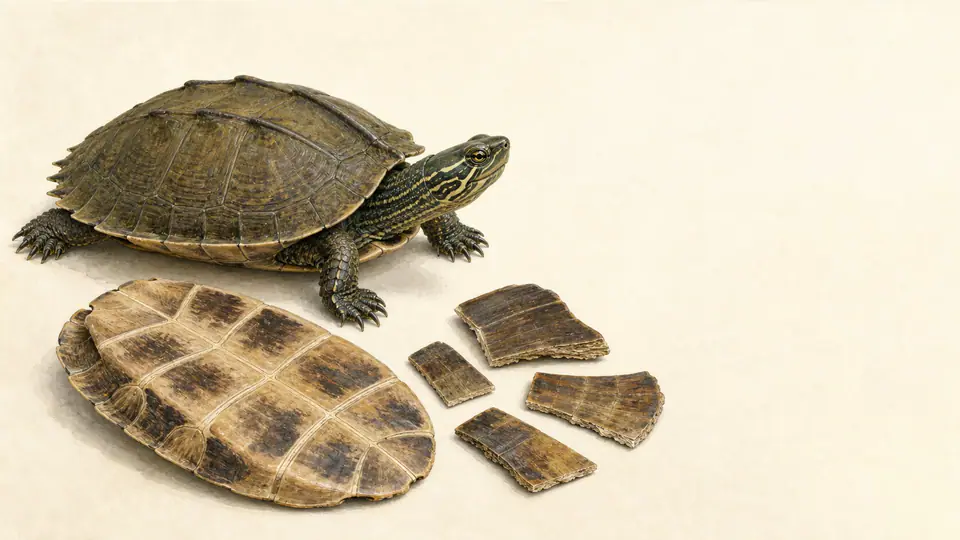
Gupan refers to the Korean pond turtle, also officially called Gwipan or Gwigap, Mauremys reevesiispecifically its plastron or carapace. Soft-shell turtle's Byeolgap, shells of other turtle species, gelatin extracts, or calcined powders are not the same ingredient. Many people decoct them thinking they are the same because the names are similar, and that is where the story begins.
Thought they were the same name, but different shells
Gupan, Gwipan, and Gwigap are names referring to the same ingredient. However, not everything called 'turtle shell' on the market is this ingredient. The National Institute of Food and Drug Safety Evaluation defines Gwipan Chinemys reevesii, currently named M. reevesii as the plastron or carapace of the Korean pond turtle and sets standards for mycotoxins. Soft-shell turtle Byeolgap is the shell of a different animal, and shells of red-eared sliders or Chinese striped map turtles are also not the same ingredient. A 2025 metabolomics and lipidomics study reported that the composition of genuine Korean pond turtle shells differs from these substitutes. In other words, species substitution in the market is a real identification issue.
While the name 'Gupan' refers to the shell of a specific species, the general term 'turtle shell' refers to a mix of several species. You should not assume they are the same ingredient based on the name alone.
Korean pond turtle shells are not simple raw materials
The Ministry of Food and Drug Safety's CITES guide describes the Korean pond turtle as a species listed in Appendix III. This means the legality of its import, export, and distribution must be verified. Therefore, the identity of Gupan includes not only the biological species but also legal sources and transaction documents. Shells without CITES documentation or those with unclear sources should be questioned as to their qualification as a raw material.
The first criterion for this ingredient is to avoid products where animal species conservation and legality issues have not been resolved, regardless of efficacy.
Where do the expectations for bones and menopause come from?
Claims regarding osteoporosis and menopause associated with Gupan mainly stem from traditional use, preclinical studies, or complex prescriptions. They have not been established through standalone clinical trials in humans. The fact that it has been used as a traditional medicine for a long time is a different domain from today's clinical evidence. Traditional use only speaks to historical context and does not guarantee modern therapeutic effects for specific diseases.
The expectations likely stem from the image of a hard shell and its long-standing name. However, a hard shell does not necessarily mean it makes human bones hard. There is a lack of human-based evidence regarding how components extracted from animal materials act on human bones, how much should be consumed, or how effective they are compared to other treatments.
Raw materials, powders, and extracts may not be the same ingredient
Gupan (turtle plastron/carapace) begins as raw carapace or plastron, but various forms such as powder, calcined powder, and gelatin extracts are mixed in the market. The 'Gwipan' regulated by the Ministry of Food and Drug Safety refers to the plastron or carapace of specific species. Gelatin extracts or calcined powders are not the same raw material. When the product form changes, the identity of the raw material also changes.
If you are decocting raw materials or powder yourself, you should avoid shells where species identification and tests for heavy metals or mycotoxins cannot be verified. Even in the case of extracts or capsules, it is often impossible to tell from the label alone whether it is official Gwipan, a different turtle species, or a gelatin extract.
When using with other medications and supplements
Gupan should not be used as a substitute for osteoporosis medication, hormone therapy, calcium, or vitamin D. Bone density and fracture risk must be evaluated using standard methods. Similarly, menopausal symptoms should not lead to missing standard diagnosis and treatment.
If you are pregnant, breastfeeding, a child, have liver or kidney disease, or are considering long-term use, it is advisable not to perform self-decoction as human safety data is insufficient. If you are taking medications or supplements, organize your current treatment before adding Gupan. What should you look for? You must verify if it is the official Korean pond turtle species, if there are CITES certifications, legal distribution records, species identification, and heavy metal/mycotoxin test reports, and whether you have been tested for menopause/osteoporosis and are taking standard treatments, calcium, vitamin D, or prescription drugs.
The possibility of remaining heavy metals
In a heavy metal risk assessment of traditional animal-based medicinal materials, most estimated exposures were within the allowable range, but turtle shells were singled out as a subject for separate caution. Arsenic and mercury contributed significantly. This is why you cannot simply overlook it as 'natural' when choosing Gupan or similar shell-based materials.
Animal-based medicinal materials can accumulate environmental pollutants. Shells are also parts of the body that maintain their form for a long time. Therefore, heavy metal and mycotoxin tests are key criteria for selection.
The Gap Between Human Evidence and Expectations
Claims regarding Gupan's effects on osteoporosis and menopause stem from traditional use, animal/cell/component research, and complex prescriptions. The statement that it has not been established through standalone human clinical trials means that, so far, there is insufficient evidence to conclude that it improves a specific disease with a specific dose and duration.
Animal/component research and the treatment of osteoporosis in humans are different stages. Just because there is a lot of research does not mean it applies identically to humans, nor can results from complex prescriptions be attributed to the effect of Gupan alone. The gap between expectation and evidence must be acknowledged.
Genuine vs. Substitutes, and Selection Criteria
When choosing Gupan, you must compare the following: the name, the carapace/plastron of the Korean pond turtle versus the plastron of the soft-shelled turtle, genuine products versus substitutes from other turtle species, and animal/component research versus human osteoporosis treatment. These four distinctions are the core of this material.
In other words, choosing Gupan does not simply mean 'buying a turtle shell.' You must consider whether it is a specific part of a specific species, from a legal source, a product that has undergone contamination testing, and the extent of human evidence for the effects you expect.
Realistic criteria to check today
Do not mistake old names or the image of a hard shell for bone efficacy; first verify the species, legal source, contamination tests, and standard diagnosis. It is a priority to organize with medical staff whether Gupan is necessary, if standard treatment and nutritional management are sufficient, and how it relates to your current medications.
This material is a story where identity and safety must be questioned before efficacy. The harder the shell, the more rigorously you must verify the source and testing behind it.
References
- National Institute of Food and Drug Safety Evaluation Herbal Medicine Standards: Gwipan.
- Ministry of Food and Drug Safety CITES and Korean Herbal Medicine Guide.
- Testudinis shell genuine and substitute metabolomic profiling.
- Heavy-metal health risk in traditional animal medicines.
This text explains the origin of the raw materials, the scope of research, and precautions before consumption. As this cannot replace individual diagnosis or treatment, please consult a medical professional if you are taking medication or if symptoms persist. If sudden and severe symptoms such as difficulty breathing or decreased consciousness occur after consumption, seek help from 119 or the emergency room.

Medical Staff Review
Director Choi Yeon-seung
Chief Director of Baekrokdam Korean Medicine ClinicGupan Dictionary Entry, reviewed the safety of expressions and the scope of verification before administration.
Review scope: Ingredient origin, human studies, concomitant medications, safety of intake · Last reviewed 2026-08-17
- Graduated from Kyung Hee University College of Korean Medicine
- Providing Korean medicine treatment since 2010
- Consultations for Gongjindan, Gyeongokgo, Nokyong (Deer Antler) restorative medicine, and customized restorative herbal medicine