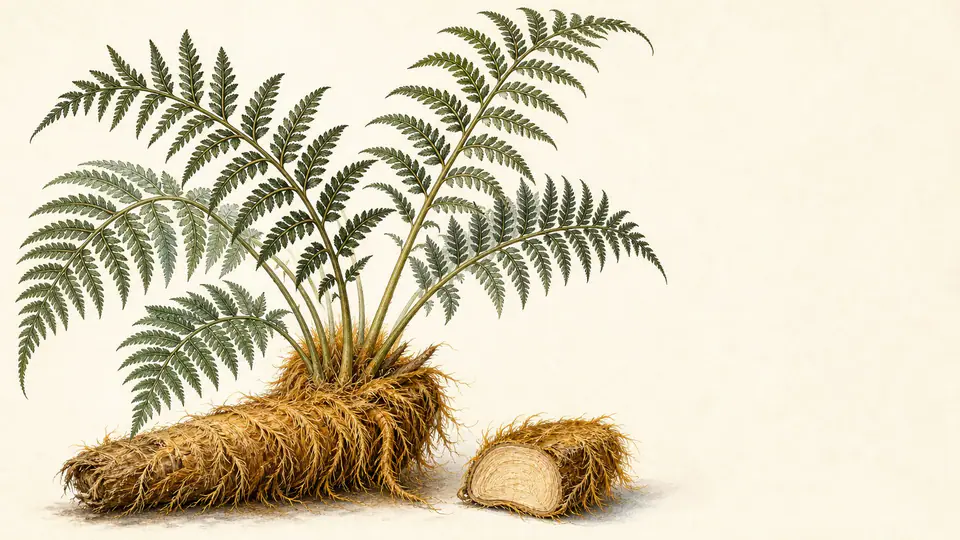
A fern rhizome wrapped in golden hair: can its power reach humans?
Can I decoct and drink Gucheok (Achyranthes rhizome) for a long time because it is said to be good for the waist, knees, and bones? In short, the correct order is to first identify the cause of the pain, verify if it is the correct ingredient, and then consider it as long as it does not replace standard treatment. While the name Gucheok may sound like the back of a hairy animal, it is actually the rhizome of a fern. Because of its appearance, it has long held an image of supporting the waist and bones, but today's research does not directly support that expectation.
However, it is difficult to know what Gucheok is or how far bone health research has progressed based on the impression of the name alone. It is necessary to break it down in order, from the identity of the ingredient to human evidence and product selection.
The 'dog' in the name is not an ingredient
The first character of Gucheok means 'dog.' However, this name does not refer to an animal-based ingredient. Geummo-gucheok Cibotium barometzis named such because its rhizome is covered in golden villi and its curved shape resembles a dog's back. The official medicinal part is the rhizome of the fern; leaves, spores, rhizomes of other ferns, sliced pieces with hair removed, or extracts do not have the same appearance or exposure.
The standards of the National Institute of Food and Drug Safety Evaluation also define Gucheok as C. barometzthe rhizome. It presents standards for golden villi, shape, identification tests, and limits for heavy metals, residual pesticides, and sulfur dioxide. In other words, when choosing Gucheok, you must first check if the species is correct, if the part is the rhizome, and if it has passed the inspection standards, rather than relying on the image of the name.
Where did the expectations for bone health come from?
Why was Gucheok remembered as a medicinal herb for the waist, knees, and bones? There is a background of it being used traditionally as an ingredient to supplement bones and joints. However, the representative research supporting that image is a preclinical trial where extracts were administered to 72 ovariectomized rats for 16 weeks. This study reported that Gucheok extract affected bone density, bone metabolism markers, and microstructure, but it was not conducted on humans.
Another study on radiation-induced thrombocytopenia also evaluated water extracts in cells and mice. This does not serve as evidence for treating back pain, osteoporosis, or human platelets. In other words, expectations for Gucheok are closer to possibilities originating from animal experiments and in vitro research rather than human clinical efficacy.
The Gap Between Human Evidence and Expectations
An HPLC fingerprint study in 2024 analyzing samples from 13 production areas is an analytical study dealing with component consistency and candidate quality markers. This study is not a clinical efficacy trial, but data showing how consistently the ingredient is produced. In a resource and quality survey in China, it was reported that the ingredient relied on wild resources, and the suitability rate of the sliced pieces in the surveyed market was 56.4%.
The problem is that this figure takes precedence over efficacy. It means that only slightly more than half of the sliced pieces on the market met the standards. In other words, verifying the species, part, processing, and quality comes before talking about the efficacy of Gucheok. In a situation where human clinical evidence is lacking, expectations will remain unfounded unless the identity and quality of the ingredient itself are verified first.
Exposure varies depending on the product form
Gucheok comes in various forms, such as raw rhizomes, sliced pieces with hair removed, roasted processed products, and concentrated extracts. If the name is the same, is what enters the body also the same? No. Decoctions of the raw material differ depending on whether the raw herb with golden villi remaining is used or sliced pieces with hair removed are used. Concentrated extracts or capsules are convenient, but if the product is not standardized, the content and components may vary.
The standards presented by the National Institute of Food and Drug Safety Evaluation are the starting point for verifying the safety of the ingredient. However, passing those standards does not mean it treats or prevents a specific disease. When choosing a product form, instead of modifiers like 'concentrated,' 'fermented,' or 'premium,' C. barometz you should check if it is the rhizome, what processing it underwent, and whether quality testing has been performed.
When Using with Medications or Supplements
Therefore, caution is needed when using Gucheok with medications or supplements you are currently taking. In particular, those taking osteoporosis medication, anti-inflammatory analgesics, anticoagulants, or receiving anticancer treatment must not replace their treatment with Gucheok. When adding concentrated products, it is advisable to inform your medical staff or pharmacist of your full medication list.
There is insufficient data on long-term human dosage, safety in pregnancy, lactation, children, and liver or kidney disease, as well as drug interactions. Therefore, rather than starting the habit of 'decocting and drinking Gucheok for a long time,' it is a priority to organize your current medications and health status.
Individual circumstances and safety signals
The causes of waist or knee pain are diverse. In cases of severe pain after a fall, loss of leg strength, decreased sensation, changes in bowel or bladder control, or waist pain accompanied by fever, prompt medical evaluation and imaging or neurological assessment take priority over seeking Gucheok.
These symptoms may be signals different from simple joint aging or fatigue. Since Gucheok is an ingredient that can cause delays in these situations, you must first check the onset of pain, whether there was trauma, accompanying symptoms such as fever or decreased sensation, osteoporosis test results, and whether you are taking analgesics or osteoporosis medication.
How to View Differences from Similar Ingredients
When selecting Gucheok (Cibotium aurantiacum), it is common to confuse the rhizome of Gucheok with other ferns. Other ferns with similar names or appearances may be mistaken for Gucheok. Additionally, the raw medicinal material with remaining golden pubescence and the processed slices (eumpyeon) with the hair removed differ in form and usage, even if they come from the same raw material.
There are also differences between decoctions of raw materials and non-standardized concentrated extracts. Raw materials allow for visual confirmation of the form but may be inconsistent, while extracts are convenient but can vary significantly between products. Finally, changes in bone density in rats and the prevention of fractures in humans are entirely different levels of evidence. Results from animal experiments cannot be applied directly to humans.
Realistic criteria to check today
If you are considering Gucheok, please check these three things first. First, C. barometzcheck if it is the rhizome of the plant, not other ferns, leaves, or spores, and verify the golden pubescence and cross-sectional characteristics. Second, distinguish whether it is a raw rhizome, processed slices with hair removed, a roasted product, or a concentrated extract. Third, organize information regarding the onset of waist or knee pain, the presence of trauma, fever, or sensory loss, osteoporosis test results, and any painkillers or osteoporosis medications currently being taken.
The standard for using Gucheok wisely is to not directly link its name, which resembles a dog's back, and the image of 'strong bones' to therapeutic effects in humans; instead, verify the species, rhizome, processing, and quality, and ensure it does not replace the evaluation of the cause of pain or standard osteoporosis treatment.
References
- National Institute of Food and Drug Safety Evaluation Herbal Medicine Standards: Gucheok.
- Cibotium barometz extract in ovariectomized rats.
- Cibotii Rhizoma resource and market quality assessment.
- Cibotii Rhizoma HPLC fingerprint and LC-MS study.
- Cibotii Rhizoma in cell and mouse thrombocytopenia models.
This text explains the origin of the raw materials, the scope of research, and precautions before consumption. As this cannot replace individual diagnosis or treatment, please consult a medical professional if you are taking medication or if symptoms persist. If sudden and severe symptoms such as difficulty breathing or decreased consciousness occur after consumption, seek help from 119 or the emergency room.

Medical Staff Review
Director Choi Yeon-seung
Chief Director of Baekrokdam Korean Medicine ClinicGucheok Dictionary Entry, reviewed the safety of expressions and the scope of verification before administration.
Review scope: Ingredient origin, human studies, concomitant medications, safety of intake · Last reviewed 2026-08-17
- Graduated from Kyung Hee University College of Korean Medicine
- Providing Korean medicine treatment since 2010
- Consultations for Gongjindan, Gyeongokgo, Nokyong (Deer Antler) restorative medicine, and customized restorative herbal medicine