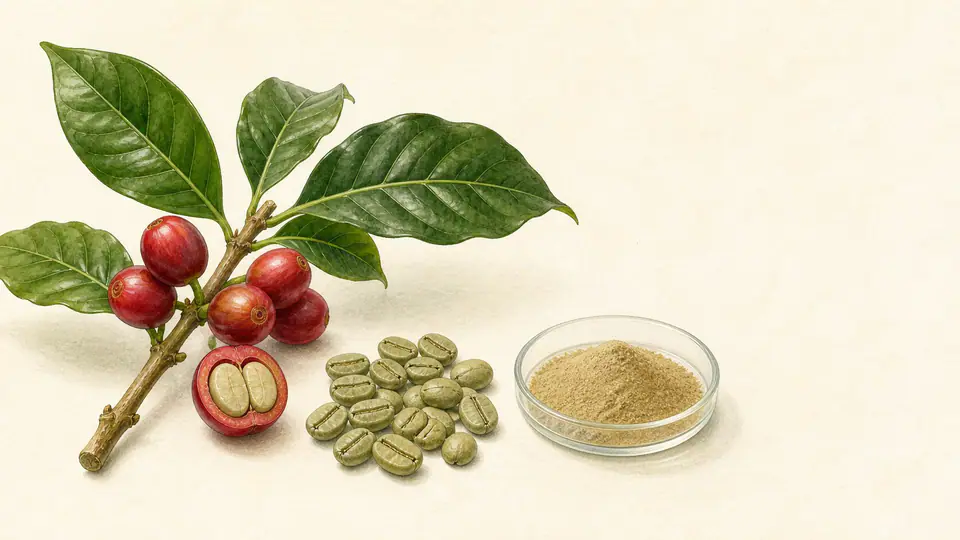
From unroasted seeds to weight management ingredients
Will taking green coffee bean extract for dieting reduce weight more than drinking coffee? In short, it is difficult to conclude that it might. A cup of coffee and green coffee bean extract capsules differ in caffeine and chlorogenic acid content as well as research dosages, and evidence from human subjects is limited.
The reason this question is frequently repeated is that the names 'coffee' and 'green coffee bean' sound as if they are the same beverage in different packaging. First, it is important to identify the actual product form and the actual amount of caffeine hidden behind the name.
Green coffee beans are not a separate plant
Green coffee beans are the unroasted seeds of coffee trees such as Coffea arabica and Coffea canephora. Kew describes Arabica and Robusta as the primary commercial coffee species and states that green coffee beans refer to coffee seeds before roasting, not a separate plant species. Botanically, coffee beans are seeds. Since the chlorogenic acid composition changes during the roasting process, just as the aroma and color change, green coffee bean extract is treated as a different ingredient from roasted coffee. Because the word 'coffee' is included, the difference between the beverage you drink and the capsule you take may seem smaller.
Why there are expectations for weight loss
Some early studies that raised expectations for weight loss were criticized or retracted due to issues with design and data reliability. While it became famous through broadcasts and some media outlets, this fame does not align with the current level of evidence. The NIH ODS evaluates the evidence as limited because there are few weight-loss trials in humans and the methodological quality of early trials was low. A 2023 umbrella meta-analysis reported an average weight reduction of approximately 1.22 kg and a BMI reduction of approximately 0.48 kg/m², but this must be read alongside the quality and short duration of the included meta-analyses and original studies. Small short-term averages should not be extrapolated to replace medication or as a means for sustained weight loss.
Green coffee bean beverages and extract capsules are different research subjects
In a 2024 network meta-analysis of coffee beverages, green coffee beverages did not show a significant effect on weight loss. Therefore, research on extract capsules must be distinguished from general beverages. Raw green beans, green coffee beverages, standardized extracts of chlorogenic acid, and decaffeinated extracts differ in their caffeine and chlorogenic acid content and research dosages. There are various forms under the same name 'green coffee,' and each has different evidence.
| Category | What is the difference? |
|---|---|
| Roasted coffee vs. unroasted green beans | Change in chlorogenic acid composition before and after roasting |
| Green beans vs. standardized green coffee bean extract | Difference between raw material and concentrated/standardized products |
| Extract mg vs. actual mg of chlorogenic acid and caffeine | Total amount is separate from the amount of active/stimulant components |
| Short-term average weight change vs. long-term weight management | Difference between research duration and actual sustainability |
The amount of remaining caffeine varies by product
Green coffee beans may contain caffeine. Since decaffeination status and residual amounts vary by product, the total mg of extract alone cannot determine the level of stimulant exposure. Even products claiming to be caffeine-free vary in their chlorogenic acid standardization and residual caffeine labeling. Therefore, it should not be viewed simply as a 'non-coffee diet ingredient.' You must consider the total daily caffeine intake, including coffee, energy drinks, and pre-workout products.
Precautions When Taking Together
Risks may increase if combined with other caffeine or stimulant ingredients. This may cause headaches, gastrointestinal discomfort, insomnia, anxiety, or palpitations. If you are taking blood pressure or diabetes medication, monitor your levels, but do not reduce your medication or use this as a substitute for weight loss treatment. What should you look for? First, identify whether it is raw bean powder, a beverage, or an extract, and check the extract mg, the chlorogenic acid ratio, and the caffeine mg for each.
Individuals Who Should Avoid Arbitrary Use
Concentrated extracts should not be used arbitrarily by those who are pregnant, breastfeeding, children, or individuals with arrhythmia, uncontrolled hypertension, anxiety, or insomnia. Seek immediate evaluation for chest pain, fainting, persistent palpitations, severe anxiety, or vomiting. Adverse reactions may occur not only from the caffeine mg listed on the product but also from the combined total of coffee or energy drinks consumed that day.
The Gap Between Research Evidence and Expectations
Rather than concluding that 'it is effective,' current evidence should be viewed alongside the number of studies, consistency, and limitations. An average value from a meta-analysis does not apply identically to every individual, and small changes over a short period are not the same as long-term weight management. You should consider what your goal is among weight, waist circumference, blood glucose, or blood pressure, and reflect on whether you are attempting to replace medication or a dietary plan.
Final Decision Criteria
Rather than relying on the image of 'green coffee beans' or 'chlorogenic acid,' a realistic standard for choosing this ingredient is to verify the amount of extract, chlorogenic acid, and caffeine, as well as the study duration, and to avoid extrapolating small short-term averages into medication replacement or sustained weight loss. Drinking coffee and taking raw bean extract are different choices, despite the similar names. Please make a decision after verifying these differences, considering your caffeine exposure, health status, and overall weight management plan.
References
- NIH ODS: Dietary supplements for weight loss.
- Kew Plants of the World Online: Coffea arabica.
- FDA: How much caffeine is too much?.
- Green coffee extract and obesity indices: umbrella review.
- Tea and coffee drinking on body weight: network meta-analysis.
This text explains the origin of the raw materials, the scope of research, and precautions before consumption. As this cannot replace individual diagnosis or treatment, please consult a medical professional if you are taking medication or if symptoms persist. If sudden and severe symptoms such as difficulty breathing or decreased consciousness occur after consumption, seek help from 119 or the emergency room.

Medical Staff Review
Director Choi Yeon-seung
Chief Director of Baekrokdam Korean Medicine ClinicGreen Coffee Bean Glossary, reviewed the safety of expressions and the scope of verification before administration.
Review scope: Ingredient origin, human studies, concomitant medications, safety of intake · Last reviewed 2026-08-17
- Graduated from Kyung Hee University College of Korean Medicine
- Providing Korean medicine treatment since 2010
- Consultations for Gongjindan, Gyeongokgo, Nokyong (Deer Antler) restorative medicine, and customized restorative herbal medicine