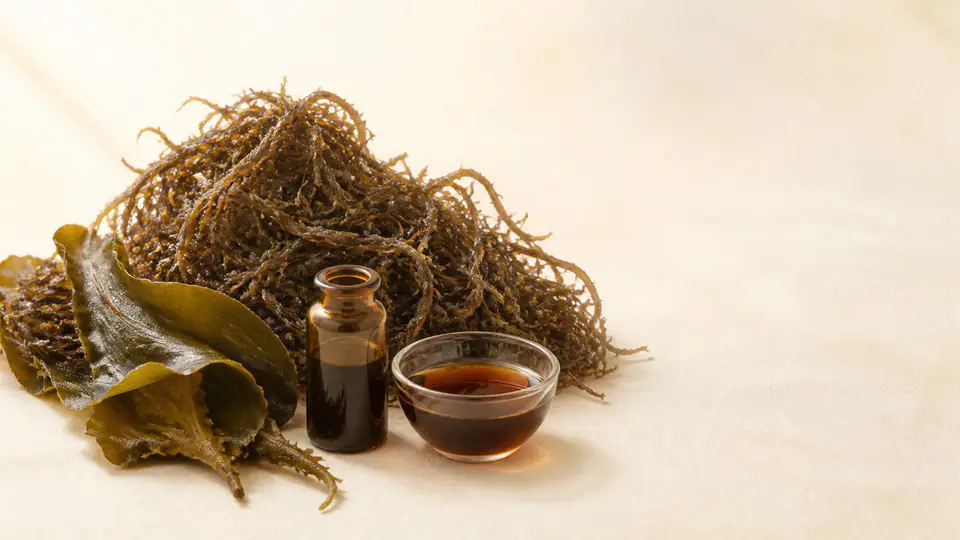
From Cell Walls Left by the Waves to Reaching Humans
Can I take fucoidan during cancer treatment to improve immunity and anti-cancer effects?
This question is frequently repeated between the hospital and home, and between the dining table and the medicine envelope. To answer briefly, it has not been proven that fucoidan slows, treats, or prevents the recurrence of cancer. However, this short answer is insufficient. This is because various different substances are mixed under the name 'fucoidan,' and there is a significant gap between the reasons for the expectations and actual human research.
It is precisely this gap that must be distinguished.
Common Questions
The reasons why cancer patients and caregivers seek fucoidan are usually similar. It is often due to fatigue caused by chemotherapy, loss of appetite, the desire to maintain immunity, or the wish to enhance treatment effects. Expressions like 'anti-cancer seaweed polysaccharides' are easily found on the internet and in surrounding circles. However, the U.S. National Cancer Institute clearly explains that no food, vitamin, supplement, or herb has been proven to slow, treat, or prevent the recurrence of cancer. Furthermore, it emphasizes that all supplements must be disclosed to the treatment team.
Then why does fucoidan receive such special expectations? It begins with the cell walls of brown algae.
Identity of the Raw Material: Not a Single Substance
Fucoidan is a group of sulfated polysaccharides found in the cell walls of brown algae such as wakame, mozuku, and kombu. While they contain fucose and sulfate groups, the fucose content, sulfate groups, molecular weight, and branched structures all vary depending on the species of brown algae, the part used, the harvest time, and the extraction method. Therefore, fucoidan is not a single standardized substance.
The term 'fucoidan' makes it feel as if it refers to one specific ingredient. In reality, however, it is a collective name for several families of sulfated polysaccharides with different structures. Even under the same name, the substances within can be entirely different.
Why Expectations Exist: Between Cell Experiments and Humans
Interest in fucoidan has focused on signals coming from test-tube and animal studies. Results such as cell death, immune cell activation, and changes in inflammation-related signals have been reported. As these mechanisms were translated as 'anti-cancer support,' people's expectations grew.
However, the fact that cell death or immune signals were observed in a test tube does not mean that the ingested polysaccharides reach the tumor at the same concentration to treat cancer in humans. Cells and humans, short-term exposure and several months of intake, and purified extracts versus seaweed foods are each different worlds. Expectations start from cell experiments, but judgments must be made based on human clinical research.
Seaweed Foods and Extracts Are Not the Same Intervention
Eating wakame, mozuku, or kombu as food is different from taking extract capsules purified to a specific molecular weight in terms of exposure amount and composition. Seaweed foods contain proteins, dietary fiber, iodine, potential heavy metals, and other seaweed components in addition to fucoidan. On the other hand, fucoidan extracts concentrate specific polysaccharides, but the degree of concentration, molecular weight, fucose content, and number of sulfate groups vary by product.
Furthermore, zo-fucoidan, high-molecular-weight fucoidan, low-molecular-weight fucoidan, and oligo-fucoidan are not the same intervention. When the molecular weight changes, absorption and distribution in the body, as well as interactions with cells, may also change. Therefore, the results of a specific extract used in one study cannot be applied directly to other products.
Current Status of Human Research
A systematic review of fucoidan as an adjuvant therapy for cancer patients found only 4 studies involving 118 people. Because the research results and methods differed, the causal effects on survival, disease control, and side effects could not be confirmed. Some small studies reported signals such as fatigue, inflammatory markers, quality of life, and treatment sustainability, but since the cancer types, extracts, and combination therapies all differed, these cannot be generalized to tumor shrinkage or prolonged survival.
A study on cancer survivor fatigue registered with the U.S. NCI is also at the stage of exploring the validity and effect size of fucoidan. However, the fact that a study is ongoing is not evidence of therapeutic efficacy. The significance can only be judged once the study is completed and the results are released.
In a company-sponsored randomized trial of 72 non-diabetic obese adults, taking a specific fucoidan for 90 days did not significantly change insulin resistance, lipids, blood glucose, weight, or blood pressure compared to a placebo. This demonstrates that expectations regarding metabolic health are not directly supported.
Concurrent Use, Bleeding, and Relationship with the Treatment Team
In test-tube and some human studies, fucoidan has shown potential anticoagulant and antithrombotic effects. Therefore, you should not start taking it on your own if you are taking warfarin, heparin, or antiplatelet agents, or if you have an upcoming surgery. There is also insufficient data regarding interactions with anticancer drugs, immunotherapy, or hormone therapy. As a rule, it should not be used to replace medical treatment or be taken concurrently without the knowledge of your treatment team.
Diarrhea and abdominal discomfort may be reported. Since the concentration of polysaccharides, iodine, heavy metals, and other seaweed components vary by product, you must verify the raw materials and test reports. If you have a thyroid condition or are on an iodine-restricted diet, do not rely solely on the 'fucoidan' label; check the actual iodine content and whether other seaweeds are mixed in. If abnormal bleeding, black stools, severe diarrhea, dehydration, or allergic symptoms occur, stop use immediately and seek medical evaluation.
Why Your Individual Situation Is Asked First
There are things that must be clarified before considering fucoidan. It is necessary to confirm the current type and stage of cancer, as well as whether you are receiving surgery, chemotherapy, radiation, immunotherapy, or hormone therapy. Additionally, you must distinguish whether the product is an extract with a labeled brown algae species, molecular weight, fucose, sulfate group, and single dose, or if it is a seaweed food or a complex formulation.
Whether you are taking warfarin, heparin, or antiplatelet agents, as well as your bleeding tendency, scheduled surgeries, thyroid disease, iodine restrictions, and seaweed allergies must also be examined. These questions are not intended to definitively conclude whether fucoidan is dangerous or safe, but are part of a process to specify which products require caution under which treatment conditions.
Differences Between Similar Names
When understanding fucoidan, the following comparisons are often confused: seaweed foods vs. fucoidan extracts; crude fucoidan vs. high-molecular-weight fucoidan vs. low-molecular-weight fucoidan vs. oligofucoidan; anticancer mechanisms in test tubes vs. tumor response and survival in humans; and inflammatory markers vs. fatigue, quality of life, and cancer treatment efficacy. These four pairs represent different axes of evaluation.
Foods should be evaluated as foods, and extracts as extracts. Products with different molecular weights should not be grouped under the same name. Mechanisms in cell experiments are not a promise of clinical efficacy. Improvement in fatigue or quality of life does not mean that the tumor has shrunk or survival has increased.
Criteria to Check Today
If you are considering fucoidan, check the specific brown algae species, extraction method, molecular weight, and treatment purpose first, rather than the general term 'anticancer seaweed polysaccharide.' You must first look at the gap between cell experiments and human clinical results, the relationship between anticancer therapy, bleeding medications, and iodine, and the quality of the product.
The most important thing is not to start this without the knowledge of your treatment team. Remembering that fucoidan is not a single special ingredient, but a group of brown algae polysaccharides that vary depending on various conditions, will make your choice much clearer.
References
- NCI: Popular diets, supplements and cancer.
- NCI trial: Fucoidan for fatigue and inflammation in cancer survivors.
- Fucoidan supplemental therapy in cancer patients: systematic review.
- Fucoidan and cardiometabolic markers: randomized controlled trial.
- Memorial Sloan Kettering: Fucoidan.
This text explains the origin of the raw materials, the scope of research, and precautions before consumption. As this cannot replace individual diagnosis or treatment, please consult a medical professional if you are taking medication or if symptoms persist. If sudden and severe symptoms such as difficulty breathing or decreased consciousness occur after consumption, seek help from 119 or the emergency room.

Medical Staff Review
Director Choi Yeon-seung
Chief Director of Baekrokdam Korean Medicine ClinicFucoidan Glossary, reviewed the safety of expressions and the scope of verification before administration.
Review scope: Ingredient origin, human studies, concomitant medications, safety of intake · Last reviewed 2026-08-17
- Graduated from Kyung Hee University College of Korean Medicine
- Providing Korean medicine treatment since 2010
- Consultations for Gongjindan, Gyeongokgo, Nokyong (Deer Antler) restorative medicine, and customized restorative herbal medicine