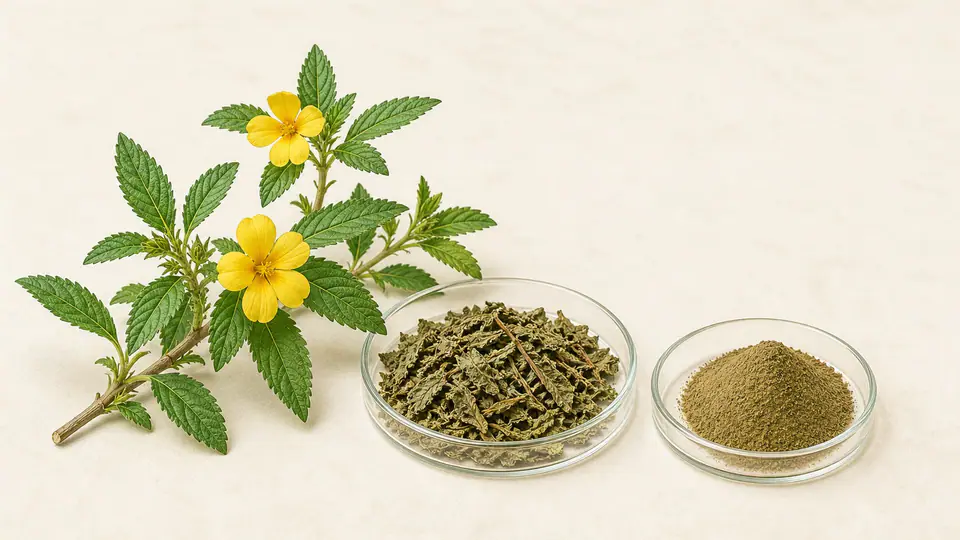
From Fragrant Leaf Tea to Sexual Function Capsules
If your libido decreases or you feel tense, will drinking Damiana tea or taking capsules naturally improve your sexual function and mood? In short, there is insufficient evidence from single-ingredient human studies to definitively conclude that this is the case. Damiana is a shrub found in the tropical and subtropical regions of the Americas, Turnera diffusa and is a plant ingredient used as tea, powder, or extract. While the name may make it sound like an ancient aphrodisiac, its traditional reputation and modern efficacy evaluations are on different paths.
It is essential to distinguish between the two. Ultimately, what matters is identifying which scientific name, plant part, formulation, and mixed ingredients are included under the general term 'Damiana,' and understanding the context in which your own decrease in libido occurred.
Can Low Libido Be Solved with a Single Ingredient?
Feeling a decrease in libido is very common. It can be linked to medications, pain, menopause, depression, relationship issues, or endocrine disorders. If you seek out Damiana in these situations, it is likely driven by a desire to 'naturally' restore something. However, when the causes are multifaceted, it is unlikely that a single plant ingredient can cover all of them. Claims that Damiana helps improve mood, anxiety, weight, or blood glucose are also not based on robust single-ingredient evidence in humans. So, what exactly is this ingredient, and why is it known as an aphrodisiac plant?
What Damiana Is: Scientific Name and Plant Part Matter More Than the Name
The general term 'Damiana' and mixed sexual function products do not guarantee a specific scientific name, plant part, or extract. Kew records Turnera diffusaas the recognized species and explains that leaf tea is known as an aphrodisiac in some regions. However, Kew's records organize botanical identity and traditional use; they do not evaluate what therapeutic effects the plant has on humans. In other words, there is a gap between the fact that 'this plant was used this way' and the fact that 'this plant works this way.'
Why Expectations Exist: Traditional Reputation Is Not Proof of Efficacy
The oldest image of Damiana is its reputation as an aphrodisiac in the form of a fragrant leaf tea. It is easy to understand how this reputation transitioned into 'sexual function capsules' in the modern supplement market. However, the traditional reputation of aphrodisiac tea recorded by Kew is not proof of therapeutic effect in humans. Traditional use only suggests candidates; it cannot replace clinical efficacy. In the case of Damiana, the stage of verifying whether those candidates are actually reproduced in humans is not yet sufficient.
Most Human Studies Were Conducted on Mixed Products
A 2014 literature review pointed out that clinical data on Damiana's sexual function primarily came from products mixed with other active ingredients. As a result, it is difficult to determine the effect of Damiana as a single ingredient. Many of the results cited as human studies involve mixed products of various herbs and nutrients, making it impossible to isolate the specific contribution of Damiana. Even if the overall product is positive, it is unknown how much of a role Damiana played or if the same effect would occur without other ingredients.
Preclinical Activity Is Interesting, but Clinical Trials Are Necessary
A 2023 Turnera literature review concluded that most reported activity is at the preclinical stage and that human clinical trials are necessary. Results from test tubes and animals can show potential mechanisms of action. However, living organisms are far more complex, and it is difficult to equate animal sexual behavior with human libido and sexual function. Unless this distinction is made clear, traditional reputation and scientific evidence become blurred.
Differences Between Leaf Tea, Powder, Extracts, and Mixed Capsules
Damiana can be consumed as leaf tea, or processed into powder or extracts for use in capsules. Even with the same raw material, the types and concentrations of active components vary depending on the formulation. Leaf tea is closest to the traditional form of use, while concentrated extracts or mixed sexual function products are closer to commercial formulations. A critical distinction here is between single-ingredient products and mixed sexual function products. Mixed aphrodisiac products may contain other stimulants or medicinal ingredients, so it is essential to check the entire label. If you choose a product based solely on the name 'Damiana,' you may mistake the effects of other ingredients for those of Damiana.
What to Check When Using Prescription Medications and Supplements Together
When using Damiana with other supplements or medications, it is advisable to check three things first. First, Turnera diffusacheck whether it is the leaf of the plant and whether it is in the form of tea, powder, extract, or a mixed product. Second, determine if the decrease in libido is linked to pain, menopause, medication, depression, relationship issues, or hormonal problems. Third, check if you are pregnant, breastfeeding, or taking diabetes medication, mental health medications, or other aphrodisiac herbs. Because there is insufficient data on the standard dosage and long-term safety of single-ingredient Damiana, extra caution is required when using it in combination with other substances. Use for medical purposes should be avoided during pregnancy and breastfeeding due to a lack of reproductive safety data.
Safety Signals from Your Body
If severe palpitations, convulsions, confusion, fainting, or severe allergic symptoms occur after taking Damiana, prompt medical evaluation is necessary. These symptoms may be signals of other ingredients in the product or an individual reaction. This is precisely why all ingredients listed on the label of mixed aphrodisiac products must be verified.
Distinguishing Between Temporary Loss of Interest and Issues Requiring Treatment
A feeling of decreased libido does not always stem from the same cause. A loss of interest caused by temporary fatigue or stress is in a different category from sexual function issues that require medical treatment. Even if there are traditional records of Damiana's use, there is no evidence that it can replace treatment for sexual function issues. Similarly, the sexual behavior of animals must be distinguished from human libido and sexual function.
Final Decision Criteria
If you are considering Damiana, it is more important to verify the scientific name, plant part, formulation, mixed ingredients, and the context of your symptoms than to rely on the name 'natural aphrodisiac.' The key criterion for viewing this material is to not equate traditional use and animal experiments with therapeutic effects on human sexual function. If the decrease in libido persists or the cause is unclear, seeking a medical consultation before selecting a supplement is a more accurate starting point.
References
- Kew Plants of the World Online: Turnera diffusa.
- Turnera ethnobotany and bioactivity with focus on damiana: review.
- Bioactivity of the genus Turnera: review.
This text explains the origin of the raw materials, the scope of research, and precautions before consumption. As this cannot replace individual diagnosis or treatment, please consult a medical professional if you are taking medication or if symptoms persist. If sudden and severe symptoms such as difficulty breathing or decreased consciousness occur after consumption, seek help from 119 or the emergency room.

Medical Staff Review
Director Choi Yeon-seung
Chief Director of Baekrokdam Korean Medicine ClinicDamiana Dictionary Entry, reviewed the safety of expressions and the scope of verification before administration.
Review scope: Ingredient origin, human studies, concomitant medications, safety of intake · Last reviewed 2026-08-17
- Graduated from Kyung Hee University College of Korean Medicine
- Providing Korean medicine treatment since 2010
- Consultations for Gongjindan, Gyeongokgo, Nokyong (Deer Antler) restorative medicine, and customized restorative herbal medicine