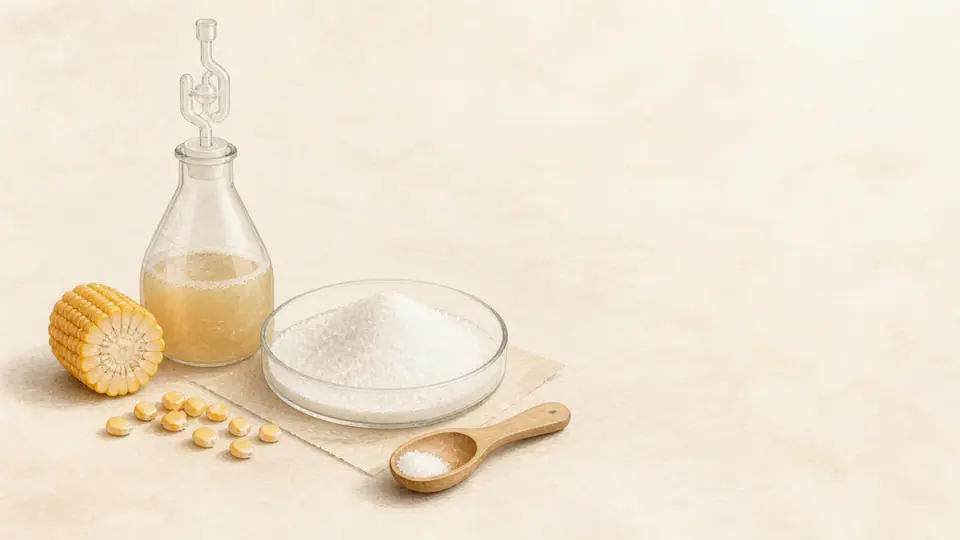
A Sweet Powder Selling the Framework of ATP
If you take D-ribose, will ATP be replenished quickly, improving exercise recovery or heart energy? In short, research on exercise recovery in healthy individuals generally showed no benefit, and data on heart failure are still at a preliminary level. Conversely, safety signals such as hypoglycemia appeared relatively clearly with high doses or intake on an empty stomach.
Based on its name alone, this ingredient feels directly linked to ATP, the core of cellular energy. However, there is a significant gap between the intermediate substances used within the body, oral supplements, and the expectations for exercise or heart health.
Where the questions begin
A common question about D-ribose is: “Since it is a building block for making ATP, wouldn't replenishing a deficiency relieve fatigue?” This question is logically appealing. However, the fact that PubChem classifies D-ribose as a pentose sugar involved in nucleic acid and energy metabolism in the body is a separate issue from whether oral supplementation provides any efficacy. Just because a substance participates in biological phenomena does not mean that consuming more of it will improve the desired function.
The Identity of D-ribose and the Trap of Its Name
D-ribose is a monosaccharide with five carbon atoms and an intermediate substance in the body that forms the backbone of molecules such as RNA and ATP. The version used as a supplement is fermentation-produced D-ribose powder. Although D-ribose has a similar name to common sugar, glucose, deoxyribose (which forms DNA), riboflavin (vitamin B2), and the ribose portion of NR, they are not the same ingredients. While similar names may suggest similar roles, each molecule follows a different pathway.
The Gap Between Expectations for Exercise Recovery and Research
It is natural to expect that it will improve muscle ATP recovery or repeated maximum exercise capacity after a workout. In an exercise study involving 19 people, D-ribose was administered at 4 g four times a day for 6 days. The results showed no benefit in either muscle ATP recovery or repeated maximum exercise capacity. While the study size was small, it is clear that the expected effects did not appear in healthy exercisers at this dosage.
Another Expectation: Heart Energy
Regarding heart failure, there was a 3-week crossover trial with 15 participants and some small-scale preliminary studies. Some signals were seen in certain cardiac filling indices or quality of life, but the sample size and duration were too small to confirm a therapeutic effect. In other words, there is not yet enough evidence to choose D-ribose over standard treatment when feeling a lack of heart energy. If you experience chest pain or shortness of breath, a prompt medical evaluation of the heart takes priority over supplements.
What Safety Evaluations Tell Us
The European Food Safety Authority (EFSA) evaluated the safety of specific fermentation-produced D-ribose. They set the acceptable intake level for the general population at 36 mg/kg/day, which is not a dosage for exercise or heart failure efficacy. In the EFSA review, decreases in blood glucose were repeatedly observed after a single intake of 5 g or more, and there was a case of symptomatic hypoglycemia after taking 10 g on an empty stomach. High doses or intake on an empty stomach should not be taken lightly.
Form of Intake and Combinations
D-ribose products are commonly available in powder form. The first things to verify are the dosage per serving and per day, whether it is taken on an empty stomach, and the purpose of use, whether for pre/post-exercise, fatigue, or heart failure. You must consult a medical professional first if you use insulin or diabetes medication or have a history of recurrent hypoglycemia. Caution is also required for those with gout, hyperuricemia, or kidney disease, as signals regarding the increase of uric acid are conflicting.
Signals from the Body
Nausea, diarrhea, or abdominal discomfort may occur after taking D-ribose. Symptoms such as cold sweats, tremors, confusion, or fainting require an evaluation for hypoglycemia. Chest pain, shortness of breath, or sudden swelling are not matters of adjusting supplements; a prompt medical evaluation of the heart takes priority. The EFSA's 36 mg/kg/day is merely a safety evaluation value for a specific novel food, not an approval of the several-gram doses found in commercial supplements as an effective or long-term safe dose.
Differences from Similarly Named Substances
To understand D-ribose, one must consider the differences between it and glucose or sugar, the differences between it and deoxyribose or riboflavin, the gap between being a building block of ATP and actual exercise recovery, and the difference between studies on healthy exercisers and auxiliary studies on heart failure patients. Without these distinctions, a single phrase like “ATP building block” can lead to unrealistic expectations.
Criteria to Check Today
If you are considering D-ribose, check the actual grams of the product, whether it is taken on an empty stomach, blood sugar risks, the study subjects, and the target results first, rather than focusing on the ATP mechanism. It is important not to attempt to resolve cardiac symptoms or exercise recovery with D-ribose instead of standard treatment. While this ingredient is a biochemically interesting intermediate, taking high doses orally has not translated that interest directly into bodily function.
References
- PubChem: D-Ribose.
- EFSA: Safety of D-ribose as a novel food.
- D-ribose and muscle ATP recovery after maximal exercise: randomized trial.
- D-ribose in coronary disease and heart failure: randomized crossover pilot.
- D-ribose in HFpEF: randomized trial with ubiquinol factorial groups.
This text explains the origin of the raw materials, the scope of research, and precautions before consumption. As this cannot replace individual diagnosis or treatment, please consult a medical professional if you are taking medication or if symptoms persist. If sudden and severe symptoms such as difficulty breathing or decreased consciousness occur after consumption, seek help from 119 or the emergency room.

Medical Staff Review
Director Choi Yeon-seung
Chief Director of Baekrokdam Korean Medicine ClinicD-Ribose Preliminary Items, reviewed the safety of expressions and the scope of verification before administration.
Review scope: Ingredient origin, human studies, concomitant medications, safety of intake · Last reviewed 2026-08-17
- Graduated from Kyung Hee University College of Korean Medicine
- Providing Korean medicine treatment since 2010
- Consultations for Gongjindan, Gyeongokgo, Nokyong (Deer Antler) restorative medicine, and customized restorative herbal medicine