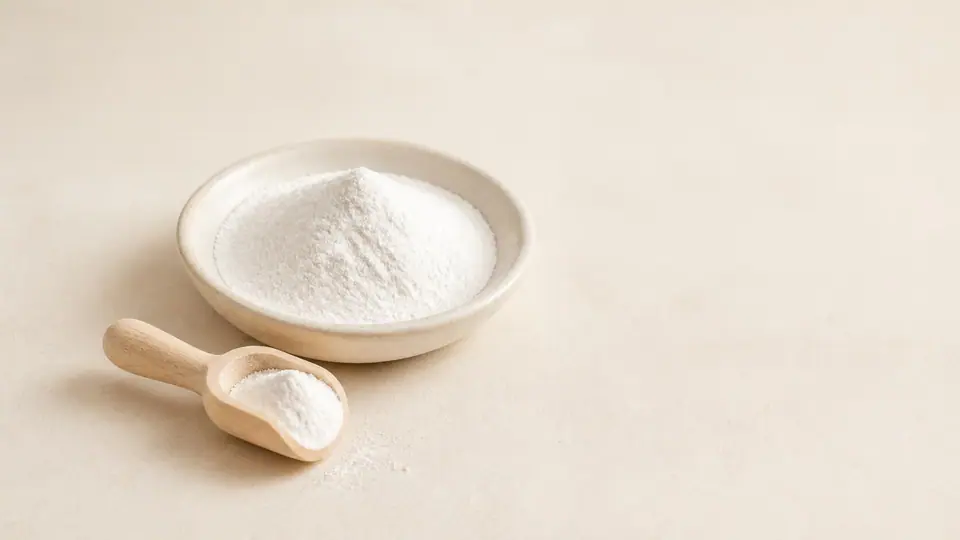
I just started exercising; will taking creatine make my muscles grow faster?
I just started exercising; will taking creatine make my muscles grow faster? In short, while it may improve performance during repetitive, short, and intense exercise, creatine does not build muscle on its own. Individual results vary, and it may be less helpful depending on the type of exercise.
This ingredient is a compound produced by the body and found in some foods. It helps supply the energy needed for short, intense muscle activity. However, because the term 'muscle supplement' mixes together water-induced weight gain, high-intensity repetitive performance, training adaptation, endurance exercise, and various formulations, it is easy to misunderstand based on the name alone. First, you must distinguish between the type of exercise and the form of the product.
Where the questions begin: The expectation of 'faster'
Many people seek out creatine because of the expectation that 'muscles will grow faster.' However, creatine is not a substance that replaces exercise. While there are research signals that it can improve strength, power, or training performance in repetitive, short, high-intensity intermittent exercise, these results appeared in conjunction with training. In other words, the ingredient does not create training adaptation itself, but rather increases the capacity for performance during specific types of training processes.
It is also important to note that 'individual differences exist.' Responses can vary even when using the same exercise and the same product. Therefore, the statement 'signals of performance improvement were seen under these conditions' is more accurate than 'taking it leads to growth.'
What kind of ingredient is creatine?
Creatine is a compound that helps supply the energy required for short and intense muscle activity. It is partially produced by the body and can also be consumed through certain foods.
Importantly, there are various formulations and products under the name 'creatine.' The most widely researched form is creatine monohydrate. Other expensive formulations, single products, or mixed exercise supplements containing multiple ingredients cannot be viewed with the same evidence. You should not apply the same evidence just because the name is the same.
Reasons for expectations: High-intensity repetitive exercise and strength training
The focus on creatine is rooted in the context of research. A meta-analysis of studies on adults using it alongside resistance exercise reported signals of increased upper and lower body strength. This is a result observed in combination with strength training, not the effect of creatine alone.
However, it may have little value for endurance exercises such as long-distance running or swimming. In fact, the increase in body weight could be a burden. Therefore, your exercise goal comes first. It may be meaningful for repetitive exercises requiring strength and power, but a different judgment is needed for sports where lowering body weight or long-term endurance is required.
What the scale tells you first: Water retention
A common change seen after starting creatine is weight gain. This does not mean that muscle has increased overnight. Common weight gain may be related to water retention.
In other words, short-term weight gain is not synonymous with muscle increase. This is an important consideration, especially for those in sports where weight classes are critical or for people sensitive to changes in physical appearance. Mistaking weight gain for muscle growth can lead to a misunderstanding of the ingredient's actual role.
Differences in product forms: Monohydrate and beyond
Creatine monohydrate is the most widely used and researched form. Other more expensive formulations have not been proven superior to monohydrate. Even if other formulations use the name creatine, they do not automatically share the same evidence as monohydrate.
Additionally, single-ingredient creatine products and bodybuilding supplements mixed with various ingredients should be viewed separately. Mixed products may have different risks of contamination or undisclosed ingredients compared to single creatine. Therefore, when choosing a product, it is more important to check 'what form it is' and 'what it is mixed with' rather than just the name 'creatine.'
Combined Intake and Individual Circumstances
When considering creatine, your current health status must also be evaluated. People at risk for kidney problems should consult a medical professional before taking it and monitor their progress afterward. While data on short-term or multi-year use in healthy adults generally support its safety, situations involving specific medical conditions must be judged separately.
Caution is also necessary for adolescents. Because there is insufficient safety data regarding the use of performance-enhancing supplements in adolescents, it is advisable not to start them without the guidance of medical or sports professionals. The same logic applied to adults cannot be applied directly to adolescents.
In rare cases, reactions such as nausea, diarrhea, muscle cramps, and stiffness have been reported. If these reactions occur, the practical response is to stop intake and consult a professional.
The Gap Between Human Evidence and Expectations
Research on creatine is relatively abundant in adults, particularly those performing resistance exercise. However, 'abundant research' does not mean 'effective for everyone.' The number of studies, consistency, and limitations must be considered together.
For example, even if a meta-analysis shows a signal for increased muscle strength, this is an average trend and varies by individual. Some people may feel a distinct difference, while others may feel almost no change. Therefore, rather than concluding that it 'is effective,' it is more accurate to say that 'there is a signal for performance enhancement in some people under these conditions.'
Similar Names, Different Meanings
The most common confusion when understanding creatine occurs when trying to cover multiple situations with a single name. Creatine monohydrate and other formulations, high-intensity repetitive exercise and long-distance endurance exercise, and weight gain due to water retention versus long-term training adaptation must all be distinguished.
The habit of assuming things are the same just because they share a name is particularly dangerous with this ingredient. This is because formulation, type of exercise, the meaning of weight change, and individual health status all operate as different axes under the name 'creatine.'
Criteria to Check Today
What should you look at first? Rather than the name of the supplement, check the following first: whether the exercise type and training plan involve high-intensity repetitive exercise/strength training or long-distance endurance exercise; whether the product is a single monohydrate or a multi-ingredient blend; and whether there are risks of kidney disease, if the user is an adolescent, or if weight gain affects athletic performance.
These criteria narrow down the conditions under which creatine can be used meaningfully. When specific training, formulations, and individual health status are considered together, the selection criteria become more realistic.
References
- NIH ODS Dietary Supplements for Exercise and Athletic Performance.
- NIH ODS Exercise and Athletic Performance fact sheet for consumers.
- Creatine plus resistance training and muscle strength in adults under 50: meta-analysis.
This text explains the origin of the raw materials, the scope of research, and precautions before consumption. As this cannot replace individual diagnosis or treatment, please consult a medical professional if you are taking medication or if symptoms persist. If sudden and severe symptoms such as difficulty breathing or decreased consciousness occur after consumption, seek help from 119 or the emergency room.

Medical Staff Review
Director Choi Yeon-seung
Chief Director of Baekrokdam Korean Medicine ClinicCreatine Dictionary Entry, reviewed the safety of expressions and the scope of verification before administration.
Review scope: Ingredient origin, human subject research, concomitant medications, intake safety · Last reviewed 2026-08-16
- Graduated from Kyung Hee University College of Korean Medicine
- Providing Korean medicine treatment since 2010
- Consultations for Gongjindan, Gyeongokgo, Nokyong (Deer Antler) restorative medicine, and customized restorative herbal medicine