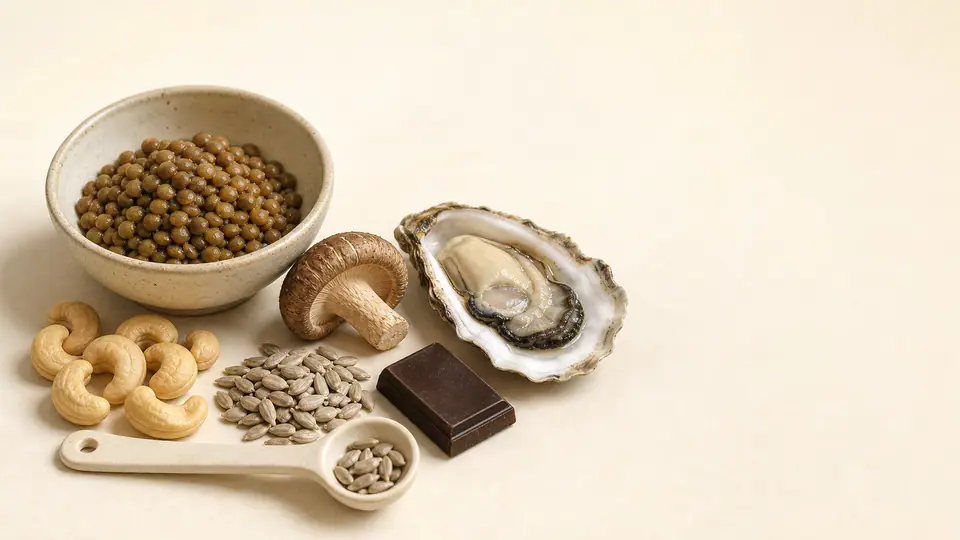
From Metal in Power Lines to Cofactors for Neural Enzymes
Should you supplement copper if you have anemia, gray hair, or fatigue, or if you have been taking zinc for a long time? In short, symptoms alone cannot confirm a copper deficiency; if you have been using high-dose zinc for a long period, you must first check the total amount and duration of use.
Copper is a trace mineral that plays a small but vital role in the body. However, the fact that it is necessary is different from the fact that deficiency is common. Especially for those who have taken zinc for a long time, actual total intake and duration of use should be prioritized over vague ratios.
What Kind of Nutrient is Copper?
Copper is a trace mineral required for iron metabolism, energy production, connective tissue, and neurological function. Small amounts from food and multivitamins, treatment for deficiency, and diseases where copper accumulates in the body, such as Wilson disease, are all different scenarios. Even with the same nutrient, the meaning changes depending on the context. The NIH ODS suggests a recommended daily intake of 900 μg for adults and an upper limit of 10,000 μg, explaining that most people obtain sufficient amounts through food. These figures are daily standards for general adults, not dosages for treating a deficiency. Understanding copper means distinguishing when this nutrient is necessary and when it is dangerous based on the context.
Why Copper is Linked to 'Anemia and Gray Hair'
Copper deficiency can cause anemia, hypopigmentation, bone and connective tissue problems, and ataxia. However, these symptoms are not specific. Fatigue and gray hair can appear due to numerous other causes. The reason copper is often introduced as something that 'restores complexion' or 'protects hair color' is that it is easy to directly link symptoms of deficiency to common inconveniences. Evidence that copper supplements prevent or treat gray hair, Alzheimer's disease, or cardiovascular disease has not been established. The presence of symptoms does not immediately mean that copper is the cause.
Difference Between Dietary Copper and Single High-Dose Supplements
Copper from food is different from single high-dose supplements. It is important to remember that most people obtain sufficient copper through their diet. Copper in microgram (μg) units found in multivitamins and minerals falls under the category of daily supplementation. Conversely, single high-dose products should not be chosen lightly unless a deficiency has been confirmed. Copper is one of the nutrients with a narrow range between the required amount and an excessive amount. A small difference in numbers can have a different meaning over the long term.
Relationship with Zinc: Total Amount and Duration Over 'Golden Ratios'
Continuous use of high-dose zinc can reduce copper absorption, potentially leading to deficiency. A study using zinc at a level of 60 mg/day for 10 weeks reported changes in copper status markers. This illustrates the situation surrounding the zinc-copper balance and arbitrary ratio formulas. Common formulas seen on the market, such as 'Zinc:Copper = 10:1', may not reflect an individual's actual total intake or duration of use. Rather than automatically adding copper for high-dose zinc users, it is better to verify the zinc dosage, duration, and the necessity of testing with a healthcare provider.
Total Intake of Other Supplements When Taking Copper
You must first calculate the total amount of copper and zinc combined from multivitamins, minerals, and meals. When combining multiple products, zinc may become high-dose while copper appears relatively insufficient. However, adding copper is not the only way to resolve this. Reducing the zinc dose or adjusting the duration of use may be a more fundamental solution. Since the interaction between copper and zinc occurs at the intestinal absorption stage, simply matching a ratio does not solve the problem.
How to Interpret Test Results
Serum copper and ceruloplasmin are influenced by inflammation, hormones, and diseases, making it difficult to determine whether to supplement based on a single value. Being within the normal range does not mean there is no deficiency, nor does a slightly low value necessarily mean supplementation is required. It is necessary to consider whether anemia tests and evaluations of iron, B12, folate, serum copper, and ceruloplasmin are needed together. Copper-deficiency anemia and iron-deficiency anemia may have similar symptoms but require different treatment directions.
Where Wilson Disease and Menkes Disease Complicate the Discussion
Wilson disease is a genetic disorder caused by an ATP7B abnormality that prevents copper excretion, leading to accumulation; therefore, it is not a candidate for general copper supplementation. Menkes disease is a disorder where copper is not absorbed due to a metabolic abnormality. Both of these diseases are on a different level from general copper supplementation. If you have liver disease or a family history of Wilson disease, it is important not to supplement copper arbitrarily.
Overdose and Safety Signals
Excessive copper can cause abdominal pain, cramps, nausea, diarrhea, vomiting, and liver damage. Do not supplement copper arbitrarily if you have Wilson's disease or liver disease of unknown cause. Severe abdominal pain, repeated vomiting, jaundice, confusion, or new gait disturbances require immediate medical evaluation. Since these symptoms can appear not only in copper overdose but also in other liver or neurological diseases, you must inform your provider if you are taking supplements.
Criteria to Check Today
In other words, while copper is necessary, deficiency is rare in healthy individuals, and deficiency cannot be diagnosed based on fatigue, anemia, or gray hair alone. High doses of zinc can interfere with copper absorption in the intestines, potentially leading to anemia, sensory abnormalities, and gait problems. So, what should be monitored? The total amount of copper and zinc combined from multivitamins, minerals, and diet; the need for anemia tests and evaluations of iron, B12, folate, serum copper, and ceruloplasmin; and whether there is a family history of liver disease or Wilson's disease, or the presence of abdominal pain, jaundice, or neurological symptoms.
The standard for managing this ingredient is to verify the actual total amount, duration of intake, test results, and liver/neurological status, rather than relying on terms like the 'golden ratio' with zinc or 'gray hair mineral,' and to avoid estimating deficiency based on symptoms alone or overlapping high doses for preventive purposes.
References
- NIH ODS: Copper health professional fact sheet.
- NIH ODS: Zinc consumer fact sheet.
- NIDDK: Wilson disease.
This text explains the origin of the raw materials, the scope of research, and precautions before consumption. As this cannot replace individual diagnosis or treatment, please consult a medical professional if you are taking medication or if symptoms persist. If sudden and severe symptoms such as difficulty breathing or decreased consciousness occur after consumption, seek help from 119 or the emergency room.

Medical Staff Review
Director Choi Yeon-seung
Chief Director of Baekrokdam Korean Medicine ClinicCopper Dictionary Entry, reviewed the safety of expressions and the scope of verification before administration.
Review scope: Ingredient origin, human studies, concomitant medications, safety of intake · Last reviewed 2026-08-17
- Graduated from Kyung Hee University College of Korean Medicine
- Providing Korean medicine treatment since 2010
- Consultations for Gongjindan, Gyeongokgo, Nokyong (Deer Antler) restorative medicine, and customized restorative herbal medicine