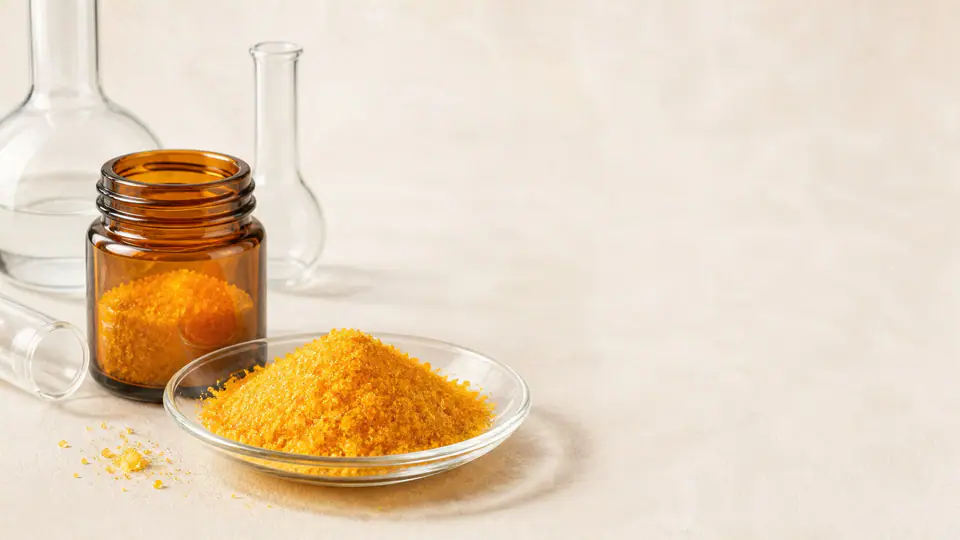
Coenzyme Q10, a name often associated with statins
“I have muscle pain after taking statins; can I take CoQ10 together?”
There is a point that must be addressed before determining whether it is possible. It must first be evaluated whether the muscle pain is temporally linked to the start or dose increase of statins. This substance, called Coenzyme Q10, CoQ10, or CoQ10, naturally exists in the body and is involved in cellular energy production. However, this does not mean that additional supplementation will eliminate specific symptoms.
Statin-induced muscle pain: Is adding a supplement first the answer?
Whether Coenzyme Q10 supplementation is effective for muscle pain occurring during statin use is a question that must be verified separately through human trials. The explanation that it is a substance naturally present in the body is not enough to determine the cause of muscle pain or the effect of supplementation.
The NCCIH explains that the overall evidence for statin-related muscle pain does not support its effectiveness. In a 2020 meta-analysis of 7 clinical trials involving 321 people, no benefits were confirmed in terms of reducing muscle pain or improving statin adherence. In other words, evidence that Coenzyme Q10 reduces muscle pain caused by statins has not been secured to date.
Why does this question keep recurring? It is likely because the explanation that it is a "substance needed by the body" leads to the intuition that "problems will occur if it is lacking." However, the fact that it exists in the body and plays an important role does not prove the effectiveness of additional supplementation. What should we look at then? We must look at the consistency and limitations of the research together.
What exactly is Coenzyme Q10?
Coenzyme Q10 is a fat-soluble substance that occurs naturally in the human body. It is involved in the process of cellular energy production, particularly the processes occurring in the mitochondria. Supplements use ubiquinone, the oxidized form, and ubiquinol, the reduced form. The two have different forms. However, the fact that the forms are different does not guarantee clinical superiority.
Coenzyme Q10, CoQ10, and CoQ10 refer to the same family, but the form and content of the products differ. Even with the same name, the subject of discussion may change depending on the form and the amount contained. In other words, you cannot expect the same effect just because the name is the same.
Why there are expectations for heart health, blood pressure, and fatigue
Due to physiological explanations regarding its involvement in cellular energy production, it is easy to link it to cardiovascular health. However, the NCCIH summarizes that research on heart disease prevention and heart failure is inconclusive. Regarding blood pressure, it is viewed as likely having no significant effect. This is why physiological roles should not be read as the same thing as the clinical effects of supplements.
Limitations of signals seen in migraine and Parkinson's disease
Some migraine studies showed signals of reduced frequency and duration of attacks. However, uncertainty remains because the number of studies is small and the effect size is also small. "There is a possibility" and "it is effective" are different statements.
In a large-scale NIH-funded study targeting patients with early-stage Parkinson's disease, high-dose Coenzyme Q10 failed to improve symptoms. These results should not be misinterpreted as being effective for other diseases or purposes.
Differences in product forms: Ubiquinone and Ubiquinol
Coenzyme Q10 available as supplements is largely divided into the oxidized form, ubiquinone, and the reduced form, ubiquinol. While it is commonly explained that the reduced form is the more active form in the body, this does not immediately mean better clinical results. Based on reviewed evidence, there is insufficient ground to conclude superiority between the forms.
| Category | Description | Points to Note |
|---|---|---|
| Ubiquinone | Oxidized Coenzyme Q10 | Superiority in efficacy has not been proven based on form alone |
| Ubiquinol | Reduced Coenzyme Q10 | Clinical superiority is not guaranteed simply by the fact that the form is different |
This table is intended solely to distinguish between forms and is not a recommendation on which form to choose.
When Prescription Medications and Supplements Interact
While Coenzyme Q10 is generally considered a safe substance, caution is required when used in combination with other medications. Although reports of serious adverse reactions are rare, insomnia or gastrointestinal discomfort may occur.
In particular, it may interact with warfarin. Warfarin's anticoagulant effect is managed using a value called INR, and Coenzyme Q10 may affect this value. Therefore, if you are taking warfarin, you should not start or stop its use arbitrarily.
When used with insulin, it may affect blood glucose management. You must inform your medical provider when making changes to your dosage. If you are undergoing chemotherapy, it may not be compatible with certain cancer treatments, so you must confirm this with your attending medical provider.
Why Checking Your Individual Situation Comes First
If statin-induced muscle pain is severe, or if it is accompanied by muscle weakness or dark urine, you should seek a medical evaluation immediately rather than relying on supplements.
Before considering supplements, it is advisable to first consider the following:
- Is the muscle pain temporally related to when you started or increased the dose of statins?
- Are you taking warfarin or insulin, or are you receiving cancer treatment?
- Is the product ubiquinone or ubiquinol, and what other complex ingredients does it contain?
These three points are not simple selection criteria, but rather the starting point for a conversation with your medical provider.
The Gap Between Endogenous Coenzyme Q10 and Supplements
The fact that a substance naturally exists in the body is different from the claim that supplementing it provides clinical benefits. This is why it is necessary to verify purpose-specific effects in human studies.
Coenzyme Q10 plays an important physiological role. However, whether that role directly translates into a preventive or therapeutic effect for a specific disease is a separate issue. This is the central point of tension emphasized throughout this text.
Final Decision Criteria
If you are considering Coenzyme Q10, there are things to verify before the explanation that it is a "substance the body needs." These include the purpose of intake and the certainty of the evidence supporting that purpose, an evaluation of whether symptoms are caused by statins, and the context of concurrent use with warfarin, insulin, or chemotherapy.
This ingredient is not as simple as its name suggests. The decision to use it should not be based on broad expectations of its physiological role, but rather on your current medications, symptoms, and human-based studies tailored to specific goals.
References
- NCCIH Coenzyme Q10.
- CoQ10 for statin-associated myalgia: systematic review and meta-analysis.
- NCCIH headaches and complementary health approaches.
This text explains the origin of the raw materials, the scope of research, and precautions before consumption. As this cannot replace individual diagnosis or treatment, please consult a medical professional if you are taking medication or if symptoms persist. If sudden and severe symptoms such as difficulty breathing or decreased consciousness occur after consumption, seek help from 119 or the emergency room.

Medical Staff Review
Director Choi Yeon-seung
Chief Director of Baekrokdam Korean Medicine ClinicCoenzyme Q10 Preliminary Items, reviewed the safety of expressions and the scope of verification before administration.
Review scope: Ingredient origin, human subject research, concomitant medications, intake safety · Last reviewed 2026-08-16
- Graduated from Kyung Hee University College of Korean Medicine
- Providing Korean medicine treatment since 2010
- Consultations for Gongjindan, Gyeongokgo, Nokyong (Deer Antler) restorative medicine, and customized restorative herbal medicine