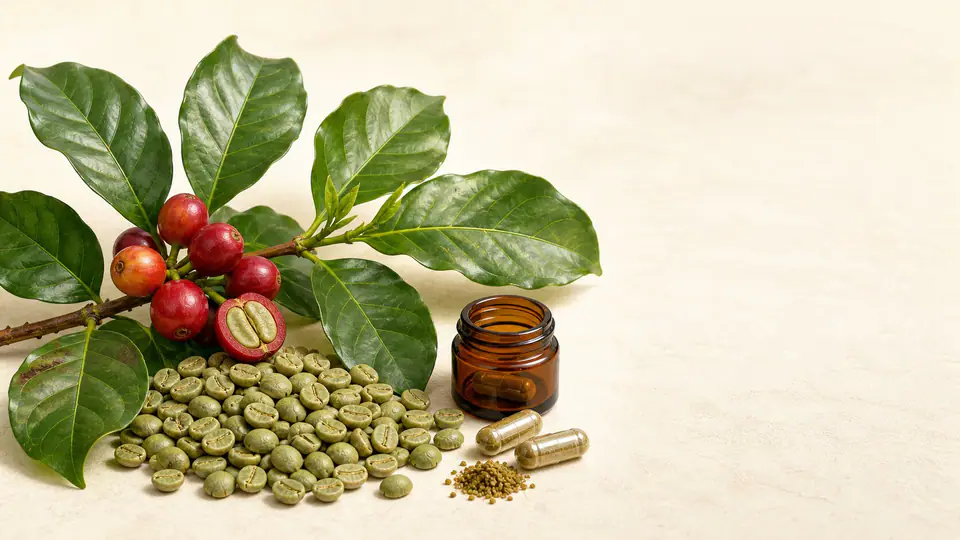
Questions Arising from Green Coffee Bean Polyphenols Through Roasting and Extraction
Can chlorogenic acid, which is said to be good for blood sugar and weight, be consumed as coffee, or are green coffee bean capsules more effective? In short, although they share the same name, they belong to different product categories, and research results cannot be applied interchangeably. A cup of coffee, decaf coffee, green coffee bean extract, and quantified chlorogenic acid products all differ in caffeine content and ingredient composition.
This question goes beyond simply asking 'which product is better' and asks how differently the same raw material can exist in various forms. The coffee someone drinks in the morning, the green coffee bean extract they take at lunch, and the capsules they consider in the evening all fall under the umbrella of 'chlorogenic acid,' but the actual ingredients entering the body may not be the same. This article explores where those differences originate and to what extent small, short-term numerical changes can be trusted.
The Name Between Coffee and Capsules
Chlorogenic acid is a polyphenol ester consisting of caffeic acid and quinic acid. It exists in various plants, not just coffee beans, but the most familiar route for the public is coffee. The problem is that the phrase 'because it is in coffee' lumps together unroasted green beans, roasted beans, extracts, concentrated extracts, and quantified ingredients. Even with the same chlorogenic acid, the actual amount consumed varies depending on the form it takes.
What Roasting Preserves and What It Loses
During roasting, some of the chlorogenic acid in coffee beans is decomposed. Since the amount in a single cup varies depending on the degree of roasting and the extraction method, it is difficult to accurately convert a cup of coffee into the mg units used in research. Caffeine is not completely removed from decaf coffee, and the preservation rate of chlorogenic acid varies by brand. Coffee brewed at home and coffee under controlled laboratory conditions may share the same name, but they are different substances.
Green Coffee Bean Extract Is Not the Same as Pure Ingredient Testing
Green coffee bean extract is obtained from unroasted beans. However, because caffeine and other components may remain in green bean products, it is not the same as trials designed solely with pure chlorogenic acid. Extraction concentration, the amount of accompanying caffeine, and the presence or absence of other plant components all differ. Therefore, the results of green coffee bean extract research cannot be applied directly to quantified chlorogenic acid capsules, or vice versa.
Blood Pressure, Blood Sugar, and Weight: What Is the Evidence?
Expectations exist because meta-analyses have reported small changes. A 2015 blood pressure meta-analysis reported a decrease in 5 trials with 364 participants, but the studies were small, limited to Asian populations, and frequently supported by manufacturers. A 2021 green coffee bean extract meta-analysis reported small changes in blood pressure, fasting blood glucose, and weight, but HbA1c and some other indicators were inconsistent. A 2023 weight meta-analysis included only 3 trials with 103 participants, making it difficult to confirm a sustainable weight loss effect. In other words, small changes in short-term surrogate markers do not prove the treatment of disease or the prevention of cardiovascular events.
What to Look for When Comparing Product Forms
Selection criteria can be organized into three main axes.
| Category | Points to Check |
|---|---|
| Raw Material mg vs. CGA mg | Whether the product lists the total mg of the raw material extract or the actual chlorogenic acid content |
| Caffeine Content | How much caffeine remains in green coffee bean extracts or coffee-based products |
| Product Form | Whether it is roasted coffee, decaf, green coffee bean extract, or a standardized CGA product |
The amount of raw material in mg is different from the amount of CGA in mg. 500mg of extract may not mean 500mg of chlorogenic acid. This difference becomes more important for those with caffeine sensitivity.
When taking with other medications
If you are taking medication for blood pressure or diabetes, do not reduce or stop your dosage based solely on signals seen in research. While there is a possibility that chlorogenic acid products may add to the effect of prescription medications, this possibility cannot be used as a basis to replace drug therapy. It is also necessary to calculate the total caffeine from all beverages and supplements. Since green coffee bean products may contain residual caffeine, taking both coffee and green coffee bean extract may lead to higher caffeine intake than intended.
Pregnancy, Breastfeeding, and Adverse Reaction Signals
There is insufficient safety data regarding concentrated extracts during pregnancy or breastfeeding. If severe palpitations, chest pain, fainting, confusion, or difficulty breathing occur, seek emergency evaluation immediately. This could be due to excessive caffeine intake or other causes, but if you are taking concentrated extracts, a faster differentiation of the cause is necessary.
Similar names, different ingredients
Chlorogenic acid and caffeine are often linked, but they are different components. Roasted coffee, decaf, and green coffee bean extract are also not in the same category. If you do not distinguish between raw material mg and CGA mg, or between short-term surrogate markers and treatment/event prevention, expectations may exceed reality. So, what should you look for? First, check the actual CGA content and caffeine content listed on the product label, and identify whether your goal is blood pressure, blood sugar, or weight management.
Realistic criteria to check today
The criteria for choosing this ingredient is to check the actual CGA/caffeine content and formulation rather than the name 'coffee polyphenol,' and to avoid extrapolating small short-term figures into therapeutic effects. Enjoying coffee, trying green coffee bean extract, and considering a standardized chlorogenic acid product are each different decisions and do not share the same evidence base.
References
- PubChem: Chlorogenic acid.
- Chlorogenic acid and blood pressure: meta-analysis.
- Green coffee extract and cardiometabolic factors: meta-analysis.
- Green coffee chlorogenic acid and body weight: meta-analysis.
This text explains the origin of the raw materials, the scope of research, and precautions before consumption. As this cannot replace individual diagnosis or treatment, please consult a medical professional if you are taking medication or if symptoms persist. If sudden and severe symptoms such as difficulty breathing or decreased consciousness occur after consumption, seek help from 119 or the emergency room.

Medical Staff Review
Director Choi Yeon-seung
Chief Director of Baekrokdam Korean Medicine ClinicChlorogenic Acid Glossary, reviewed the safety of expressions and the scope of verification before administration.
Review scope: Ingredient origin, human studies, concomitant medications, safety of intake · Last reviewed 2026-08-17
- Graduated from Kyung Hee University College of Korean Medicine
- Providing Korean medicine treatment since 2010
- Consultations for Gongjindan, Gyeongokgo, Nokyong (Deer Antler) restorative medicine, and customized restorative herbal medicine