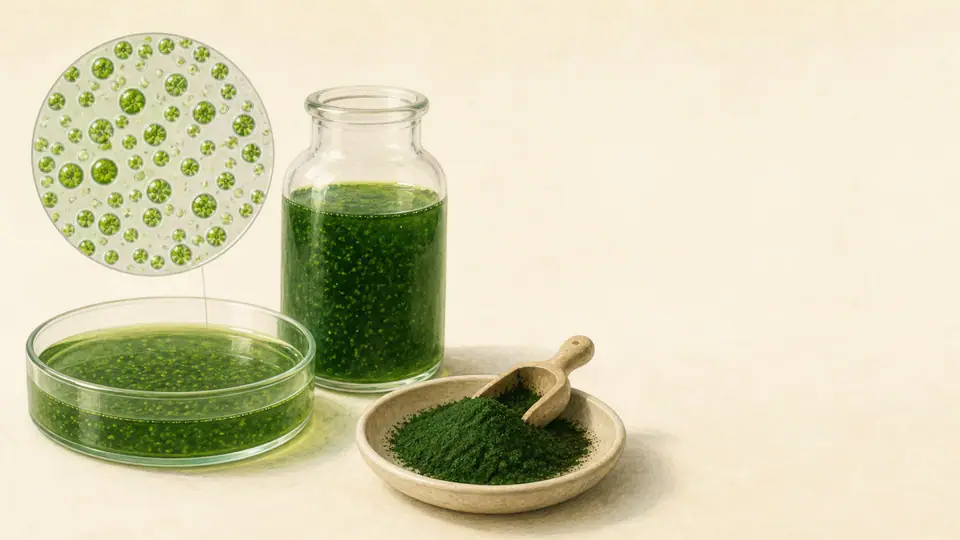
Until a Small Green Lump Becomes 'Detoxification'
Will taking chlorella help manage cholesterol or blood sugar? In short, some studies showed an average decrease in total cholesterol, LDL, blood pressure, and fasting blood glucose, but a more rigorous recent meta-analysis viewed those effects as neutral. Between these results lie differences in species, strains, processing methods, and research designs. It is difficult to conclude these as definitive therapeutic effects.
In the category of algae supplements, this name is often mentioned alongside spirulina. Chlorella belongs to the genus Chlorella, a unicellular green microalga, and the NCBI also classifies C. vulgaris as such. Spirulina is a cyanobacterium. Even if they are placed in the same algae supplement category, their biological identities and the evidence supporting them must be distinguished.
Why This Question Is Repeated
Chlorella is associated with a broad image of 'detoxification' and expectations for cholesterol and blood sugar management. However, its identity as a microalga and the claim that it affects specific test values are separate issues.
Ingredient Identity: Distinguishing Species and Strains
Chlorella refers to unicellular green microalgae of the genus Chlorella. Supplements use various species, strains, and different processed products, such as C. vulgaris. NCBI MeSH classifies Chlorella vulgaris as a green microalga of the Chlorellaceae family. Under the single name 'chlorella,' there are multiple species, strains, and processed products. Hearing only 'chlorella' may make it feel like a single, fixed substance, but it is actually closer to a collective term.
Reasons for Expectations: 19 Trials and Subsequent Meta-Analyses
A meta-analysis of 19 randomized trials involving 797 people up to 2017 reported an average decrease in total cholesterol, LDL, blood pressure, and fasting blood glucose. Conversely, there were no significant changes in triglycerides, HDL, or BMI. These results opened the possibility that chlorella could play a role in metabolic indicators. However, a more rigorous comparative meta-analysis of spirulina and chlorella published in 2025 evaluated the effects of chlorella on blood pressure and lipids as neutral. Results conflict due to different included studies and analysis methods. In other words, conclusions can vary depending on how studies were selected and integrated for the same ingredient. Therefore, it is difficult to conclude these as definitive therapeutic effects.
Why Product Forms Fail to Keep Pace with Research
Is the chlorella used in the study the same as the product I chose? If the species, strain, or the form of the product (powder, tablet, or cell-wall processed) differs, it is difficult to apply the research results directly. This is why it is important to check if the product label accurately indicates the species, strain, and the amount per 1 serving.
| Checkpoints | Reason |
|---|---|
| Species/Strain Labeling | Whether a specific name such as C. vulgaris is listed |
| Amount per 1 serving | Whether a baseline for comparison with research can be established |
| Third-Party Testing | Whether there is a basis to trust the quality differences based on species, strain, cultivation, and processing |
Relationship with Concurrent Medications
There is no evidence that chlorella can replace blood pressure medication, diabetes medication, lipid-lowering agents, or the evaluation of the underlying cause of a condition. If you are taking medication for blood pressure, blood sugar, or lipids, you must not arbitrarily interpret test results or reduce your medication dosage after adding this product. Supplements are simply another variable that can change your numbers; they cannot replace the basis for medical drug therapy. It is safer to inform your medical provider about the product and coordinate your testing schedule with them.
Individual Circumstances and Adverse Reaction Signals
If you overlap multiple green powder and microalgae products, it is difficult to determine which product caused a reaction. Therefore, it is advisable not to start several at once. If adverse reactions such as new gastrointestinal discomfort, headaches, or rashes occur, stop use and inform your medical provider, recording the product name, raw material species, and formulation.
Differences from Similar Ingredients: Spirulina and Other Species
While chlorella and spirulina are both grouped as algae supplements, their biological classifications differ. Chlorella is a unicellular green microalga, whereas spirulina is a cyanobacterium. Therefore, research and safety data for one ingredient cannot be applied directly to the other. Furthermore, there is a gap between C. vulgaris and other species or strains that prevents the simple transfer of research results. The same applies to the gap between lipid, blood pressure, and blood sugar indicators and the actual treatment of a disease. An improvement in numbers does not mean the disease has been cured.
Realistic criteria to check today
Rather than relying on the broad image of 'detox,' first verify the exact species, product form, conflicting research, test indicators, and existing drug treatments. When choosing a product, look for the exact species/strain, the dosage per serving, and whether it has undergone third-party testing. If you are taking medication, do not interpret numbers arbitrarily and share them with your medical provider. Do not overlap multiple green powders, and stop use if adverse reactions appear. Expectations for chlorella begin with research possibilities, but separate verification is needed to see if those possibilities apply to the specific product in your hand and your personal health status.
References
- NCBI MeSH: Chlorella vulgaris.
- FDA GRAS Notice 986: Chlorella sorokiniana powder.
- Chlorella and cardiovascular risk factors: meta-analysis.
- Chlorella and Spirulina as cardiovascular adjuncts: meta-analysis.
This text explains the origin of the raw materials, the scope of research, and precautions before consumption. As this cannot replace individual diagnosis or treatment, please consult a medical professional if you are taking medication or if symptoms persist. If sudden and severe symptoms such as difficulty breathing or decreased consciousness occur after consumption, seek help from 119 or the emergency room.

Medical Staff Review
Director Choi Yeon-seung
Chief Director of Baekrokdam Korean Medicine ClinicChlorella Dictionary Entry, reviewed the safety of expressions and the scope of verification before administration.
Review scope: Ingredient origin, human subject research, concomitant medications, intake safety · Last reviewed 2026-08-16
- Graduated from Kyung Hee University College of Korean Medicine
- Providing Korean medicine treatment since 2010
- Consultations for Gongjindan, Gyeongokgo, Nokyong (Deer Antler) restorative medicine, and customized restorative herbal medicine