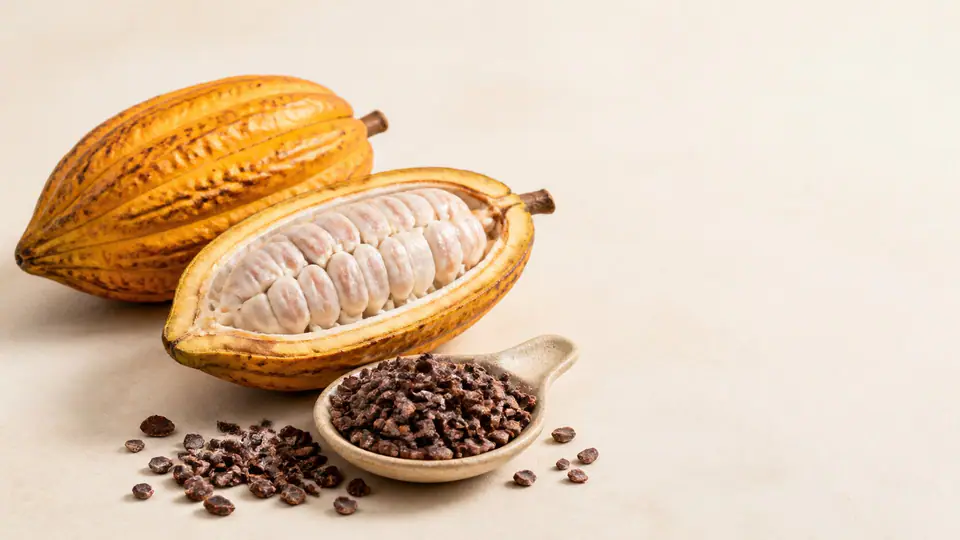
Remaining questions from the bitter seed: Are cacao nibs better than dark chocolate, and is there no need to worry about heavy metals?
If I eat cacao nibs every day because they are said to be good for blood pressure or dieting, are they better than dark chocolate, and is there no need to worry about heavy metals? In short, there is insufficient evidence to definitively say so. Cacao nibs are simply one form of cacao; they are a different food from the flavanol-standardized drinks or extracts used in clinical trials, and heavy metal content varies depending on the origin and the product.
This question asks about several different faces of the raw material called cacao simultaneously. Seed fragments, powder, butter, chocolate, and extracts all come from cacao, but each differs in its content of fat, sugar, fiber, flavanols, and methylxanthines. As cacao nibs, one of these, have come to the center of health foods under the name 'sugar-free,' the subjects of research and the reality of commercial products have begun to overlap. The story begins by unraveling that overlap.
Where does cacao come from, and which part are the nibs?
Kew introduces cacao Theobroma cacaoas a tree originating from tropical America and records the long history of its seeds being consumed. Seeds removed from the fruit undergo fermentation and drying, and are usually roasted and then shelled. Those seed fragments are the nibs. Further grinding produces cacao mass, and partially separating the fat results in cocoa powder and cocoa butter. Taste and aroma are developed during this process, but the content of flavanols and methylxanthines also changes.
Since flavanols and methylxanthines vary depending on fermentation, roasting, variety, and origin, clinical trial dosages cannot be calculated based solely on 'sugar-free' status or cacao content. This means it is unknown whether a handful of nibs provides the same amount of flavanols used in research.
Where did the expectation of it being an 'antioxidant superfood' come from?
Cacao contains flavanols. A meta-analysis of 31 studies showed signals that cocoa drinks and chocolates containing flavanols slightly lowered blood pressure over several weeks. However, there was significant heterogeneity in formulation, dosage, control diets, and the studies themselves. More importantly, many of these blood pressure studies used drinks, chocolates, or extracts with a fixed flavanol content. This was not the same intervention as a spoonful of commercial cacao nibs.
In other words, while there are studies observing short-term changes in blood pressure levels, those studies did not directly test cacao nibs. Although 'cocoa' and 'nibs' may feel like the same thing, the research subjects were quantified flavanol formulations.
Can it be seen as reducing cardiovascular events?
The COSMOS trial involved 21,442 older adults. After administering 500 mg of cocoa extract containing flavanols daily for an average of 3.6 years, it did not significantly reduce the pre-specified overall cardiovascular events. While signals appeared in some secondary outcomes, further verification is needed, and the trial infrastructure and products were supported by a company. Therefore, it cannot be concluded that cacao nibs prevent cardiovascular disease.
To put it another way, a small change in a surrogate marker like blood pressure is on a different dimension from event outcomes such as myocardial infarction, stroke, or death. There is insufficient evidence to suggest that eating cacao nibs daily can prevent cardiovascular events.
Nibs, powder, chocolate, or extracts, which should be compared?
Cacao nibs, cacao mass, cocoa powder, cocoa butter, and dark chocolate all come from the same fruit but have different compositions. Nibs are closest to the original seed fragments, containing both fat and fiber. Cocoa powder is a form where a significant portion of the fat has been removed, and cocoa butter is almost entirely fat. Dark chocolate is a product where sugar and fat are added to cocoa solids.
Food products and flavanol-standardized extracts are also different. Extracts are made by quantifying specific components, whereas nibs are not. A high cacao content or a strong bitter taste does not necessarily mean the actual flavanol content is high. Therefore, it cannot be definitively stated that nibs are 'better' than dark chocolate. One must first ask what the expected goal is.
How should I consider weight, caffeine, and theobromine?
Even if cacao nibs are sugar-free, they contain fat and calories. Consuming too many may conflict with your weight management goals, so you should check the serving size per intake. Additionally, cacao contains caffeine and theobromine. For this reason, insomnia, pulsating sensations, anxiety, heartburn, reflux, and headaches may worsen. Those who are sensitive may need to adjust the timing and amount of intake.
Particularly during pregnancy or breastfeeding, you must calculate the total caffeine intake, including coffee, tea, and chocolate. It is advisable not to arbitrarily add concentrated flavanols or cacao extracts.
Can heavy metals be identified by organic certification or taste?
When US FDA researchers analyzed commercial cocoa products, including nibs, cadmium and lead concentrations varied significantly depending on the product, origin, and cacao solids. The fact that cacao is a natural food does not eliminate the possibility of contamination. Cadmium and lead cannot be detected by taste or organic labels alone.
Rather than eating large amounts daily, it is better to check the manufacturer's lot-by-lot testing, origin management, and maintain a diverse diet. The belief that there is 'no need to worry about heavy metals' is unfounded.
What about taking them with other supplements or medications?
First, you must identify whether the product is nibs, powder, dark chocolate, or standardized flavanol extract, and check the sugar, fat, calories, and serving size. Next, you should ask whether the intent is to replace medication or meals for the purpose of blood pressure, cardiovascular prevention, weight, or mood. You should also check for caffeine sensitivity, insomnia, anxiety, reflux, migraines, pregnancy, breastfeeding status, and whether the product has undergone heavy metal testing.
These questions are not simple checklists. When taking cacao nibs with other substances or consistently for health goals, they serve as criteria to distinguish between what is a food and what is a medical expectation.
What symptoms indicate that I should stop and seek medical evaluation?
Chest pain, neurological abnormalities, persistent palpitations, or severe allergic symptoms should not be monitored with cacao; you must seek medical evaluation. Regardless of how natural the ingredients are, these signals are not issues that can be left unattended.
Then, what should I look for?
The selection criteria are simple. Rather than the label of a 'sugar-free antioxidant superfood,' first check the fermentation, processing, formulation, and actual amount, as well as sugar, fat, caffeine, theobromine, the difference between flavanol research and nibs, blood pressure surrogate markers and event outcomes, and the origin and heavy metal quality.
Cacao nibs are a food with a specific taste and texture. If you choose them for health goals, start by acknowledging the gap between what research shows and what the actual product contains.
References
- Kew Plants of the World Online: Theobroma cacao.
- Cocoa beverages and dark chocolate on blood pressure: systematic review.
- COSMOS cocoa flavanol cardiovascular outcomes trial.
- Cadmium and lead in cocoa powder, chocolate and nib products.
- Multi-year heavy metal analysis of cocoa products.
This text explains the origin of the raw materials, the scope of research, and precautions before consumption. As this cannot replace individual diagnosis or treatment, please consult a medical professional if you are taking medication or if symptoms persist. If sudden and severe symptoms such as difficulty breathing or decreased consciousness occur after consumption, seek help from 119 or the emergency room.

Medical Staff Review
Director Choi Yeon-seung
Chief Director of Baekrokdam Korean Medicine ClinicCacao Nibs Glossary, reviewed the safety of expressions and the scope of verification before administration.
Review scope: Ingredient origin, human studies, concomitant medications, safety of intake · Last reviewed 2026-08-17
- Graduated from Kyung Hee University College of Korean Medicine
- Providing Korean medicine treatment since 2010
- Consultations for Gongjindan, Gyeongokgo, Nokyong (Deer Antler) restorative medicine, and customized restorative herbal medicine