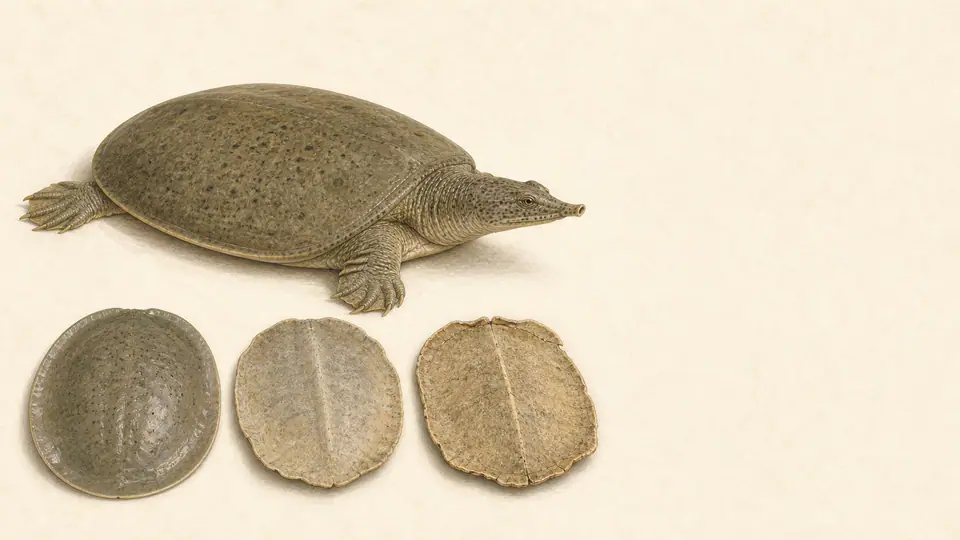
Byeolgap: Names Hidden Behind the Hard Shell
Can I decoct and drink Byeolgap because it is said to be good for bones or masses? In short, it is not that simple. You must first verify what Byeolgap is, which part of the animal it is, and how it was processed; furthermore, there is insufficient evidence for its use as a standalone treatment in humans.
The soft-shelled turtle on the dinner table and the carapace used as a medicinal herb refer to the same animal, but they result in entirely different exposures. The story becomes more complex as names overlap with Maengseongi (Korean pond turtle) plastron and carapace, other turtle shells, and collagen peptides. We will calmly examine what raw materials actually exist under the name Byeolgap and what should be looked at first when selecting them.
Same Animal, Different Parts, Different Names
Byeolgap refers to the carapace of Pelodiscus sinensis, the animal we commonly call the soft-shelled turtle. The Korean Pharmacopoeia (Herbal Medicine) Standards also define Byeolgap as the carapace of this animal. However, in the market, soft-shelled turtle meat, soft-shelled turtle soup, collagen peptides, Maengseongi plastron and carapace, and processed powders from other turtle shells are easily understood in a similar context as Byeolgap.
This is where the problem begins. While the soft-shelled turtle is distributed as both food and a traditional medicinal herb, the meat, soup, and carapace differ in composition and exposure. Eating the meat, drinking a soup made from simmering bones, and decocting the carapace refer to different parts and processing methods, even for the same animal. Byeolgap specifically refers to the carapace, and this part cannot be seen as having the same efficacy as other forms of raw materials.
Reasons for Expectations and the Boundaries of Research
There are various research contexts that lead to expectations for Byeolgap regarding bones or masses. However, these studies did not all originate from the same raw materials, products, or subjects. For example, skin-related results for soft-shelled turtle collagen peptides came from studies on cultured human keratinocytes. This is far removed from human clinical results showing that a Byeolgap decoction treats bones or masses.
In other words, it is premature to expect the same phenomena observed in cellular research to occur in the human body. There is insufficient evidence confirming the therapeutic effect and long-term safety of administering Byeolgap alone to humans for the treatment of osteoporosis or masses. This means that the existence of research does not immediately translate to the efficacy of raw Byeolgap, powder, or decoctions.
Raw Material, Powder, or Extract
When choosing Byeolgap, you must first distinguish the product form. Depending on whether it is a raw carapace, processed with vinegar, a powder, or a collagen extract, the exposure and the subject of verification change. If it is a raw material, the species, part, and contamination tests must be possible; if it is a powder, it must be possible to verify which part the raw material came from and what processing it underwent.
Collagen peptides may be extracted from the carapace, or they may have undergone a completely different process. Since the properties of the final product can change depending on the processing method even for the same raw material, it is dangerous to discuss efficacy without distinguishing the form.
The Possibility of Species Mixing in the Market
Another easily overlooked point when selecting Byeolgap is species identification. Research on the identification of commercially distributed turtle shells shows that sea turtle and other soft-shelled turtle shells can be mixed in as substitutes. In other words, what is sold as Byeolgap may not actually be the carapace of the Pelodiscus sinensis soft-shelled turtle.
This goes beyond a simple quality issue and leads to safety concerns. You should avoid self-decocting raw shells or powders where the species, part, processing status, and contamination tests cannot be verified. In particular, those with allergies to animal-derived materials, or those who are pregnant, breastfeeding, children, or have liver or kidney disease, should consult medical staff first due to the lack of safety data.
When Used Alongside Medications or Treatments
If you take Byeolgap, you must consider how it fits with your current treatment. You must not replace or postpone osteoporosis medication, anticancer treatment, or the evaluation of masses with Byeolgap. Raw materials are not intended to supplement or replace treatment; standard diagnosis and prescribed treatment take priority.
So, what should be checked first? First, check if the raw material is the carapace of the soft-shelled turtle Pelodiscus sinensis, or the shell of a Maengseongi or other turtle. Next, determine if it is a raw material, a vinegar-processed product, a powder, or a collagen extract, and verify if the mass or osteoporosis was diagnosed through standard tests and if you are receiving prescribed treatment. Only after verifying these three things can you establish a criteria for choosing Byeolgap.
Individual circumstances and safety signals
When considering Byeolgap, you must also look at your own physical condition. If you have allergies to animal-derived materials, there is a possibility of a reaction. For those who are pregnant, breastfeeding, children, or have liver or kidney disease, consulting medical staff is the priority as safety data for Byeolgap is insufficient.
Additionally, if you have symptoms such as a persistent abdominal mass, pain, weight loss, or bleeding, medical evaluation and imaging tests should take priority over selecting ingredients. These signs must be evaluated at a hospital before attempting to decoct Baekrokdam.
The Gap Between Human Evidence and Expectations
Much of the expectation regarding Byeolgap is derived from cellular, animal, or complex prescription research that has been extrapolated to single-ingredient treatment in humans. However, there is insufficient evidence confirming the long-term safety and therapeutic effects of Byeolgap alone on osteoporosis or masses in humans.
In other words, while the image of a hard shell naturally leads to associations with bone health or mass treatment, there is a significant gap between the research stages and the actual product forms. Rather than concluding that it is effective, a more accurate approach is to distinguish which research was conducted on which subjects.
Differences from similar raw materials
Byeolgap is a different ingredient from Gupan or Gwipan. Gupan or Gwipan from the Reeves' turtle may be from different parts or different animals than Byeolgap. Soft-shell turtle shells, soft-shell turtle meat, and soft-shell turtle soup also provide different exposures. Raw shells must also be distinguished from collagen peptides in terms of processing and components.
If all these differences are grouped under the single name 'soft-shell turtle,' the expected efficacy may not align with the actual ingredient. When choosing byeolgap (soft-shell turtle shell), it is necessary to develop the habit of checking the species, part, and processing state before the name.
Criteria to Check Today
If you choose Byeolgap, do not simply equate the image of a hard shell with efficacy for bones or masses; first verify the species, part, processing, and standard diagnosis. For raw materials, check if species identification and contamination testing are possible; for powders or extracts, check which part was used and how it was processed. Additionally, consider whether this replaces or delays your current treatment and whether your personal health status is stable.
This is how to view the ingredient Baekrokdam as it truly is.
References
- Ministry of Food and Drug Safety, Korean Herbal Medicine (Crude Drug) Standard outside the Korean Pharmacopoeia.
- Turtle shell and counterfeit species identification.
- US Fish and Wildlife Pelodiscus sinensis assessment.
- Soft-shelled turtle collagen peptides in human keratinocytes.
This text explains the origin of the raw materials, the scope of research, and precautions before consumption. As this cannot replace individual diagnosis or treatment, please consult a medical professional if you are taking medication or if symptoms persist. If sudden and severe symptoms such as difficulty breathing or decreased consciousness occur after consumption, seek help from 119 or the emergency room.

Medical Staff Review
Director Choi Yeon-seung
Chief Director of Baekrokdam Korean Medicine ClinicBaekrokdam Dictionary Entry, reviewed the safety of expressions and the scope of verification before administration.
Review scope: Ingredient origin, human studies, concomitant medications, safety of intake · Last reviewed 2026-08-17
- Graduated from Kyung Hee University College of Korean Medicine
- Providing Korean medicine treatment since 2010
- Consultations for Gongjindan, Gyeongokgo, Nokyong (Deer Antler) restorative medicine, and customized restorative herbal medicine