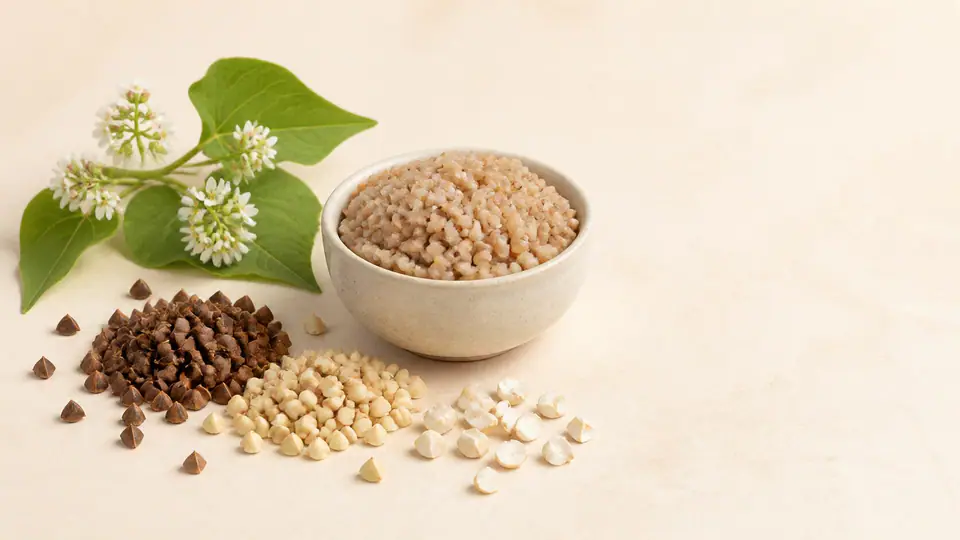
Buckwheat: Its identity as a dish far removed from wheat, despite having 'wheat' in its Korean name
I heard buckwheat is good for blood glucose and gluten-free; can I eat it every day? This question is only possible if you think of buckwheat as a single type of grain.
To answer briefly, buckwheat itself is a gluten-free pseudocereal, and some studies show signals that it may help with blood glucose and lipids, but there is still insufficient evidence to conclude that it can be eaten every day. So, what should we look at first? We must first distinguish what buckwheat is, and which species and forms are consumed and in what quantities.
Buckwheat is not a type of wheat
Although the Korean name contains the word for 'wheat', buckwheat belongs to a different plant lineage than wheat. Kew classifies common buckwheat as Fagopyrum esculentumand it belongs to a different lineage from wheat TriticumBuckwheat is a pseudocereal that uses the seeds of the Polygonaceae family Fagopyrum as a grain. Common buckwheat Fagopyrum esculentumand tartary buckwheat Fagopyrum tataricumare also different species. Therefore, buckwheat powder, noodles, tea, and sprouts cannot be viewed as the same food because their species, blends, and processing methods differ. The name alone makes the identity of buckwheat quite blurry.
What are the conditions for being gluten-free?
Buckwheat itself is not a gluten-containing grain. Under FDA regulations, buckwheat products can be labeled gluten-free if they meet the requirements. However, the term 'gluten-free' does not guarantee all buckwheat products. In reality, buckwheat noodles or pancakes may contain mixed wheat flour or be subject to cross-contact. If you have celiac disease or a wheat allergy, you must separately check the ingredients, certifications, and whether cross-contact has occurred. Just because buckwheat itself is gluten-free does not mean all buckwheat products are safe.
There are signals regarding blood glucose and lipids, but confirmation is difficult
The reason buckwheat is gaining attention as a diabetic diet stems from a 2018 systematic review. Signals of reduction in blood glucose, total cholesterol, and triglycerides were reported in 13 short-term randomized trials. However, there was high unexplained heterogeneity between studies, and in the same review, the benefits for other cardiovascular risk indicators such as weight, blood pressure, insulin, and LDL were unclear. In a 2024 review of ancient grains for diabetic patients, there were only 4 buckwheat trials, and it was reported that the buckwheat results were not quantitatively synthesized, making it difficult to confirm the effect on diabetes treatment. In other words, while there is a possibility that buckwheat may be good for blood glucose, it is not consistent clinical evidence sufficient to conclude that it can be eaten every day.
Differences in species and product form: common buckwheat, tartary buckwheat, noodles, and tea
Common buckwheat and tartary buckwheat differ in taste and components such as rutin. It is difficult to apply the research results of one species or one processed product to all buckwheat. The exposure amount and evidence for buckwheat tea, sprouts, and rutin concentrates are not the same as for a buckwheat meal. Eating buckwheat noodles does not mean you get the component effects of buckwheat tea, nor does drinking buckwheat tea mean you can expect the nutritional effects of a meal replacement. In other words, as the part used, concentration, and processing method change for each product form, the expected results must be re-verified.
How to View Medications Taken with Buckwheat
If you are taking diabetes medication, buckwheat must be counted as a carbohydrate food. You should not arbitrarily reduce your medication while monitoring blood glucose changes. Research suggesting that buckwheat may help blood glucose levels is not a basis for replacing medication. When adding buckwheat to your diet, you must first determine how to calculate the amount of carbohydrates per serving and how to coordinate this with your existing medications.
Do Not Forget Allergies to Buckwheat Itself
Although buckwheat is gluten-free, it can cause IgE-mediated allergies and rare anaphylaxis. Being 'gluten-free' does not mean it is allergy-safe. If hives, wheezing, throat tightness, or dizziness occur after ingestion, inhalation of buckwheat flour, or use of buckwheat hull pillows, stop exposure immediately; severe reactions require immediate emergency assistance. If you have experienced difficulty breathing after using buckwheat foods, flour, or hull pillows, it is necessary to consult an allergy specialist before using them again.
Celiac Disease and Buckwheat: Limitations of Small Studies
Although changes in symptoms have been reported in small crossover trials for non-celiac gluten sensitivity, this does not prove the effectiveness of buckwheat for treating celiac disease or the efficacy of all buckwheat products. Results observed in specific groups with specific products cannot be generalized. Whether buckwheat is suitable for patients with celiac disease depends on the gluten content of individual products and the risk of cross-contamination.
Comparing Buckwheat vs. Wheat, and Different Types of Buckwheat
When choosing buckwheat, three comparisons are needed simultaneously: the difference between buckwheat and wheat, the difference between common buckwheat and Tartary buckwheat, and the difference between whole grains, flour, noodles, or tea versus pure buckwheat or mixed products. These three comparisons are summarized below.
| Comparison Axis | Points to Check |
|---|---|
| Buckwheat vs. Wheat | Buckwheat is a gluten-free pseudocereal, but check if wheat flour is mixed into the product |
| Common Buckwheat vs. Tartary Buckwheat | They are different species with different components and tastes, so they should not be viewed as having the same effect |
| Whole Grain, Flour, Noodles, Tea vs. Pure Buckwheat, Mixed Products | Exposure levels and evidence vary depending on the processing form and mixing ratio |
This table helps break the perspective of viewing all buckwheat as the same. Even with the same raw material, the form and ratio in which it is included vary.
Criteria for Choosing Buckwheat Today
Whether to eat buckwheat daily depends on individual circumstances due to high heterogeneity in research and product diversity. First, check if it is pure buckwheat, noodles or pancakes mixed with wheat flour, or if it has a gluten-free label. If you are taking diabetes medication, do not use buckwheat as a replacement for medication or exclude it from your carbohydrate calculations. Avoid re-exposure if you have experienced hives or difficulty breathing after using buckwheat foods, flour, or hull pillows. Finally, buckwheat tea, sprouts, and rutin concentrates should not be viewed as having the same evidence as a serving of buckwheat food.
Rather than the label of being a 'grain good for blood glucose,' the realistic criteria for choosing this ingredient are to first verify the exact species and mixing ratio, the amount of carbohydrates per serving, the high heterogeneity of research, the possibility of gluten contamination, and the risk of allergy to buckwheat itself.
References
- Kew Plants of the World Online: Fagopyrum esculentum.
- FDA questions and answers on gluten-free food labeling.
- Buckwheat and cardiovascular risk markers: systematic review.
- Ancient grains for diabetes: systematic review.
- Epidemiological and clinical review of buckwheat allergy.
This text explains the origin of the raw materials, the scope of research, and precautions before consumption. As this cannot replace individual diagnosis or treatment, please consult a medical professional if you are taking medication or if symptoms persist. If sudden and severe symptoms such as difficulty breathing or decreased consciousness occur after consumption, seek help from 119 or the emergency room.

Medical Staff Review
Director Choi Yeon-seung
Chief Director of Baekrokdam Korean Medicine ClinicBuckwheat Dictionary Entries, reviewed the safety of expressions and the scope of verification before administration.
Review scope: Ingredient origin, human studies, concomitant medications, safety of intake · Last reviewed 2026-08-17
- Graduated from Kyung Hee University College of Korean Medicine
- Providing Korean medicine treatment since 2010
- Consultations for Gongjindan, Gyeongokgo, Nokyong (Deer Antler) restorative medicine, and customized restorative herbal medicine