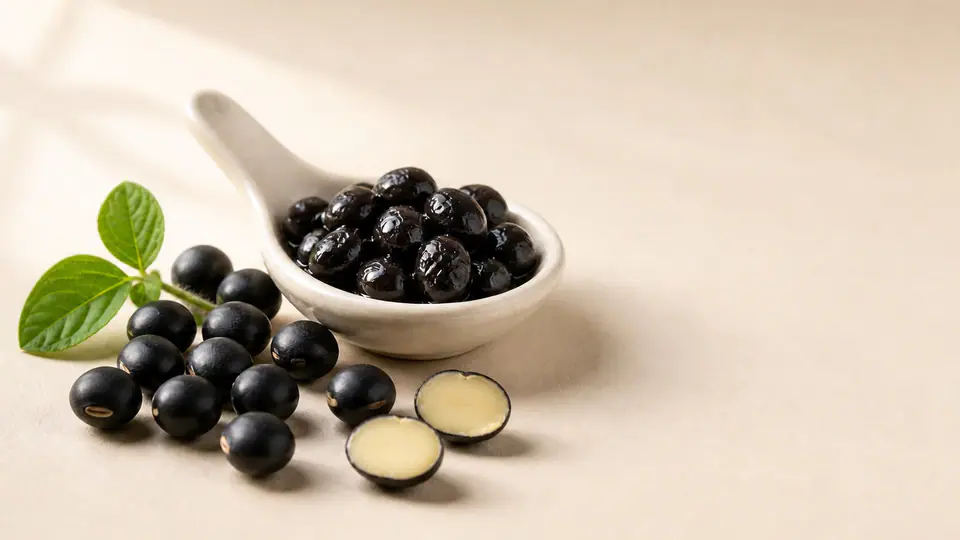
Stories attributed to the black seed coat on rice
Is eating black soybeans every day better for hair loss, menopause, or cholesterol than regular soybeans?
There is currently insufficient evidence to conclude that just because the color is black, it is specifically better for hair, female hormones, or vascular health. Black soybeans are a variety of soybean (Glycine max); while the black seed coat may contain more components like anthocyanins, their presence alone does not prove that they treat specific symptoms or are superior to yellow soybeans. Therefore, it is necessary to distinguish between the expectations attached to the color black and the actual evidence in humans.
What are black soybeans?
Black soybeans is the common name for a group of soybean (Glycine max) varieties with black seed coats. This includes Korean varieties such as Seoritae and Seomoktae, as well as black soybeans in general. However, they are different from black beans of the Phaseolus genus or black sesame seeds. They may look similar in color, but their botanical identities are different. Black soybeans and yellow soybeans are simply variety differences within the same Glycine max species, and the black color is mainly related to the seed coat components. Thus, basic nutrition, such as protein and fiber, is a foundation common to all soybean varieties, and the black seed coat simply contains additional components like anthocyanins.
How has the symbolism of black foods expanded?
The color black is often associated with images of antioxidants or health foods. Within that symbolism, black soybeans have naturally expanded into stories about hair, female hormones, and vascular health. However, test-tube antioxidant capacity of the black seed coat or general meta-analyses on anthocyanins cannot be translated into specific clinical effects of a bowl of black soybeans. The presence of a component is a different stage from the improvement of a specific symptom in the human body. A significant portion of research on the unique anthocyanins and polyphenols in black soybeans is at the level of component analysis, test tubes, or animals, and is narrower in scope than human research on general soybeans.
Are whole beans, soy milk, powder, and extracts the same raw material?
No. Boiled whole beans, roasted beans, soy milk, soybean powder, seed coat extracts, and isoflavone supplements are not the same form of exposure. The form, concentration, amount consumed, and other included ingredients are all different. For example, in a very small single-food trial where 22 healthy adults consumed cookies containing 20 g of roasted black soybean powder for 4 weeks in a crossover design, changes in some vascular functions and systolic blood pressure were reported. However, this was a short trial of a specific formulation, roasted black soybean powder, and cannot be applied to boiled whole beans or soy milk. The fact that soy milk, tofu, whole beans, soy protein, isoflavones, and black seed coat extracts cannot be read interchangeably is the first distinction to check when choosing black soybeans.
To what extent can the claims about cholesterol be trusted?
A meta-analysis of 46 trials showed that general soy protein slightly lowers LDL and total cholesterol. However, this is not direct evidence that black soybeans are superior to yellow soybeans. This is because direct human evidence for black soybeans has not accumulated as much as for general soybeans. Translating the effects of soy protein directly to whole black soybeans or soy milk, or assuming a greater cholesterol-lowering effect simply because the color is black, are interpretations that exceed the scope of the evidence.
Where do the claims about menopause and hair loss come from?
The results of soy protein and isoflavone trials in menopausal women differ from the results of isoflavone-only extracts. Furthermore, these results cannot be grouped as the efficacy of whole black soybeans. Expectations regarding hair loss or menopause are merely possibilities derived from component analysis of the black seed coat or anthocyanin research, not human-confirmed effects of whole black soybeans. It must be emphasized again that the presence of a component does not immediately mean the treatment of hair loss, menopause, or disease.
What about taking them with medications or supplements?
Black soybeans are soybean products. If you have been advised on the timing between medications, such as thyroid hormone medication, and food, it is best to include black soybeans as a soybean product and follow those guidelines. Additionally, you should first check what you are consuming, whether it is boiled whole beans, roasted beans, soy milk, powder, seed coat or isoflavone extracts, whether you are replacing existing meat or snacks with beans or adding them to your meals, and whether you have received specific guidance on the intake interval for medications like thyroid medicine or for soybean allergies. These three are the most practical questions when choosing black soybeans.
What should I look for to consume them safely?
Dried beans must be sufficiently soaked and cooked before eating. The amount and digestive tolerance for whole beans, roasted beans, and soy milk differ. Since the oligosaccharides and fiber in beans can cause gas or abdominal bloating, it is recommended to adjust the amount gradually. Soybeans are a major food allergen and can cause hives, vomiting, difficulty breathing, or anaphylaxis. If you experience throat tightening, difficulty breathing, systemic hives, or dizziness after consumption, you must seek emergency help immediately.
Differences Between Black Soybeans and Similar Ingredients
Black soybeans, yellow soybeans, black beans of the Phaseolus genus, and black sesame seeds may seem like the same group based on their names alone. However, black soybeans and yellow soybeans are simply different varieties of the same species, Glycine max, while black beans belong to the Phaseolus genus and black sesame is a different plant from sesame. Whole beans, soy milk, soy protein, isoflavones, and seed coat extracts also cannot be viewed as the same ingredient. The same applies to the difference between evidence based on general soybeans and direct evidence based on black soybeans. The presence of color and specific components does not immediately translate to stronger efficacy.
Realistic criteria to check today
Rather than relying on the image of black soybeans as antioxidant beans, first verify the exact type of bean, the cooking method and formulation, what they are replacing, the difference between general soybean research and direct black soybean research, and any allergies or intervals between medication. Black soybeans are soybean foods that provide protein and fiber, and the black seed coat may contain anthocyanins. However, there is still insufficient human-based evidence to conclude that they are better than general beans for hair loss, menopause, or cholesterol. In other words, while they are meaningful as a food to enjoy instead of yellow soybeans, they are not something to be selected like a medicine for specific health goals.
References
- Black soybean and vascular function: randomized crossover trial.
- Black soybean bioactive compounds and evidence: comprehensive review.
- Soy protein and LDL cholesterol: meta-analysis of 46 trials.
- Soy protein, isoflavones and lipids in postmenopausal women: meta-analysis.
- Extracted soy isoflavones and cholesterol: meta-analysis.
This text explains the origin of the raw materials, the scope of research, and precautions before consumption. As this cannot replace individual diagnosis or treatment, please consult a medical professional if you are taking medication or if symptoms persist. If sudden and severe symptoms such as difficulty breathing or decreased consciousness occur after consumption, seek help from 119 or the emergency room.

Medical Staff Review
Director Choi Yeon-seung
Chief Director of Baekrokdam Korean Medicine ClinicBlack Soybean Glossary, reviewed the safety of expressions and the scope of verification before administration.
Review scope: Ingredient origin, human studies, concomitant medications, safety of intake · Last reviewed 2026-08-17
- Graduated from Kyung Hee University College of Korean Medicine
- Providing Korean medicine treatment since 2010
- Consultations for Gongjindan, Gyeongokgo, Nokyong (Deer Antler) restorative medicine, and customized restorative herbal medicine