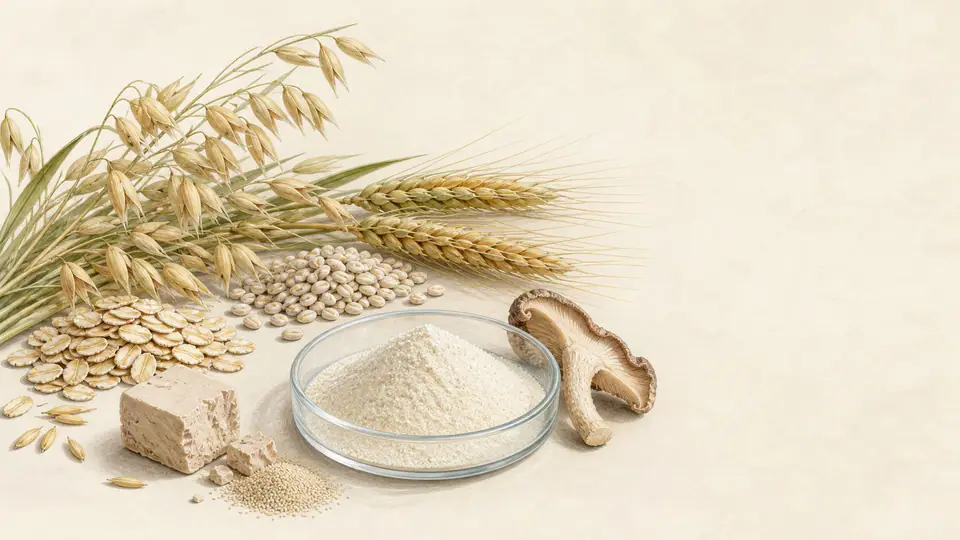
One name, two different cell walls
"I heard my cholesterol is high; should I try a beta-glucan product?"
To answer briefly, the answer depends on what the raw ingredient is. This is because the name 'beta-glucan' alone does not specify whether it is a soluble dietary fiber from grain cell walls or a polysaccharide with a different structure extracted from yeast or mushrooms. Even if they share the same name, research on one cannot substitute for the other.
This name refers to a broad class of polysaccharides where glucose units are linked by beta-bonds. Because of this breadth, you must first check which raw material the 'beta-glucan' on a label comes from. Mixed-linkage beta-glucans from oats and barley differ in structure and research purpose from beta-glucans derived from yeast or mushrooms. They should not be read as the same ingredient.
The question is about cholesterol, but the answer starts with the ingredients
For those seeking beta-glucan due to concerns about cholesterol levels, the actual lipid research has been conducted on soluble dietary fibers from oats and barley. The US FDA also describes mixed-linkage beta-glucans from the cell walls of oats, barley, and rye as soluble dietary fibers. The FDA's health claims regarding the reduction of coronary heart disease risk are also limited to the context of soluble fibers from specific oat and barley ingredients combined with a diet low in saturated fat and cholesterol.
In other words, this evidence regarding cholesterol markers is tied to grain-based ingredients. Research on the cholesterol-lowering effects of grain beta-glucans cannot be applied directly to beta-glucans obtained from yeast or mushrooms.
Why the expectation: What meta-analyses have shown
In a meta-analysis of 13 randomized trials involving 927 adults with high cholesterol, oat beta-glucan lowered total cholesterol and LDL. However, there were no significant changes in triglycerides or HDL. The magnitude of the effect varied depending on the subject's baseline lipid status, the raw material, the intake amount, and the delivery food.
The important point here is that the average result of 'lowering' is different from the statement 'it will work with the same magnitude for me.' Even within the research, the magnitude of the results differed based on baseline lipid status, raw materials, intake amount, and delivery food.
A bowl of whole grains vs. isolated powder: Different contexts
Oat and barley beta-glucans are soluble dietary fibers from plant cell walls. Consuming them as whole grain foods is different from consuming them as a powder where only the fiber has been isolated, as the accompanying nutrients and consumption contexts differ. Whole grains include other nutrients and dietary patterns beyond a single component. Since isolated and concentrated forms remove only a specific component, the dietary composition that accompanies the 'beta-glucan' is different, even for the same amount.
Therefore, when choosing a product, do not look at 'beta-glucan content' alone; you should also consider whether the raw material is whole-grain based or isolated fiber, and in what food form it is delivered.
Yeast and mushroom complexes: A different story
Beta-glucans derived from yeast or mushrooms are separate products from grain fibers. Their structures and research purposes are different. Some products promoting immune effects use cholesterol research from grain beta-glucans to explain their benefits, but this means that oat and barley data cannot be converted into evidence for the immune effects of yeast or mushroom beta-glucans.
To put it another way, if your goal is cholesterol management, you must first verify if the raw material is oat or barley; if your goal is immunity, you must look at research specifically for yeast or mushroom raw materials.
When taking with medications or supplements
If you are taking lipid-lowering medications, you must not arbitrarily reduce or stop your medication just because you start taking beta-glucan. You should evaluate test results and overall dietary changes together with your healthcare provider. Since yeast and mushroom complexes are separate products from grain fibers, you must also check for interactions with other raw materials and concomitant medications.
Rapidly increasing dietary fiber intake may cause gas, bloating, abdominal pain, or changes in bowel movements. It is necessary to adjust intake gradually while monitoring food and water consumption. If you have oat or barley allergies or gluten-related conditions, check the raw materials and cross-contamination labels.
Individual circumstances and safety signals
It is important to observe whether you experience abdominal bloating or changes in bowel movements when suddenly increasing dietary fiber. If discomfort persists or worsens, you should re-verify the form of the ingredients and the intake amount.
Additionally, you should check whether the ingredients are oat/barley or yeast/mushroom, whether you are taking lipid-lowering agents and have recently checked your lipid test results, and whether there are changes in abdominal bloating or bowel movements when suddenly increasing dietary fiber.
The Gap Between Human Evidence and Expectations
A meta-analysis of 13 randomized trials provides human-based evidence that oat beta-glucan lowers some cholesterol markers. However, this does not mean it is a treatment for cardiovascular disease. Changes in total cholesterol and LDL are a different matter from the treatment of cardiovascular disease.
Research results are averages, and the magnitude of the effect varies by individual. Therefore, rather than accepting the definitive statement that 'taking beta-glucan lowers cholesterol,' it is more appropriate to view it as one possibility within the context of overall diet and combined therapy.
Summary of differences from similar ingredients
Oat/barley beta-glucan and yeast/mushroom beta-glucan share the same name, but their structures and research purposes differ. Whole grain foods and isolated fibers have different intake contexts even if they come from the same raw material. Changes in cholesterol/LDL must be distinguished from the treatment of cardiovascular disease.
Then, what should you look for? You must first verify the raw materials, structure, actual fiber content, and the context of your overall diet and medication.
Criteria to Check Today
Rather than focusing on the label 'beta-glucan,' first check the raw materials, structure, actual fiber content, and the context of your overall diet and medication. When targeting cholesterol, verify if it is a soluble dietary fiber from oat or barley sources; yeast/mushroom products are viewed within a different research context. Do not arbitrarily discontinue lipid-lowering agents, and increase dietary fiber gradually while consuming it with plenty of water. If you have allergies or gluten-related conditions, check the ingredients and cross-contamination labels.
References
- FDA review of physiological effects of non-digestible carbohydrates.
- FDA Food Labeling Guide: soluble fiber and coronary heart disease claim.
- Oat beta-glucan and lipid profiles in hypercholesterolemic adults: meta-analysis.
This text explains the origin of the raw materials, the scope of research, and precautions before consumption. As this cannot replace individual diagnosis or treatment, please consult a medical professional if you are taking medication or if symptoms persist. If sudden and severe symptoms such as difficulty breathing or decreased consciousness occur after consumption, seek help from 119 or the emergency room.

Medical Staff Review
Director Choi Yeon-seung
Chief Director of Baekrokdam Korean Medicine ClinicBeta-glucan Dictionary Entry, reviewed the safety of expressions and the scope of verification before administration.
Review scope: Ingredient origin, human subject research, concomitant medications, intake safety · Last reviewed 2026-08-16
- Graduated from Kyung Hee University College of Korean Medicine
- Providing Korean medicine treatment since 2010
- Consultations for Gongjindan, Gyeongokgo, Nokyong (Deer Antler) restorative medicine, and customized restorative herbal medicine