When a Yellow Ingredient Sounds Like a Prescription Drug
Can I try taking berberine for blood sugar or weight? This question is frequently repeated when facing information about health functional foods or supplements. To answer briefly, based on the evidence reviewed so far, it cannot be concluded that it can be taken instead of prescription medication for everyone. This is because behind the name 'berberine,' there are multiple overlapping layers of different plants, ingredients, product forms, and research quality.
First, we must distinguish between berberine as a single ingredient and plant-based or complex products containing it, and separate the different questions regarding blood sugar and weight.
Berberine Is Not the Name of a Plant
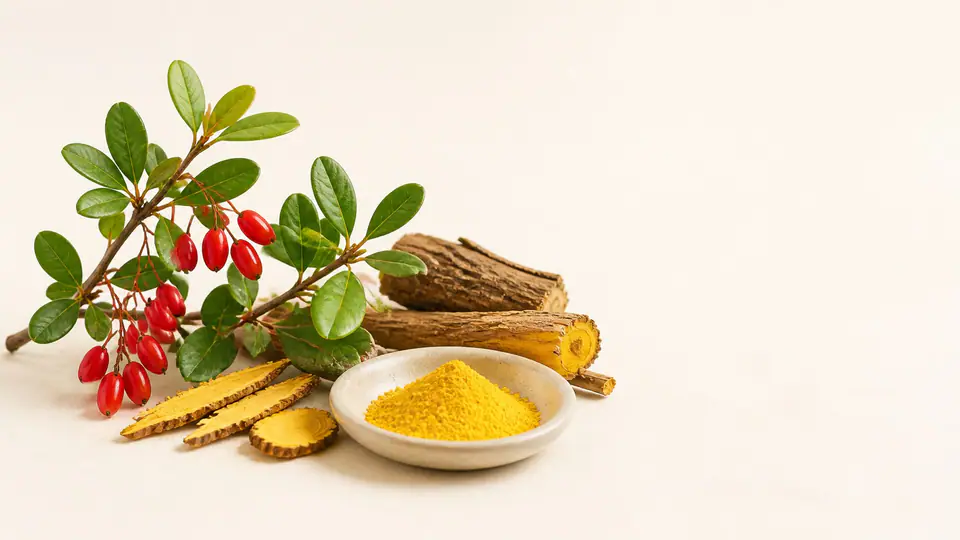
Berberine is not the name of a single plant, but an ingredient found in several plants. The NCCIH under the U.S. National Institutes of Health also explains that berberine exists in various plants such as goldenseal, barberry, and Coptis chinensis. In other words, the word 'berberine' does not refer to one specific tree, but to a yellow ingredient spread across multiple plants.
Coptis chinensis extract, goldenseal, and single-ingredient berberine cannot be placed on the same level. Even if the same plant or ingredient is listed in the name, the amount and composition of ingredients in plant-based raw materials, single ingredients, and complex products are not the same.
Blood Sugar and Weight: Two Different Questions
Expectations for berberine are largely divided into two paths: one is blood sugar and insulin resistance, and the other is weight and BMI reduction. These are separate research questions, and whether the product is a single or complex formulation also differs.
While there are studies reporting weight and BMI reduction, the effects on weight loss are not conclusive due to differences in study characteristics and quality. Ignoring these differences, one cannot conclude that 'berberine helps you lose weight.'
In reviews of type 2 diabetes research, there was a possibility of improvement in blood sugar, insulin resistance, and lipid markers. However, these results also have limitations. The studies were biased toward Chinese patients, results varied significantly, and the overall quality of research was low. Therefore, it is premature to generalize the possibilities seen in a specific population to everyone.
The Trap of the Nickname 'Natural Blood Sugar Medicine'
Berberine is often associated with images like 'natural blood sugar medicine,' but a nickname suggesting it is similar to medicine is not evidence that its efficacy and safety are the same as prescription drugs. Just because a name sounds like a medicine does not mean the dosage, interactions, and side effects are the same.
The important point is that berberine has not been proven to replace prescription diabetes treatment or diet and exercise management. There is a large gap between the possibility of supplementation and the replacement of treatment. If your blood sugar is high, it is correct to consult with medical staff to discuss what can be added to your current management, without arbitrarily stopping or reducing prescription medications.
Single Ingredients, Plant-Based Raw Materials, and Complex Products Are Not the Same
Different plant extracts and complex products cannot be directly applied to research on quantitative berberine. For example, the results of a clinical trial consisting of berberine as a single ingredient cannot be applied directly to Coptis chinensis extract or products mixed with berberine and other herbs.
| Category | What is the difference? |
|---|---|
| Berberine single ingredient | Must verify whether the ingredients used in the study match those in commercial products |
| Plants containing berberine | Contains other components, resulting in different total amounts and compositions |
| Combination supplements | Difficult to estimate interactions and effects due to the involvement of ingredients other than berberine |
This table is simply to distinguish between these three categories. It does not mean one form is better than another, but rather that the evidence for each must be viewed separately.
Consult a professional first if you are taking medication
Berberine can interact with various medications. In particular, it may affect cyclosporine levels, so those taking prescription drugs must consult a medical professional or pharmacist. If you are taking any medications, including diabetes drugs or immunosuppressants, you must check for interactions before adding this product.
What should you look for? First, check your current list of medications. Before starting berberine, it is necessary to specifically ask a medical professional or pharmacist, 'Is it okay to take this along with my current medication?'
Contraindicated for pregnancy, breastfeeding, and infant exposure
Berberine should not be used during pregnancy or breastfeeding. It must never be given to infants. Due to the risk of bilirubin accumulation and severe neurological damage in infants, caution must be exercised regarding product storage and exposure within the family.
If there are infants or young children at home, it is fundamental to keep products containing berberine out of their reach. Adult supplements should never be given to children, even in 'small amounts'.
First, check for common gastrointestinal adverse reactions
Commonly reported adverse reactions to berberine are gastrointestinal symptoms such as nausea, diarrhea, abdominal bloating, and constipation. These reactions may be mild and temporary, but if they persist or worsen, you should stop taking the supplement and consult a medical professional.
If gastrointestinal discomfort persists or worsens, stop taking the supplement and consult a medical professional.
The gap between evidence and expectation
While berberine research to date shows potential, it is not yet an established treatment. There has been potential for blood glucose improvement, but there are issues with study quality and population bias, and the effect on weight loss is more uncertain.
In other words, the image of berberine as an 'ingredient that manages both blood glucose and weight simultaneously' is a case where expectation has outpaced the evidence. When making a personal choice, one must first distinguish 'what effects remain as possibilities' rather than 'what effects have been proven'.
How to view the differences between similar ingredients
The following three comparison axes are useful when choosing berberine.
| Comparison Axis | Questions to check |
|---|---|
| Berberine single ingredient vs. Plants containing berberine | Whether the amount of the ingredient is clear or if it is a plant extract |
| Blood sugar support vs. Weight loss | What is the purpose of selection, and is there sufficient evidence for that purpose? |
| Supplementary therapy vs. Replacement for prescription treatment | Is the intention to replace current treatment or to add to it? |
These three axes are not simple comparisons of ingredients, but encourage you to reflect on your own expectations.
Realistic criteria to check today
If you are considering berberine, check the limitations of evidence by purpose, whether it is a single or complex product, contraindications for pregnancy, breastfeeding, and infants, and your current medications, rather than focusing on the label 'natural'.
Specifically, check the following: whether you are taking current medications such as diabetes drugs or immunosuppressants, whether there is a possibility of pregnancy, breastfeeding, or exposure to infants, and whether you intend to use it for weight loss or blood sugar management. After answering these three questions, consult with a medical professional or pharmacist to properly understand and choose from the various layers hidden under the name berberine.
References
- NCCIH Berberine and Weight Loss.
- NCCIH Diabetes and Dietary Supplements.
- Berberine and health outcomes: umbrella review.
This text explains the origin of the raw materials, the scope of research, and precautions before consumption. As this cannot replace individual diagnosis or treatment, please consult a medical professional if you are taking medication or if symptoms persist. If sudden and severe symptoms such as difficulty breathing or decreased consciousness occur after consumption, seek help from 119 or the emergency room.

Medical Staff Review
Director Choi Yeon-seung
Chief Director of Baekrokdam Korean Medicine ClinicBerberine Dictionary Entry, reviewed the safety of expressions and the scope of verification before administration.
Review scope: Ingredient origin, human subject research, concomitant medications, intake safety · Last reviewed 2026-08-16
- Graduated from Kyung Hee University College of Korean Medicine
- Providing Korean medicine treatment since 2010
- Consultations for Gongjindan, Gyeongokgo, Nokyong (Deer Antler) restorative medicine, and customized restorative herbal medicine