Fluorescent drinks for muscle pain relief and the three amino acids within them
Is it necessary to take BCAA separately to reduce muscle soreness and increase muscle mass after exercise? In short, for healthy exercisers who already consume enough protein, the necessity is not as significant as some research suggests. BCAA is simply a collective name for three branched-chain amino acids, leucine, isoleucine, and valine, and it does not independently provide all the materials required to synthesize new muscle protein.
The narrative became complicated when the facts that BCAA is used directly as energy in the muscles and that leucine is involved in the initial signal for muscle synthesis were packaged into fluorescent drinks in gym bags. Turning on the synthesis switch is a different matter from having all the materials to actually build the structure, yet these two often sound like the same thing in a single product. This article explores that distinction.
Post-exercise muscle soreness vs. muscle mass: two different goals
Can reducing post-exercise muscle soreness and increasing muscle mass be achieved with the same supplement? Research shows that these two must be distinguished. A 2024 meta-analysis of 18 studies reported a reduction in CK (creatine kinase) at certain time points after exercise and a reduction in muscle soreness from 24 to 96 hours, but there was no difference in LDH (lactate dehydrogenase), and results varied by dose and duration. In other words, while some pain indicators were lower, overall markers of damage were not consistently improved.
Another meta-analysis of 25 studies also showed that some muscle damage markers and pain were lower, but there was no difference in the recovery of muscle performance at 24 and 48 hours. This means that feeling less pain does not necessarily mean muscle strength returns better the next day. A review of 24 studies on athletes also showed potential for muscle synthesis signaling and muscle soreness relief, but gains in performance and body composition were minimal, and endurance results were inconsistent.
So, what should you look for? You must first distinguish whether your goal is the relief of muscle soreness or an actual increase in muscle strength, endurance, and muscle mass. Different goals lead to different expectations for the same product.
What is BCAA: Three Essential Amino Acids
BCAA is a collective term for three essential amino acids: leucine, isoleucine, and valine. The term "essential amino acid" means that the body cannot produce them on its own, so they must be obtained through food. These three are metabolized relatively heavily in the muscles, and leucine, in particular, is known as the starting point of the muscle synthesis signaling pathway.
However, BCAA consists of only three essential amino acids. To synthesize new muscle protein, other essential amino acids are required in addition to these three. Whether leucine stimulates the muscle synthesis signal is one question; whether adding only BCAA increases muscle mass and strength in the long term is another. Even if the signal is turned on, construction stops if there are insufficient materials to build the structure.
Why expectations were placed on BCAA
Two facts, that they are used directly in the muscles and that leucine handles the first signal for muscle synthesis, made BCAA seem special. The fact that they can be used as an energy source for muscles during exercise fueled the imagination of BCAA as an endurance supplement, and the fact that leucine stimulates the muscle synthesis pathway created expectations for it as a muscle-building agent.
However, it is difficult to compare numbers alone because the BCAA ratios, dosages, intake periods, training status of participants, and baseline protein intake vary across exercise research products. Some studies targeted beginners, some targeted people with protein deficiencies, and some products were mixed with caffeine or creatine. Concluding that "BCAA is good for ~" while ignoring these differences distorts the evidence.
Differences in product forms: BCAA single, EAA, complete protein, and complex supplements
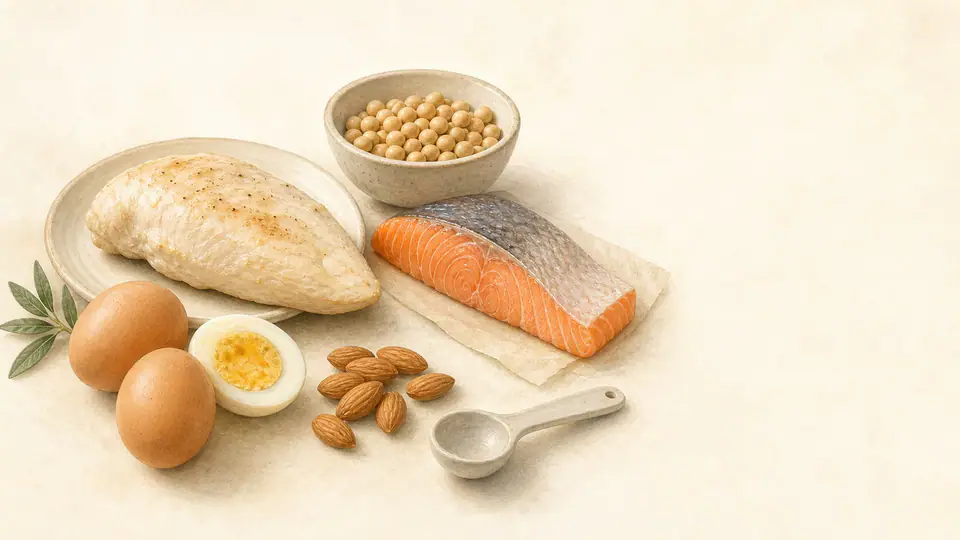
Not all BCAA products on the market are the same. Pure BCAA powder, products containing all essential amino acids (EAA), complete proteins such as whey or soy, and pre-workout complex supplements containing caffeine have different amino acid compositions and purposes.
BCAA alone provides only three amino acids. EAA includes all the essential amino acids necessary for muscle protein synthesis. Complete proteins provide both essential and non-essential amino acids. Pre-workout complex supplements contain caffeine, electrolytes, and creatine in addition to BCAA, making it difficult to distinguish which effect came from the BCAA.
| Category | Composition Characteristics | Points to Consider |
|---|---|---|
| BCAA single powder | Leucine, isoleucine, and valine (three types) | Incomplete materials for muscle protein synthesis |
| EAA | All essential amino acids | More complete protein synthesis materials than BCAA |
| Complete proteins (whey, soy, etc.) | Both essential and non-essential amino acids | Can be covered by total daily protein intake |
| Pre- and post-workout complex supplements | BCAA + caffeine, sugar, electrolytes, creatine, etc. | Total intake and adverse reactions must be evaluated by individual ingredient |
BCAA products often contain mixed ingredients such as flavorings, sweeteners, caffeine, and creatine. Therefore, adverse reactions and total intake must be evaluated by individual ingredient.
Combination Use and Individual Circumstances: How it Differs by Person
When considering BCAA, you must first check your own health status. For a healthy person who already consumes sufficient protein, the benefits and safety of adding high doses over a long period are difficult to confirm through short-term post-exercise trials alone. The abundance of short-term studies means that long-term safety and efficacy have not been sufficiently verified.
If you have liver or kidney disease, are pregnant or breastfeeding, have a metabolic disorder, or are undergoing clinical nutritional therapy, do not arbitrarily use workout products instead of medical-grade BCAA. Evidence for BCAA used for medical purposes, such as in liver cirrhosis, cannot be applied directly to muscle-growth products for healthy athletes. Disease treatment and exercise supplementation are different domains in terms of target population, dosage, and purpose.
If you experience severe pain in one area accompanied by swelling or weakness, or if your urine becomes cola-colored, do not dismiss this as general muscle soreness and try to endure it with supplements. These may be signs that you need emergency medical evaluation rather than BCAA.
The Gap Between Research Evidence and Expectations
The 2024 overview shows that while re-evaluating systematic reviews may reveal signals in recovery indicators, the quality and heterogeneity of the reviews and original studies must be considered together. A high number of meta-analyses does not mean all results are certain. This is because the training status of the subjects, baseline protein intake, type of exercise, and product ratios and dosages all varied.
In other words, even if BCAA showed traces of lowering muscle soreness indicators in certain situations, it does not mean it increases muscle mass and strength for all exercisers. Rather than concluding that it is 'effective,' one must look at the number of studies, consistency, and limitations together.
How to View Differences from Similar Ingredients
There are three axes when comparing BCAA with EAA or complete proteins. First are damage indicators such as muscle soreness and CK. Second is the actual recovery of muscle strength and performance. Third is long-term changes in body composition. BCAA showed some positive signals on the first axis, but the results were minimal or inconsistent on the second and third axes.
Another comparison is the target subject. Clinical BCAA for trained individuals, untrained individuals, and patients with liver disease must be evaluated in different contexts. Evidence used for patients with liver disease should not be applied directly to healthy athletes.
Criteria to Check Today
If you are choosing or continuing to take BCAA, check the following first: Are you adding BCAA while already having sufficient total daily protein and calories? Is it pure BCAA or a complex supplement mixed with caffeine, sugar, electrolytes, or creatine? Is your goal the relief of muscle soreness or an actual increase in muscle strength, endurance, and muscle mass? Do you have a medical purpose for treating liver or kidney disease?
Rather than focusing on the term 'muscle synthesis switch,' first check your total daily protein and essential amino acids, the mixed ingredients of the product, the difference between muscle soreness and performance/muscle mass, and the research subjects compared to your own disease or training status. Ensure that BCAA does not replace meals, training, and recovery, or lead to overtraining by masking pain.
References
- BCAA and muscle damage and soreness: systematic review and meta-analysis.
- BCAA and post-exercise recovery: overview of systematic reviews.
- Oral BCAA supplementation in athletes: systematic review.
- BCAA, muscle damage markers and performance: meta-analysis.
This text explains the origin of the raw materials, the scope of research, and precautions before consumption. As this cannot replace individual diagnosis or treatment, please consult a medical professional if you are taking medication or if symptoms persist. If sudden and severe symptoms such as difficulty breathing or decreased consciousness occur after consumption, seek help from 119 or the emergency room.

Medical Staff Review
Director Choi Yeon-seung
Chief Director of Baekrokdam Korean Medicine ClinicBCAA Glossary, reviewed the safety of expressions and the scope of verification before administration.
Review scope: Ingredient origin, human studies, concomitant medications, safety of intake · Last reviewed 2026-08-17
- Graduated from Kyung Hee University College of Korean Medicine
- Providing Korean medicine treatment since 2010
- Consultations for Gongjindan, Gyeongokgo, Nokyong (Deer Antler) restorative medicine, and customized restorative herbal medicine