Ashwagandha: Multiple Questions Hidden Behind the Word 'Adaptogen'
Should I try taking Ashwagandha to reduce stress and sleep better? This is a frequently asked question. To answer briefly, some preparations have shown a potential for slight improvement in stress and sleep, but it is not yet at a level to be conclusive. More importantly, this single question actually overlays several different questions.
While Ashwagandha is a plant with a long history of use, what is studied today are mostly supplement extracts made in specific ways. In other words, traditional raw materials and modern supplements should not be viewed as the same. By first identifying the nature of the ingredient, the differences between products, concurrent use, safety, and the limitations of the evidence naturally become clear.
Stress, Anxiety, and Sleep: Overlapping but Different Outcome Measures
The reason expectations are placed on Ashwagandha is that the three areas of stress, anxiety, and sleep seem closely linked. However, in research, these must be viewed as separate outcome measures.
The NCCIH states that some Ashwagandha preparations may be helpful for stress and insomnia, but explains that the number of studies is small and the preparations used and evaluation methods differ. Regarding anxiety, it states that the effect is not clear because the study designs and results are not sufficiently consistent. Systematic reviews and meta-analyses of stress and anxiety research reported signals of improvement, but concluded that larger, high-quality studies are needed due to heterogeneity between studies and limited sample sizes. Meta-analyses of sleep research also observed a potential for slight improvement, but the number of included trials and participants was limited, and products and dosages varied.
In other words, 'feeling less stressed,' 'improvement in clinical anxiety disorder,' and 'better sleep' are each different claims, and the strength of the evidence for each differs. The perception that one ingredient solves all three at once is merely due to the arrangement of words; the arrangement of research evidence is not so.
Identity of the Ingredient: A Nightshade Plant, Nicknamed Indian Ginseng
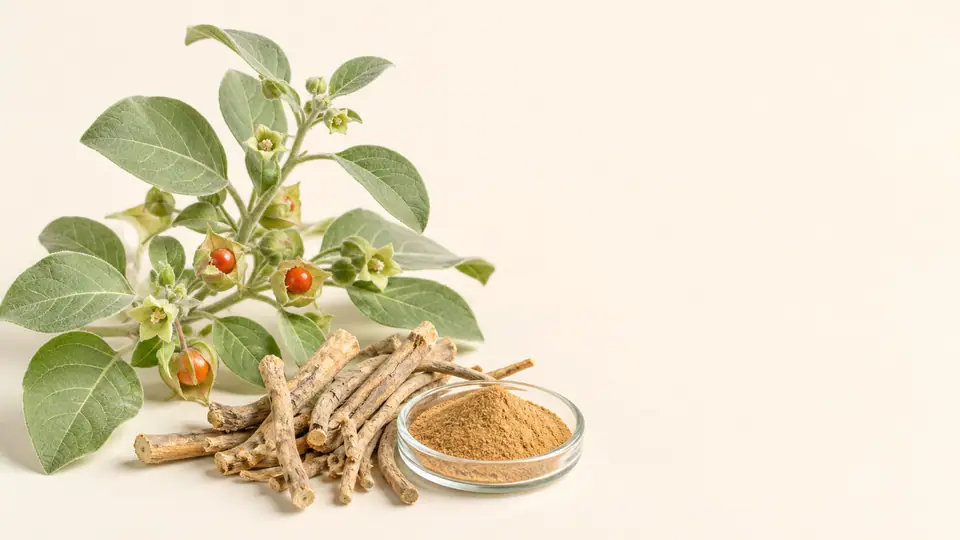
Ashwagandha is a nightshade plant Withania somniferaand is also called Indian ginseng. Although the name contains 'ginseng,' it is a different species from ginseng. Supplements use extracts from the root, leaves, or both parts.
The important point here is that because extraction methods and standardized components differ, products cannot be viewed as a single substance. If you consider them the same ingredient based solely on the name 'Ashwagandha' when choosing a commercial product, you fall into the error of trying to fit research results to your specific product.
The Illusion Created by the Term 'Adaptogen'
The category of 'adaptogen' frequently appears when introducing Ashwagandha. This term sounds attractive as it carries the nuance of helping the body adapt to stress. However, behind the single word 'adaptogen' lie overlapping different questions regarding stress, anxiety, and sleep, as well as various root and leaf extracts.
In other words, the name of a category can feel as if it proves specific efficacy. While the name is used in both marketing and academic discussions, it does not guarantee the action of a specific product.
Root Extracts vs. Extracts Including Leaves: Same Name, Different Products
When comparing Ashwagandha products, the first thing to check is the part of the plant used for extraction. Because products using only the root differ from those including leaves in terms of extraction ratios and standardization indices, it is difficult to apply the dosage from one study directly to another product.
For example, one study may have used root extracts, while another may have used extracts including leaves. If the ingredient profiles of two products differ, there is weak evidence for applying the results of one study to another product. Therefore, checking the extraction part and standardization markers on the product label is more important than simply looking at the brand or the number of capsules.
Short-term Trials vs. Long-term Regular Use: Different Timeframes
Another limitation of Ashwagandha research is that most consist of short-term trials lasting only a few weeks. In the short term, drowsiness, gastrointestinal discomfort, diarrhea, and vomiting may occur, and long-term safety has not been sufficiently established.
However, many products on the market are intended for long-term regular use. Turning the possibilities observed in short-term trials into certainty for long-term use is a leap in evidence. Trials lasting a few weeks are not the same as consumption for several months or more.
When Taken with Medications: Combinations Requiring Verification
Particular caution is needed when using Ashwagandha with other medications or supplements. It may interact with sedatives, anticonvulsants, thyroid hormones, blood pressure medications, diabetes medications, and immunosuppressants.
You must first verify if you are using sleeping pills, sedatives, or anticonvulsants, or if you are taking thyroid medication, blood pressure medication, diabetes medication, or immunosuppressants. If you are taking these medications, it is appropriate to decide after consulting with medical staff.
Individual Circumstances and Safety Signals: Who Should Avoid It
Avoid Ashwagandha during pregnancy, and safety during breastfeeding is also not sufficiently established. Those with autoimmune diseases, thyroid diseases, or scheduled surgery should consult medical staff before use.
Rare cases of liver damage associated with Ashwagandha supplements have been reported; if symptoms such as jaundice, dark urine, or severe itching occur, it is necessary to stop use and seek medical evaluation. These signals are uncommon, but they are at a level that should not be ignored.
Diabetes, Cognitive Function, Athletic Performance, Menopause: Other Uses with Insufficient Evidence
Beyond stress and sleep, there are various expectations for Ashwagandha. However, for several other uses such as diabetes, cognitive function, athletic performance, and menopause, there is insufficient evidence to determine efficacy.
This does not mean it is ineffective, but rather that it cannot be determined based on research to date. New research may emerge, but at this point, tempering expectations is an evidence-based approach.
Realistic criteria to check today
Then, what should you look for? Rather than the category of 'adaptogens,' first look at the symptoms you intend to resolve, the actual extraction part and standardization of the product, your current medications, and the scope of short-term use.
Specifically, they are as follows:
| Checklist Item | Reason |
|---|---|
| Whether the extraction part is the root or includes leaves | The ingredient profile and the applicability of research will differ. |
| Whether standardization markers are indicated on the label | Concentrations may differ even for products with the same name. |
| Whether you are currently taking any medications | Caution is required with sedatives, thyroid medication, blood pressure/diabetes medication, and immunosuppressants. |
| Whether you are pregnant, breastfeeding, scheduled for surgery, or have an autoimmune disease | Consultation with medical staff is required before use. |
| Whether it is intended for short-term use | Long-term safety has not been established. |
This table is a condensed version of the selection criteria, and all products can be evaluated based on these criteria.
Finally: Start with a Question, Not a Name
Ashwagandha is an interesting ingredient. It possesses both a long history of use and modern supplement research, and the term 'adaptogen' further enhances its appeal. However, the key point here is that the name and the evidence do not always align.
Stress, anxiety, and sleep may seem overlapping, but they are not the same outcome measures, so the evidence for each must be read separately. Root extracts and extracts containing leaves are different products under the same name. Short-term trials and long-term intake operate on different time scales. Concurrent use of other medications and individual health conditions are critical turning points for safety.
Ultimately, the most important thing when choosing Ashwagandha is not 'Is this ingredient right for me?' but 'Does the evidence for the product in my hand actually align with the symptoms I am trying to resolve?' By asking this question first, you can unravel the various questions hidden behind an attractive name.
References
- NCCIH Ashwagandha.
- Effects of Ashwagandha on stress and anxiety: systematic review and meta-analysis.
- Effect of Ashwagandha extract on sleep: systematic review and meta-analysis.
This text explains the origin of the raw materials, the scope of research, and precautions before consumption. As this cannot replace individual diagnosis or treatment, please consult a medical professional if you are taking medication or if symptoms persist. If sudden and severe symptoms such as difficulty breathing or decreased consciousness occur after consumption, seek help from 119 or the emergency room.

Medical Staff Review
Director Choi Yeon-seung
Chief Director of Baekrokdam Korean Medicine ClinicAshwagandha Dictionary Entry, reviewed the safety of expressions and the scope of verification before administration.
Review scope: Ingredient origin, human subject research, concomitant medications, intake safety · Last reviewed 2026-08-16
- Graduated from Kyung Hee University College of Korean Medicine
- Providing Korean medicine treatment since 2010
- Consultations for Gongjindan, Gyeongokgo, Nokyong (Deer Antler) restorative medicine, and customized restorative herbal medicine